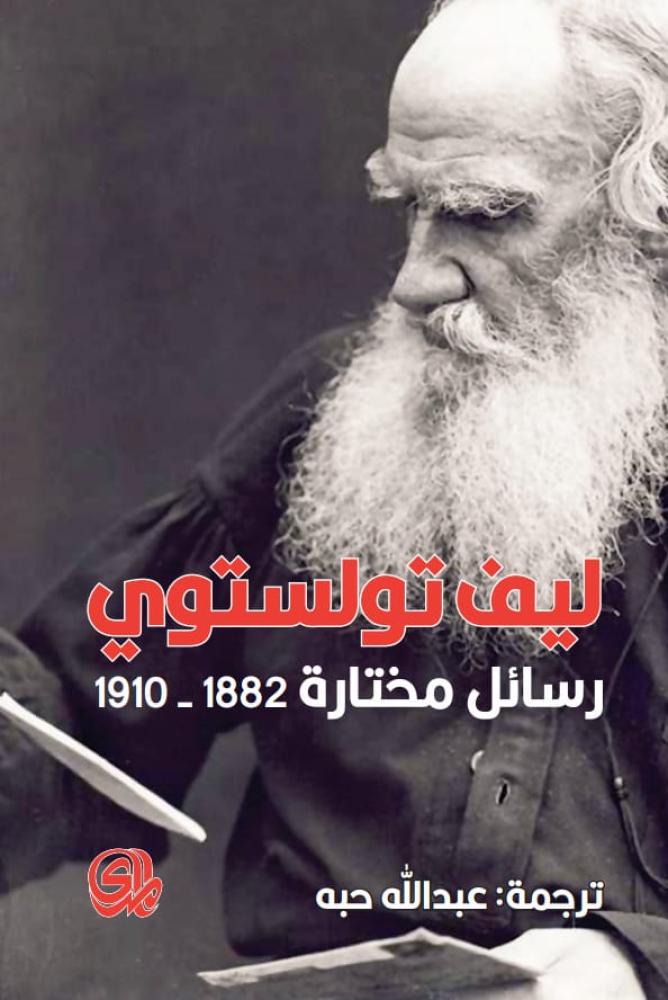
Selected messages 1882 - 1910
51.75ر.س
Out of Stock
Product description
There is no doubt that the character of Leo Tolstoy is one of the most strange and contradictory figures in Russian literature. This genius writer combined in his personality the depth of narrative creativity, the boldness of a philosopher, and at the same time, a firm religious faith. Since his return from his famous European journey and his retreat to his estate Yasnaya Polyana, he radically changed his view of life and death, the writer's message, and how to achieve social justice in Tsarist Russia, which was burdened under the yoke of serfdom (feudal slavery) that Western Europe had abolished following the Great French Revolution of 1789. His letters and diaries are considered the best record of his intellectual and creative development, and of the sources from which he drew the themes of his novels, stories, plays, as well as his philosophical studies, especially on life and death, land ownership, social justice, and folk arts and education. I found it appropriate to select the letters related to this creativity and studies, including his letters to writers Turgenev, Ostrovsky, Gorky, Andreev, Stasov, Tschertkoff, Romain Rolland, and artists G. Repin, composer Tchaikovsky, as well as his letters to Tsar Alexander III and Tsar Nicholas II, and his letters to Bernard Shaw and Mahatma Gandhi. However, there are no available correspondences with some of his contemporaries among well-known writers, including Dostoevsky and Chekhov. I focused on his social and educational activities, especially in the field of education, his establishment of popular schools, and his work in teaching there. The main feature of Tolstoy's literature is his keenness to depict characters and events with honesty and detail. This was reflected in his numerous letters with various personalities and official circles to obtain archival materials related to his writings. This is evident from his attention to historical events, character biographies, and daily life details during the Patriotic War of 1812, when he wrote the novel "War and Peace," as well as the lives of prisoners during his writing of the novel "Resurrection," and the memories of participants in the Decembrist movement (in an unpublished novel), and the life of Haji Murad and those around him during the writing of the novel "Haji Murad," among others. Therefore, he would send letters to all concerned persons, hoping to obtain information about those events.

From Jeddah