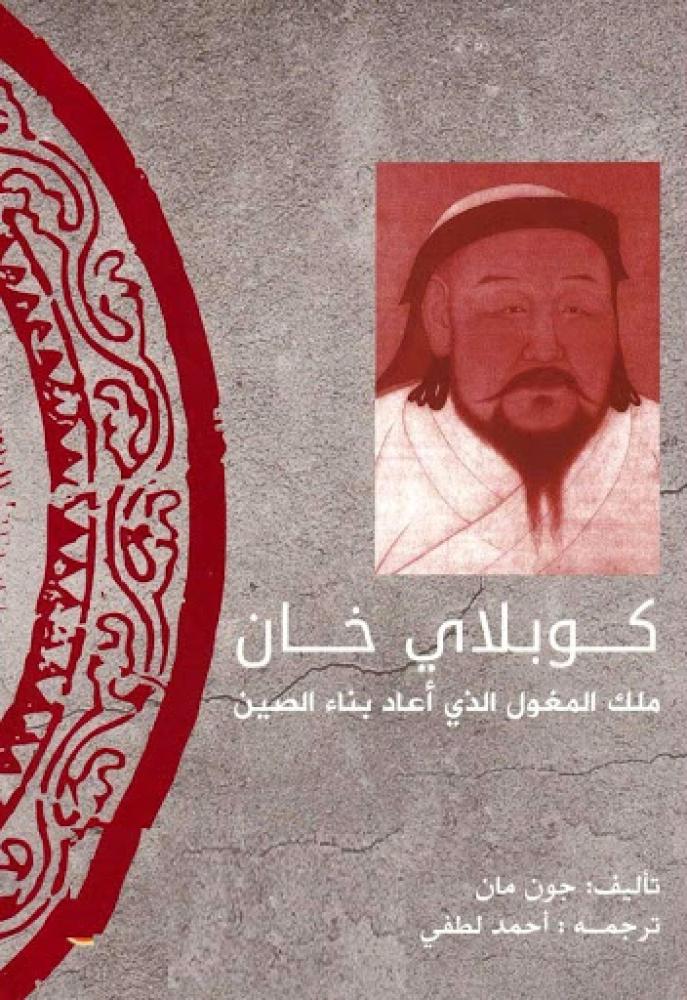
Kublai Khan, the Mongol king who rebuilt China
101.20ر.س
Out of Stock
Product description
The book "Kublai Khan, the Mongol King Who Rebuilt China" consists of an introduction, seventeen chapters, and a conclusion. It was written by John Mann, a British historian specializing in travel literature and particularly interested in Mongolian history. It is considered one of the most important books that documented the great leader Kublai Khan — grandson of Genghis Khan — who was born in the same year that Beijing was destroyed by his grandfather Genghis Khan, 1215. He would accept the challenge of realizing Genghis Khan’s impossible vision and exert efforts beyond any other leader to achieve it, extending his strength and authority across the regions from the Pacific Ocean to southern Russia.
Kublai Khan enjoyed nominal dominance over one-fifth of the inhabited world, and perhaps half of humanity, as his name spread beyond the territories he actually occupied, specifically to Europe, Japan, and Indonesia, until news of his attempt to invade Java in Indonesia in 1292 reached the sea cucumber fishermen off the northern coasts of Australia. Not only that, but the legend of his wealth and kingdom became an inspiration for the legendary explorer Columbus, transforming him from a nightmare for the West as his grandfather was, into a deeply rooted Western consciousness, a king with no borders to his kingdom.
According to the author, the great Loulou Khan, perhaps no Mongol empire was established in China, but thanks to his legacy, China expanded and became the unified frontier it is today. The turning point was in 1281, when Kublai was sixty-six years old, and his empire had reached its greatest extent. He realized too late that his empire would not extend further, and despair began to take hold of him.
If we examine Kublai’s personality from a modern psychological perspective, we find that this man — who was the strongest in the world in his time — challenged the acceptance that dreams die, ambition wither, and the body ages, and he only accepted his ambition to build an empire capable of enduring within the borders he set for it. Despite many myths about the legend of Kublai, they are not devoid of traces of truth. The legacy of the conquerors Genghis Khan and his grandson Kublai, passed down through generations over centuries, still defines current geopolitics, even though the Chinese regions under Kublai’s rule extended beyond traditional Chinese borders.
Although the descendants of the caliph had to resort to ancient China, Kublai Khan’s additions shaped their agenda. One of Kublai’s successors, Möngke, followed Kublai’s additions without hesitation or question.

From Jeddah