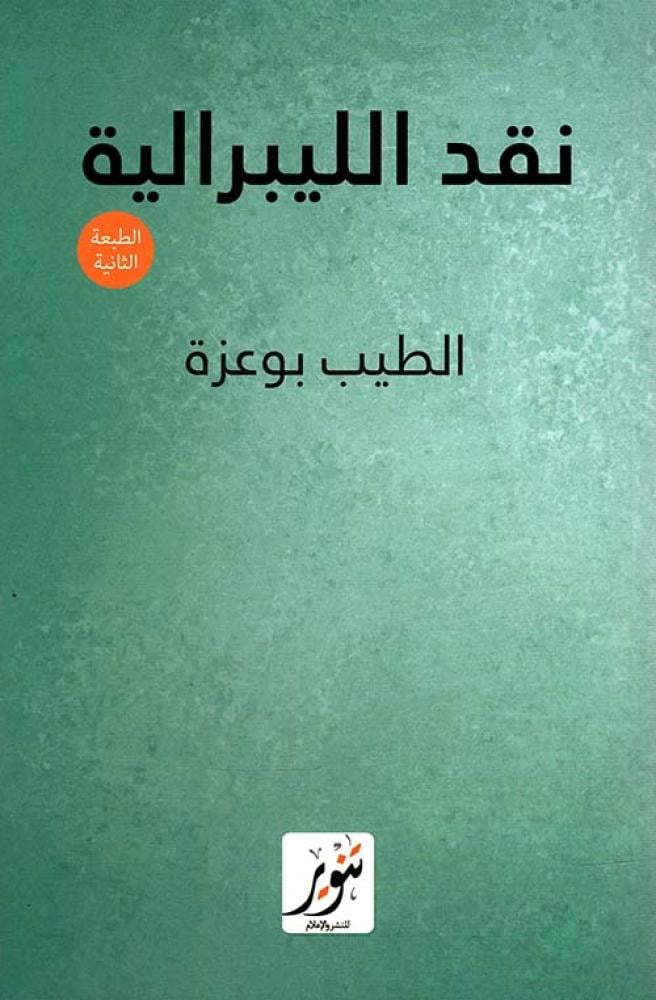
Criticism of liberalism
42.01ر.س
Product description
Bouazza explains in his book that the goal of criticism is not hostility to human freedom, but rather the dismantling of liberalism as a single model imposed on the world. He sees that liberalism, especially in its neo-liberal form, has shifted from a philosophy of human liberation to a philosophy of capital liberation, making it a dominant force controlling the economy, politics, and media.
The approach and main axes of the book
Bouazza relies in his critique on a dual methodology:
Philosophical criticism: addresses the theoretical and conceptual foundations of liberalism, revealing its internal contradictions, especially regarding its claims of absolute individualism and complete freedom.
Historical and social criticism: analyzes liberalism as a practical application on the ground, showing how its slogans have not been realized fairly, but rather led to the emergence of huge economic and social disparities.
The book covers several main axes:
Definition of liberalism: begins by providing an accurate definition of the liberal philosophy in its political and economic dimensions.
The relationship of liberalism with ethics and the individual: analyzes how liberalism separates politics from ethics, leading to the erasure of shared values in society.
Critique of neo-liberalism: dedicates a section to analyzing new liberalism, highlighting its negative repercussions on societies.
Liberalism in the Arab world: offers a critical reading of the liberal discourse in the Arab context, and clarifies the nature of the challenges it faces.
In short, the book represents a serious attempt to rethink liberalism as a political and philosophical system, and calls for searching for more humane and just intellectual alternatives.

From Jeddah