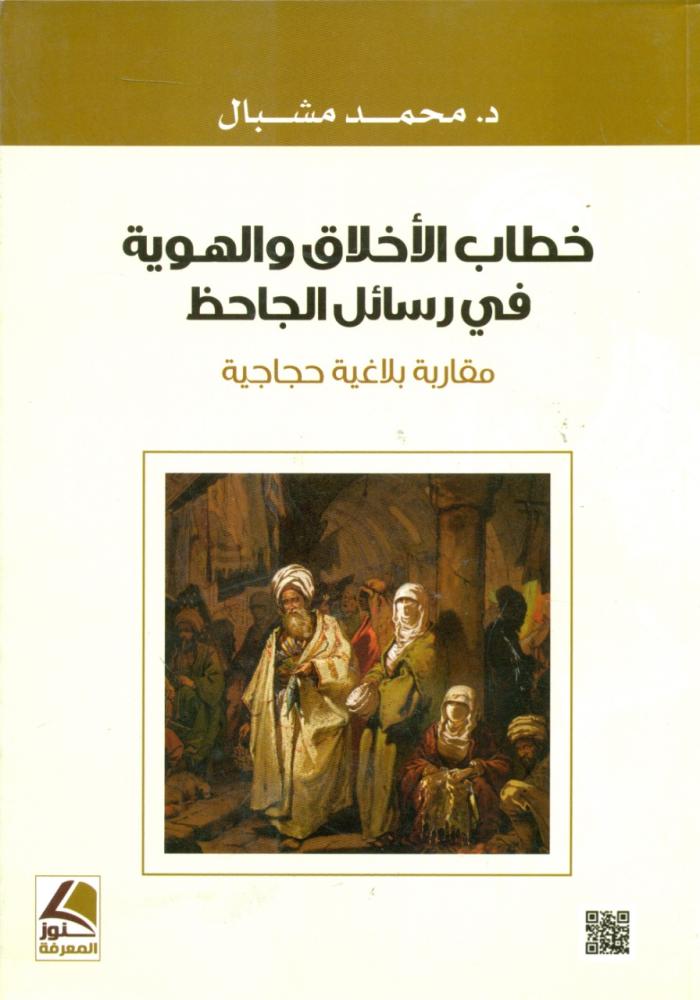
The discourse of morals and identity in the messages of Al-Jahiz
72.45ر.س
Out of Stock
Product description
The book of Mohamed Mashbal is an applied book he attempted to approach a group of Al-Jahiz's messages with a rhetorical and argumentative approach, exploiting especially the stylistic aspect. He divided it into three sections. The first section is purely theoretical, titled "Rhetoric of the Old Arabic Prose Text: Components and Principles," and under this section, there are three chapters: the first on "The Rhetoric of the Text as a Thematic Frame," the second on "Dialogical and Argumentative Text," and the third on "Arguments." The second section is labeled "Rhetoric and Morality," and includes three chapters: one on "Morality between Desire and Reason," another on "Political Morality," and a third on "Condemnation of the Morals of Writers and Scholars." As for the third and final section, it is called "Morality and Identity," and it is divided into four chapters: the first on "Argumentation and the Identity of Places," the second on "Praising Black Identity," the third on "Praising Turkish Identity," and the fourth on "Dialogue with the Other and Preserving Islamic Identity." Then comes the conclusion. The second and third sections are applied chapters, in which Mohamed Mashbal attempted to utilize the theoretical knowledge of the first section to reveal the aspects of the rhetoric of argumentation in Al-Jahiz's prose, and to what extent his messages align with the developments of the argumentative theory from Aristotle to modern rhetoric—such as Perlman and others—both in their persuasive, discursive aspect and in their imaginative argumentative aspect. This aimed to uncover the nature of the old texts and their functions, and to conduct an extensive rhetorical analysis that goes beyond the limits of style and phrase to the horizons of meaning, discourse, and contextual implications.

From Jeddah