





"Golden Strings" Catalog for Reviving Folk Heritage - Green Valley Foundation
200ر.س
Product description
This catalog is an important artistic and historical document that chronicles a golden era in the history of folk songs in Saudi Arabia and the Gulf. Published by the Golden Strings Foundation (based in Riyadh), in collaboration with Al Wadi Al Akhdar Recordings , this guide serves as a comprehensive reference for collectors and connoisseurs of authentic art.
Key features and contents of the catalog:
• Vision and Goal: The catalog explains in its introduction the institution’s commitment to building bridges of artistic cooperation to revive “ancient folk heritage”, using the latest technological methods to convert timeless melodies from its huge archive into (cassette and CD), to ensure their access to new generations and to preserve them from being lost.
• A panorama of folk art pioneers: The catalog presents numbered and illustrated lists of releases by folk art icons, making it easier for the listener to find rare recordings:
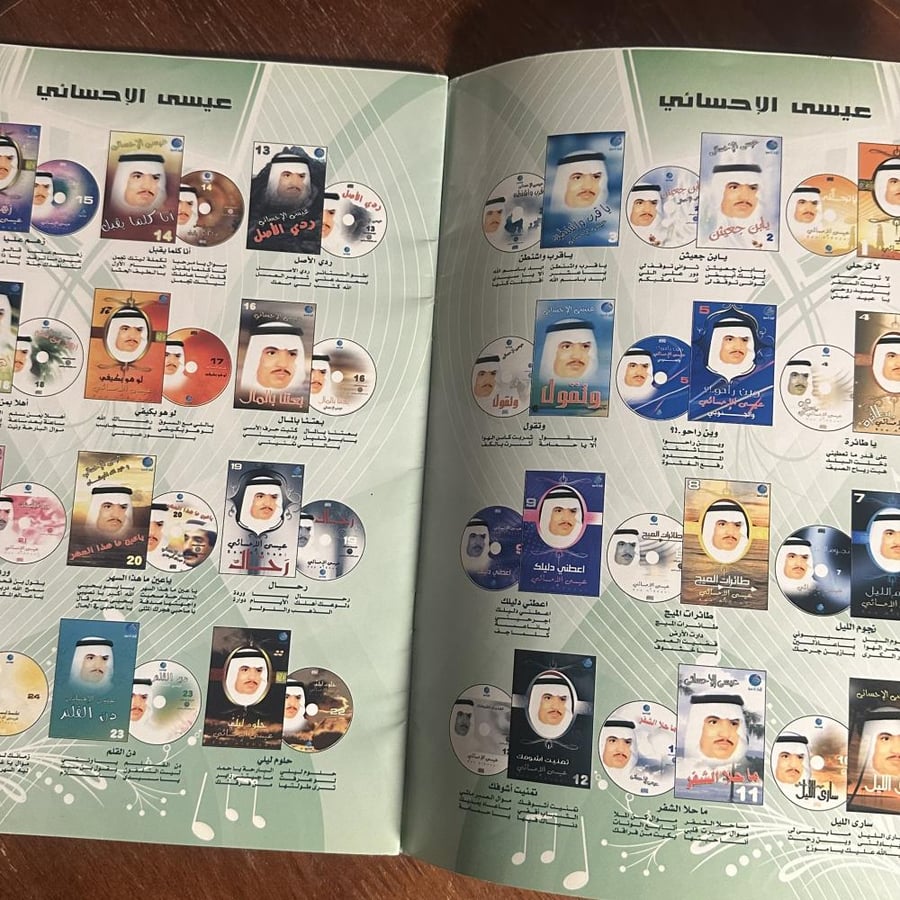
• Issa Al-Ahsa’i Section (The Boy of the Eastern Province): It showcases dozens of albums that documented the career of “Sayed Al-Wadi”, such as the albums “Ya Qurb Washtan”, “A’tini Dalilak”, and “Tamnit Ashoufak”, along with a display of album covers that represent a distinctive visual identity of that period.
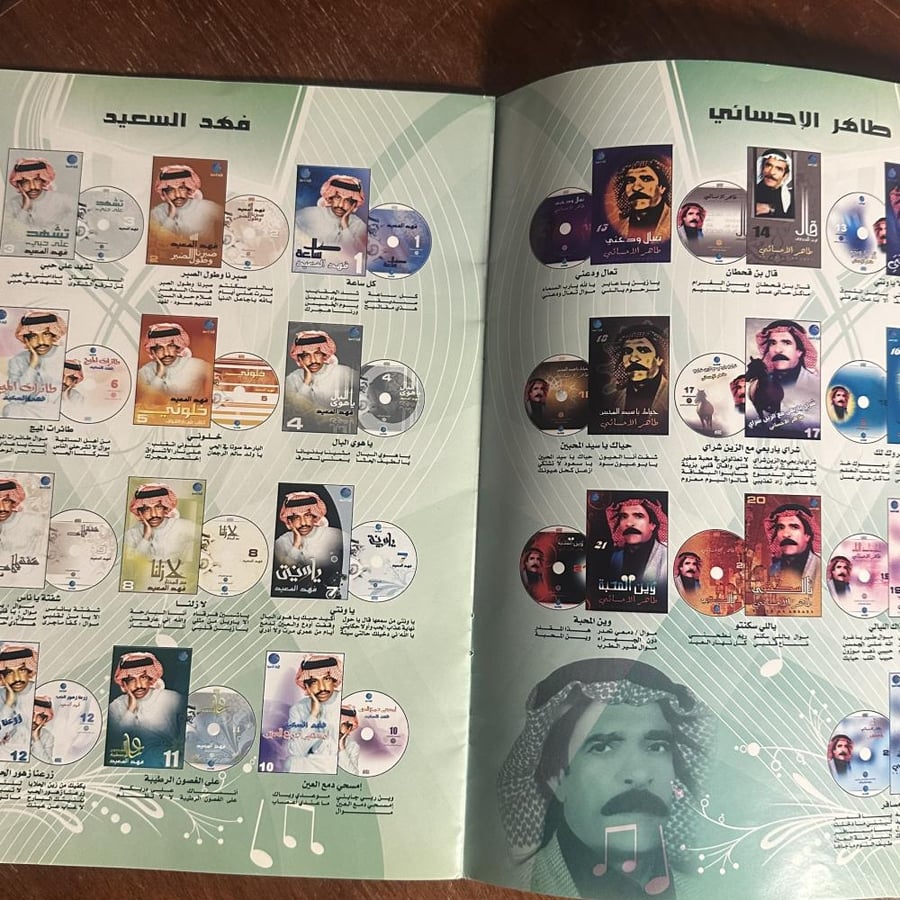
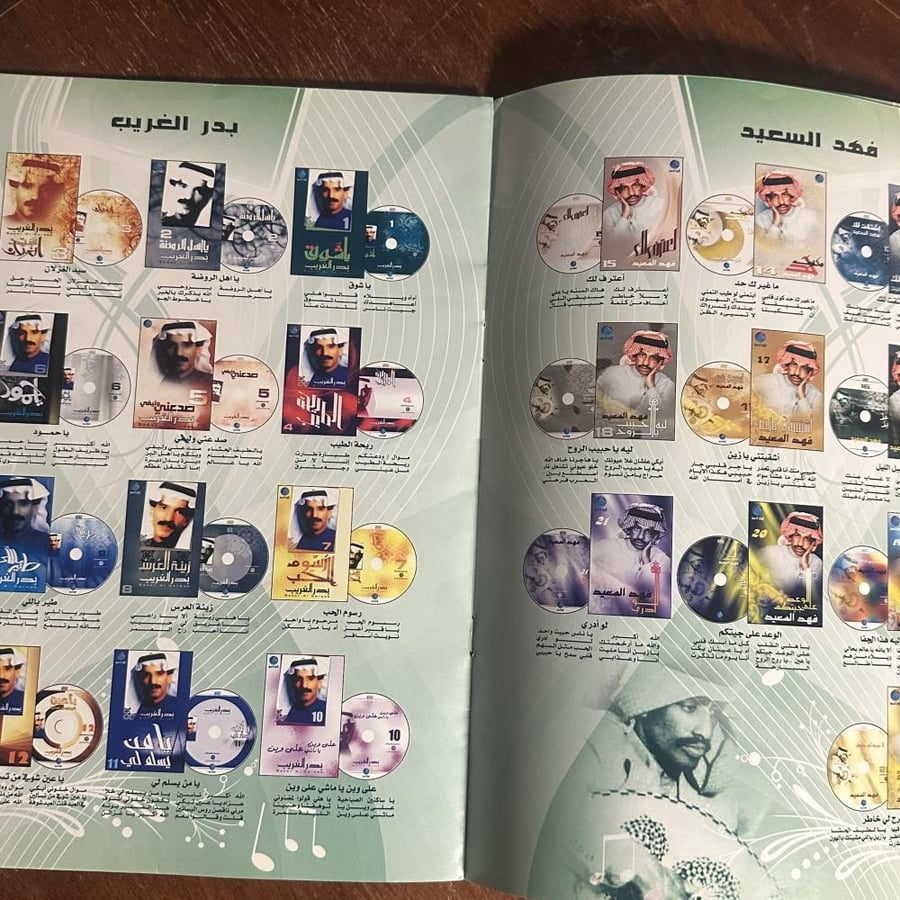
• Fahd Al-Saeed’s section (The Island’s Lonely One): It highlights a large collection of his works that are characterized by melancholy and a purely folk style, such as “Our Patience and the Length of Patience”, “Oh Longing”, and “MiG Planes”.
• Taher Al-Ahsa’i Section: It focuses on his heritage works such as “Naseem Al-Rabee’” and “Ya Nas Hali Rah,” explaining the numerical sequence of his publications at the institution.
• Badr Al-Gharib Section: It includes a list of his famous songs such as “Sad Anni Wa Naha” and “Ya Man Yaslam Li”.
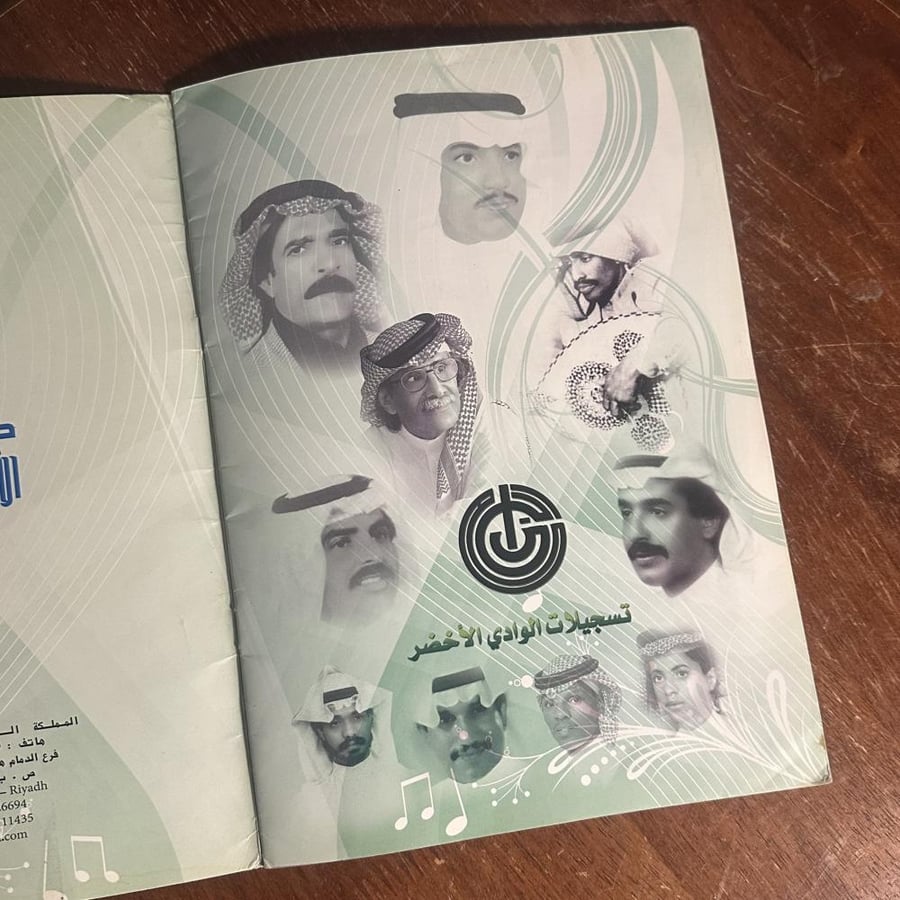
• Documentary value: The importance of the catalog is not limited to being a sales list, but it is an archiving tool that shows the titles, issue numbers, and logistical data of the institution (branch addresses in Riyadh and Dammam, and old telephone numbers), reflecting the extent of the spread and organization that Saudi artistic production companies enjoyed at that time.
• Visual identity: The catalog's artistic design uses shades of green and musical motifs with rare portraits of artists in traditional dress, giving it a classic, nostalgic feel.
Summary: This edition serves as a "mini-encyclopedia" that immortalizes the names of artists who have etched their names in the hearts of Arab listeners, and embodies the pioneering role of national production institutions in preserving the cultural and musical identity of the region.
