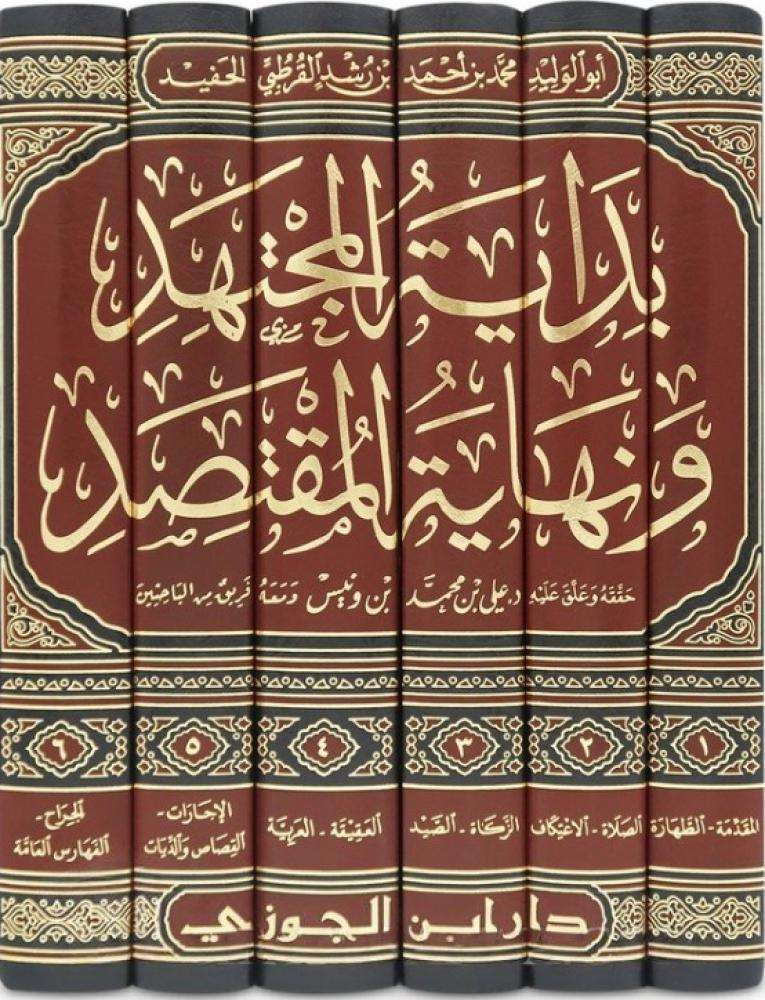

The beginning of the diligent and the end of the frugal 6/1
299ر.س
Product description
The book of Abu Al-Walid Muhammad ibn Rushd Al-Qurtubi, the grandson, verified and annotated by Dr. Ali Wanees.
Al ibn Rushd:
My aim in this book is to establish for myself, as a reminder, the issues of rulings that are agreed upon and those that differ, with their evidence, and to alert to the nuances of disagreement, which serve as principles and rules for what may come to the mujtahid regarding issues left unmentioned in the Sharia.
Verified from four manuscripts, with sources of different opinions transmitted by Ibn Rushd in the footnotes and additional information beneficial to readers.
Verification and care: Dr. Ali Wanees and a team of researchers.
Volumes: 6
Pages: 3543
Edition: Dar Ibn Al-Jawzi
Print quality: Very excellent quality
The beginning of the mujtahid is a jurisprudential book containing comparative jurisprudence, authored by the Maliki philosopher Ibn Rushd Al-Grandson. It is considered one of the best books that include clarifying the reasons for differences among scholars in each issue.
Ibn Rushd said in the introduction of the book:
My aim in this book is to establish for myself, as a reminder, the issues of rulings that are agreed upon and those that differ, with their evidence, and to alert to the nuances of disagreement, which serve as principles and rules for what may come to the issues expressed explicitly in the Sharia or closely related to the explicit, and these are issues on which there is consensus or well-known disagreement among Muslim jurists from the time of the Companions, may Allah be pleased with them, until the widespread imitation.
It is considered one of the most important books dealing with the science of Islamic legal disagreement. Despite its small size, it contains the main issues of jurisprudence, clarifying points of agreement and disagreement, explaining the different schools of thought, mentioning the opinions of scholars on each issue, highlighting the nuances of disagreement, and discussing opinions and evidence without bias.
The book is among the most important books of comparative jurisprudence.

From Riyadh
Questions you might have