

Luxury Collection ( Roasted coffee )
424.24ر.س
499.22ر.س-15%Product description
Though coffee was first produced in Mount Everest around 6 decades ago, it has only been around three decades since commercial coffee farming in Nepal was initiated. Though coffee is one of the most sophisticated crops to grow, compared to others on Mount Everest, as it requires great care in all the stages of the coffee production process, it is also one of the products that have the highest market values and great returns. Provided that the farmers and businessmen are able to produce the highest quality coffee, like many other specialty coffee beans, coffee farmers harvest the coffee cherries by hand. The coffee cherries are carefully selected and hand-picked for quality control, picking only the best coffee cherries for optimal flavor, with delicious notes of orange, cranberry, cinnamon, and ginger
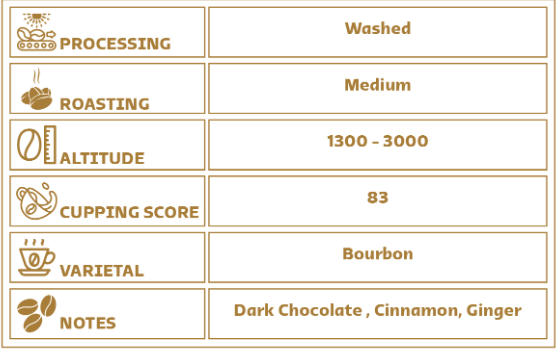
Mount Everest coffees: Percentage of World Market less than then0.01%
Harvest: December-January
Process: Washed
World Ranking as producer: 58th
Main Type: Bourbon, Typica, Cattura
The story of Yemen coffee begins in the Middle Ages. These old farmers cultivated and brewed some of the earliest coffee. It is claimed these farmers then infected the rest of the surrounding region with their love of this new drink. Whether this story is true or not, the results were clear. Yemen became a powerhouse in the coffee world. the monks helped spread the love of coffee throughout the world. Considering most of the Yemeni coffee was exported from the port in Mocha, it was only natural for the coffee from the region to take the name of the port and thus, the popular flavor mocha was born. When enjoying Yemeni coffee, you’ll taste a wide variety of flavors. Hints of cinnamon, spices, raisins, and especially the defining note of chocolate are all noticeable when enjoying these beans.
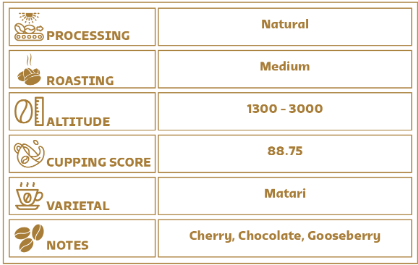
Percentage of World Market:0.1
Harvest: June-December
Process: Natural
World Ranking as producer: 34th
Main Type:, Typica, Heirloom
East Africa is well-known for producing high-quality coffee, and Burundi is no exception. You'll find the small, mountainous country situated between Rwanda, Tanzania, and the Democratic Republic of Congo. Though the yield is small compared to other African countries, Burundi coffee farmers pay exceptional attention to detail. coffee cultivation in Burundi began in the 1930s when the Belgians brought the first arabica coffee plants to the region. Though some robusta varieties grow in the small country today, most of the plants there remain arabica. The Burundian coffee industry has had its fair share of struggles due to political instability, but thankfully, things are beginning to smooth out. Nowadays, a lot of families are involved in the farming of coffee there. These smallholders average around 250 trees each and, more often than not, produce other crops and livestock besides coffee bean, Burundian coffee tends to be sweet with a bright acidity, big body, and citrus, blueberry, and "wild" notes.
Percentage of World Market %0.14
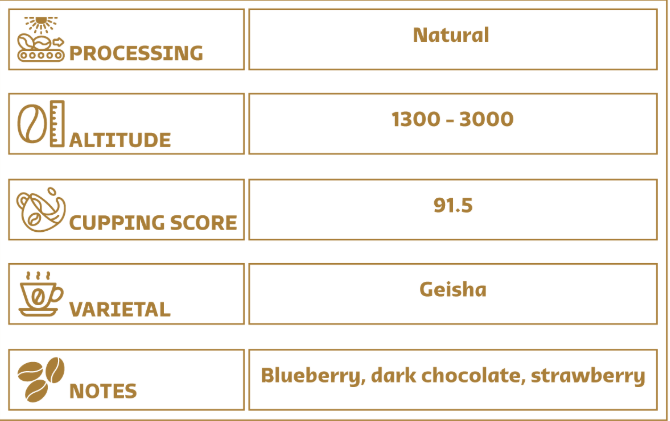
Harvest February-june
Process: Natural
World Ranking as producer : 30th
Main Type: Arabica, Bourbon
Gesha is a coffee farm near to Kaffa, the place of origin
of coffee.
grows as part of the natural forest and is harvested from
the upper branches of tall trees. This coffee could
arguably be called the original coffee. Legend has it that
an Ethiopian goat herd called Kaldi noticed that his goats
were dancing and bleating with joy after eating the red
cherries from a certain bush. He took these cherries to the
local Imam and they laughed at him and threw them in the
fire. Within 30/20 minutes the smell of the roasting beans
(the pips inside the cherries) drew the surprised Imam
back to the fire with its delightful smell and after a few
weeks of experimentation, coffee drinking was born
approximately in the 9th century AD. It has a wild hay-like
aroma, with gentle hints of berry fruit. On the palate
there is an initial flavour of lemon followed by notes of
berries and cinnamon with a sugarcane sweetness. This is
a beautifully smooth natural coffee, comforting and
understated and incredibly easy drinking.
Ethiopia’s coffees Percentage of World Market 4.5%
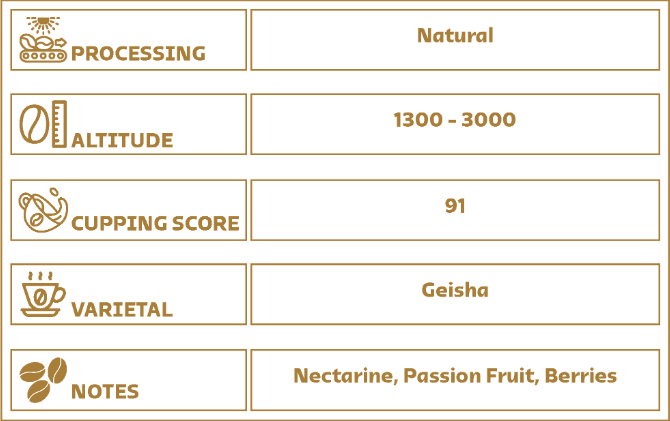 Harvest Octobrer- December
Process : Washed and Natural
World Ranking as producer : 5th
Main Type: Arabica , Native Heirloom Varieties, gesha
Coffee production in Australia dates back to the early 1880s, but the industry has gone through highs and lows, With the more to mechanical harvesting in the last 40 years, new farms have been established to revive the sector, with some producers also starting to plant on Norfolk island of the east coast
Growers plant new varieties Such as Catuai, Mundo Novo alongside with old Typica and Bourbon
Most Coffee Regions in Australia are Atherton : Tablelands, Central and Southwest Queensland, and North New South Wales
The flavor of Australian Arabicas is varied, but often is chocolaty, soft acidic with the scope of fruity notes
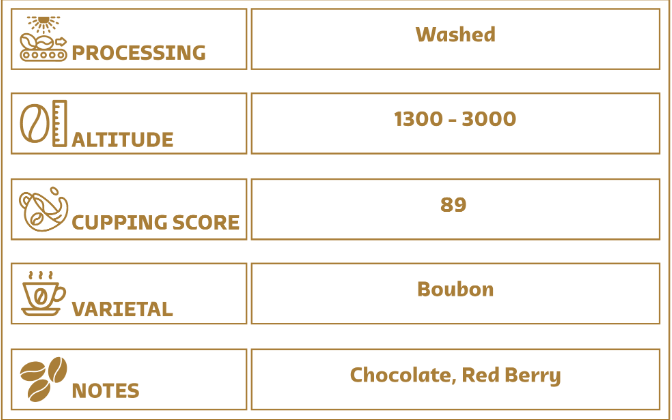
Australia's coffee percentage of the World Market is less than 0.01%
Harvest: June-October
Process: Washed/Natural
World Ranking as producer: 56th
Main Types: Typica, Boubon, Catuai, Mundo Novo
