


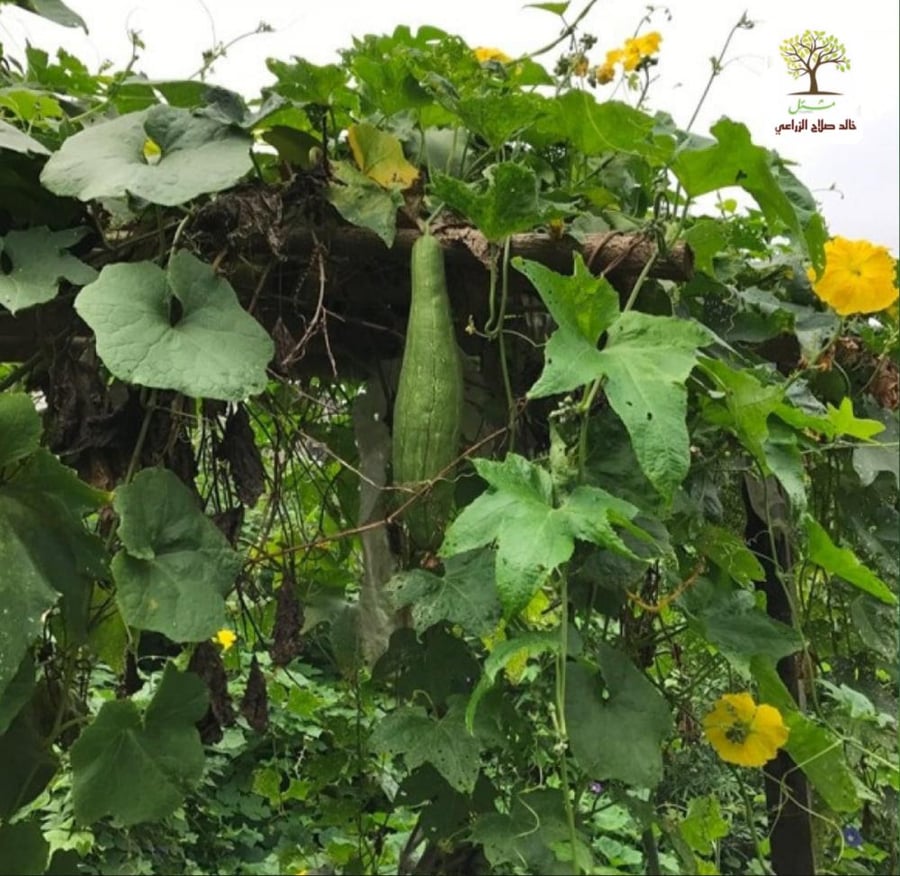
Climbing seedlings of luffa - the luffa
12ر.س
Out of Stock
Product description
Common name: Loofah climbing plant - Scientific name: Luffa
Luffa climbing plant or loofah is a plant genus from the gourd family, with fruits resembling pumpkin fruits. Its flesh is dried and used as a loofah for body cleansing.
Its flowers are yellow, visited and pollinated by bees due to their abundant nectar.
Luffa flowers are bright yellow with a light fragrance that attracts bees.
They contain a good amount of nectar and pollen, making them a good food source for bees.
Male flowers appear abundantly on the plant, are open for a longer period, and are considered more attractive to bees.
🐝 Benefits:
Bees help pollinate the female flowers, increasing fruit production and quality.
Luffa climbing plant, also known as loofah, is a climbing plant from the gourd family. Its dried fruit is used as a natural loofah for body cleansing and skin renewal.
Its small fruits can also be eaten in cooking, and the fibers extracted from them are used to make ropes, while the leaves are used to repel insects.
Uses and benefits of loofah climbing plant:
Skin cleaning and exfoliation: The fiber extracted from its dried fruits helps remove dead skin cells and stimulates blood circulation.
Skincare products: Used in making natural exfoliating tools and natural soap to improve skin freshness.
Rope making: Its strong fibers are used to produce natural ropes.
Food: The small fruits can be cooked and are similar to zucchini.
Pest control: Grinding the leaves is said to help repel insects and animals.
Decor: Can be used to decorate fences and provide natural insulation.
Cultivation care:
Location: Prefers slightly shaded areas but performs better in direct sunlight.
Soil: Rich in nutrients, well-drained, and well-aerated.
Watering: Tolerant of drought but needs regular watering, especially during early growth.
Support: Needs a trellis or fence to climb on.
Propagation: By seeds, with planting during moderate times of the year.
Pests: May be affected by pests such as powdery mildew and mites but is generally resistant.

From Medina
Questions you might have