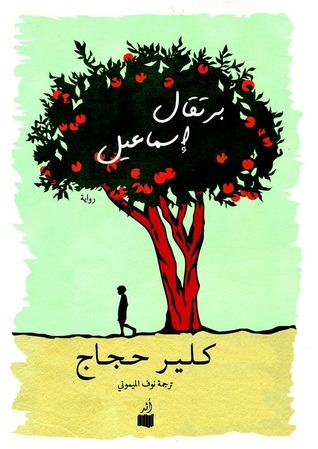
Ismail Orange - Clear Hajjaj
63.25ر.س
Product description
The novel "Ismail's Orange" by the British author of mixed roots, Claire Hajjaj, is a highly sensitive human work that delves into the depths where politics intersects with identity, and love with historical inheritance. The novel is not just a family story, but a brave attempt to approach one of the most tragic moments of the last century through the fate of a single person. Hajjaj redraws that moment not as a conflict between nations, but as the story of a child whose life begins cast between two sides that no one can see in full.
The story revolves around Ismail, the child born to a Jewish mother and a Palestinian father, in a reality where it is impossible for the two names to come together under one roof. Ismail is kidnapped, and grows up in a world that is unaware of half of itself and fed by the spirit of the other half, with his heart still divided between an identity he knows and another that denies him. Claire Hajjaj works on this tornness as if she is pulling a thread between two worlds, keeping her character hanging between a memory she does not possess and a truth she cannot escape from.
In this tension, the novel sheds light on a bitter question: can a person transcend a history written before their birth? The language Hajjaj writes with is calm, imbued with the elegance of English, but carries a clear emotional warmth. She skillfully weaves the details of daily life—not just to tell what happened, but to reveal what the event left as scars on the soul.
Scenes of Ismail’s childhood, the city that grows within him, the smells, relationships, and everything he learns about himself and the world create a narrative fabric in which the reader sees a life built on half-truths and half-silence. Over time, the question becomes not “Who is Ismail?” but “Who allows him to be?”
Ultimately, "Ismail’s Orange" is not a novel about politics, but about the human being who finds himself torn inside a narrative he did not choose to belong to. It is a story about loss that is born before consciousness, and about identity when it becomes a burden rather than inheritance. Although the novel advocates for the human above all divisions, it does not offer solutions but leaves a clear wound:
How does a person live while carrying a half that the other considers betrayal? And what path can lead to peace… when even birth itself is the first battle?

From Dammam