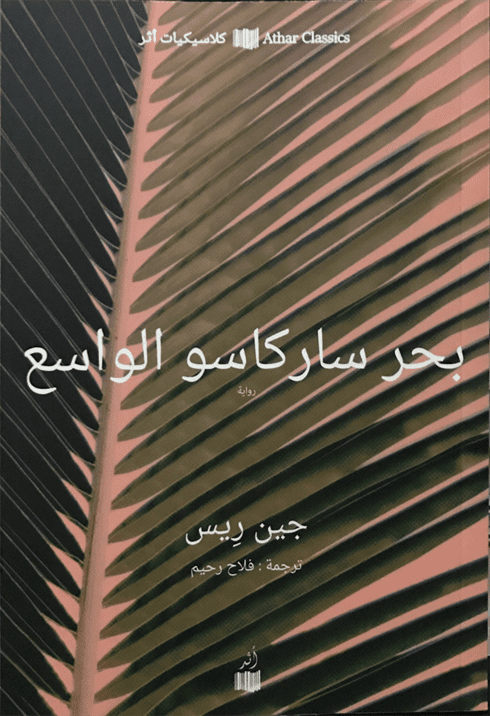
The wide Sargasso Sea - Jean Rhys
51.75ر.س
Out of Stock
Product description
The novel "Sarkasso's Wide Sea" comes as a work that reveals the hidden angle of Charlotte Brontë's novel – "Jane Eyre"; as Jane Rees gives a voice to the woman silenced by the original text, and retells the story from the side that literature ignored for many years. It is not a rewriting, but a revelation of the shadow left by the mother novel, and a restoration of a face that was never allowed to be seen. It is a novel about the suppressed voice, about the woman who was made to be a shadow in others' stories, turning into a ghost. In this work, Rees gives her heroine, Antoinette, space for anger, love, madness, and loss—and makes her speak finally enough to rewrite the legend from her side. The novel takes place in the Caribbean, where Antoinette grows up amid unforgiving natural beauty and an ethnic and social tension that gnaws at homes and families. The place here is not a decor; it is an emotional force that slowly engulfs the characters, just as the sea engulfs small islands. Antoinette, who grows on the edge of belonging, is neither white as Europeans see her nor black as Caribbeans see her; she lives in a gray area resembling an internal crack that widens over time. When she meets the English man who becomes her husband, the real collapse begins: a clash between two worlds, between one language and another, between a woman seeking recognition and a man coming to reshape her according to his fears. Rees's language in this novel is a rare blend of poetry and madness. The sentences are short, shimmering, flowing as if written from within a fever, yet remain tight and driven by deep awareness. It does not evoke sympathy, but imposes it through harsh truth: madness is not an event, but a result of a long series of isolation, fear, and deprivation of freedom. The narration shifts between Antoinette and her husband, between inside and outside, to show how the body itself becomes a battleground between two wills, and how a love relationship can turn into a cage, just a difference in perspective. In the end, "Sarkasso's Wide Sea" is not a novel about madness… but about the injustice called madness so that it is not seen as it truly is. It is a text about colonization when it enters the heart, not the land, and about the woman when she becomes a picture in a man's story, then recovers her voice with late courage. And the question that Rees encourages the reader to confront remains: Was Antoinette truly mad… or did the world make her so because it refused to hear her?

From Dammam