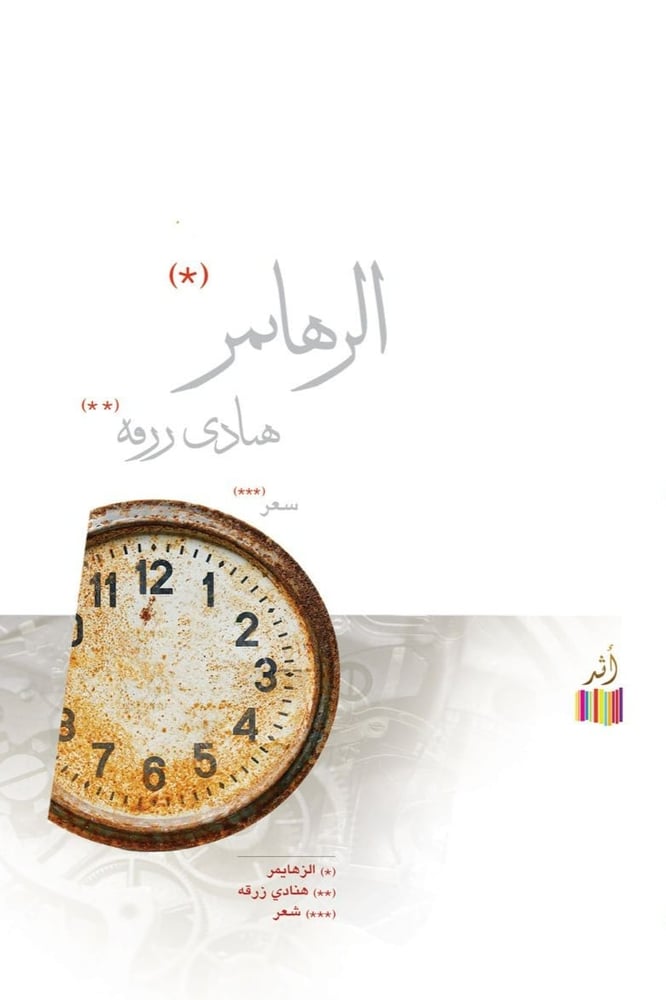
Alzheimer
23ر.س
Product description
Fatima Abdullah - Lebanese writer and journalist, saying about the book: Death is not more painful than accompanying a person to their death, and watching them suffer and weaken without any means to save them. Only at this point does one become kind, with less pain. The mother suffering from Alzheimer, her daughter constantly imagines her dead and practices in the poem her disappearance. In vain, she delays the moment of farewell, touching her proximity, as the death of a person is the same as the death of memory and complete darkness. The poetess is equal to her mother’s suffering in the sense that both are victims of social denial that necessarily accompanies aging and the tragedies of old age and the impossibility of healing. The poetess refuses her helplessness towards her mother, and compensates for it by revealing her state of rejection, and launching the poem towards confession, as an outlet for a possibility—not that her mother will be healed, but she, or at least accepting the idea of healing. She confesses details. Then, empathy with the poem must replace judging and condemning it, and blaming it for colluding with the wound instead of deliberately aggravating it, surpassing it, and paving the way for killing it. Faced with the neglect she received from other children, whose priority was the busyness of life and its demands, they left the mother to the daughter—the poetess—to care for her and learn from her old age; the poem becomes shameless, savage, vengeful, wishing she could end all this, and change the situations: "You will see a clean woman. You will not notice the fungus between her toes. My dreams have been devoured. You will be slightly repulsed by her breath, and just give a kiss on her head, and advise me to feed her well. I will nod in agreement. And quietly continue trimming her toenails, as if I saw no one but fog."

From Dammam
Questions you might have