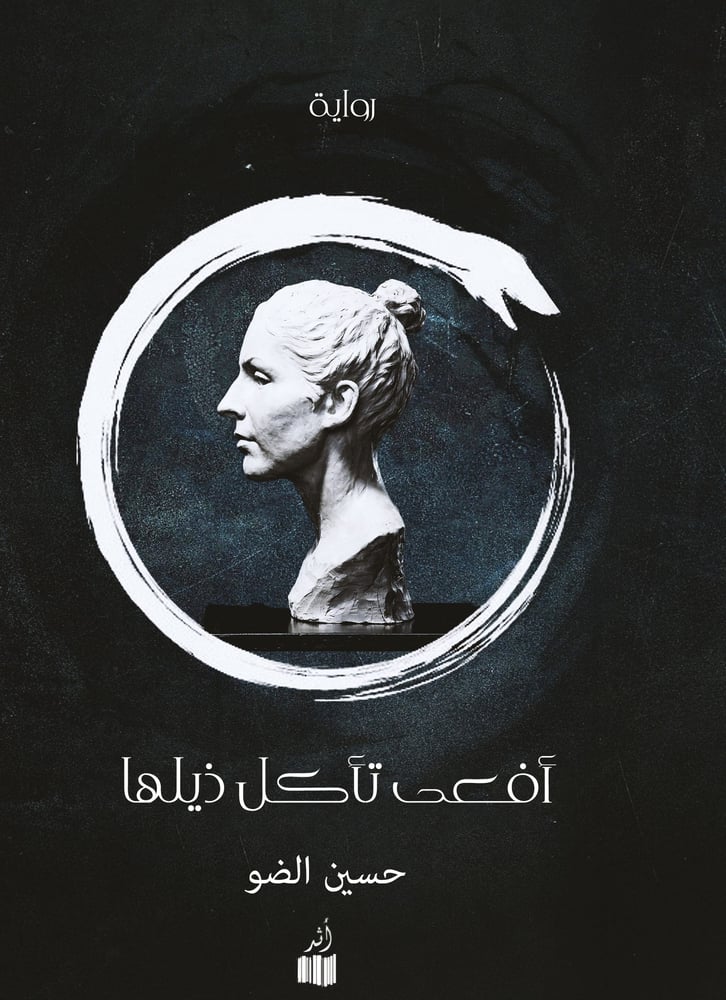
A snake eating its tail
34.50ر.س
Product description
The main event in this short novel is the death of the mother. Although her children harbor hatred towards her, it remains a significant event in a collectivist society that heavily depends on the family institution. Due to this event, the secrets of other characters living in a strange family are revealed, and this event serves as an entry point to explore one of the well-known philosophical ideas called "the unity of the self," which states that there is nothing else besides the mind of the individual itself, meaning it is a cognitive stance that says anything outside the human mind is uncertain. The "snake eating its tail" or Ouroboros is an ancient symbol with many connotations and symbolism throughout history, but what it symbolizes in this novel is self-knowledge through the self itself, immortality, and the endless and repetitive cycle of nature between existence and non-existence. This novella is considered an experimental novel, as it addresses a philosophical topic that Arabic novels have not previously tackled. It also attempts to distance the Arabic novel from repetitive political and social themes, re-establishing storytelling as a purely aesthetic value rather than a social practice. In terms of style and narrative technique, the novel is written in five chapters, each containing 5-7 short segments representing scenes, unified by a theme. This means that the narrative work is not driven by plot but by theme, and this style may be new in Arabic literature but is not unfamiliar in world literature. This novella aims to present a new or pioneering Arab novel that transcends the simple narration easily consumed by the reader, offering a story that stimulates thinking through techniques of omission and not saying everything, in addition to infusing the text with surrealist and bizarre elements that compel the reader to try to form meaning and participate in it.

From Dammam