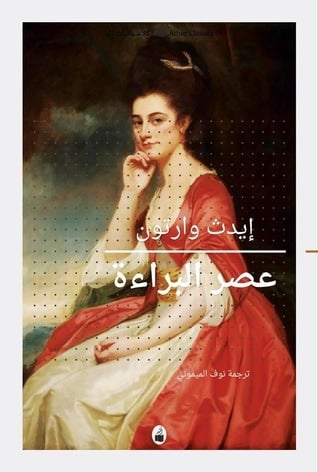
The era of innocence - Edith Wharton
51.75ر.س
Out of Stock
Product description
The novel "The Age of Innocence" by American author Edith Wharton is one of the works that exposes the society of the high class in New York with a skill comparable only to a surgeon's scalpel knowing exactly where to cut. Wharton, the Pulitzer Prize winner— and the first woman to receive it— does not write a traditional love story, but a novel about social secrets, about a network of hidden rules that move people's lives without them seeing the threads. At the heart of this world stands "Newland Archer," a man who considers himself free, but discovers that freedom in his city is a fragile and easily shattered concept. Through his perspective, we see an elegant world whose sophistication hides a deep fear of breaking social norms.
The novel revolves around the emotional triangle that brings together Archer, his fiancée "May Welland," and her cousin "Ellen Olenska," a woman returning from Europe with endless stories, scandals, and whispers. Ellen is not a straightforward rebel, but she has enough courage to reveal the falsehood of a society that values appearances more than truth. Her presence alone causes a quiet earthquake within Archer’s soul, who finds himself torn between his social duty and his desire for an honest life. Wharton does not present this conflict as a forbidden love story, but as a bitter test of how much a person can rebel against the world they have created themselves.
Wharton’s style is captivating and precise, relying on long, deliberate sentences and a satirical narrative perspective that uncovers the hypocrisy of high society without raising its voice. She describes parties, visits, family rituals, and social behaviors with mastery, revealing that "Innocence" in the title is not a truth… but a collective illusion. The characters move as if they are actors on a tightly controlled stage, and every movement exposes the fragility of the norms that imprison their desires. As for Archer, every time he tries to convince himself of stability, he gets closer to discovering that his true loss is not losing Ellen… but losing himself.
In the end, "The Age of Innocence" is not a story about impossible love, but about the price a person pays when choosing submission over truth. It is a novel about the silence that governs high society, and about desires buried under a beautiful rug.
And the question the novel leaves hanging in the reader’s mind is: how many lives have been lost because their owners did not dare to break a single rule?

From Dammam