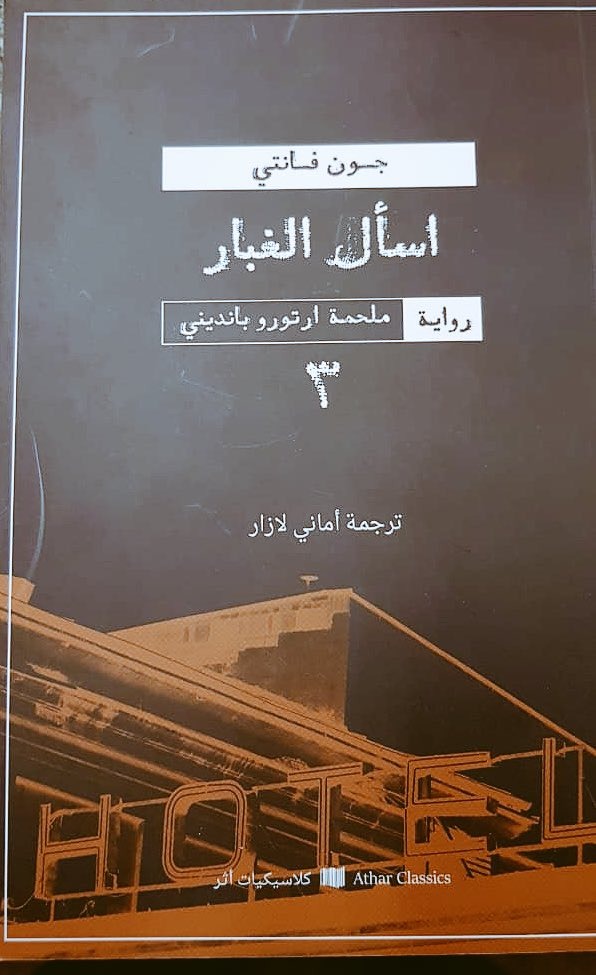
Ask the dust - John Vanty
51.75ر.س
Product description
The novel "Ask the Dust" by American writer John Fante is the third part of the Bandini quadrilogy, which traces the journey of the young writer Arturo Bandini in his pursuit of the American Dream, but at the same time it is considered the most prominent and independent work in the series, as it can be read alone as a self-contained novel, written with devastating honesty and harsh tenderness towards the poor dreaming human. Fante wrote the novel from the heart of his personal experience, making its hero an extension of his soul: a poor immigrant writer in Los Angeles, seeking recognition while being chased by poverty and loneliness. It is not a novel about success, but about the fragility that accompanies ambition, and about the hunger for words and meaning in a world that only hears noise. Arturo lives on the margins of the city, in cheap rooms filled with dust, writing imaginary letters to his publisher more than realistic ones, and falling in love with a Mexican waitress named Camila Lopez — a love as contradictory as his life: violent, sarcastic, full of arrogance and fear. Through this failed relationship, Fante depicts a poetic image of human betrayal, where love and writing become two sides of the same torment. The city in the novel is not just a background, but a living entity that breathes and suffocates; its dust fills the lungs as much as it fills the dream. Fante’s style is unique in its sincere simplicity. Short sentences resemble a broken breath, language that is colloquial yet charged with emotion, written as if shouting and smiling at the same moment. Critics have described him as one of the true fathers of what is known as "dirty realist literature," which later flourished with Bukowski and Kerouac, but he differs from them in his human sensitivity and hidden warmth. Between sarcasm and bitterness, there is a deep tenderness towards the simple human, towards the failures and passersby who possess nothing but their words. In the end, "Ask the Dust" is not a novel about a failed writer, but about dignity in defeat, about those who write despite knowing that dust will cover their names. It is a elegy for the city, for writing, and for the heart that never ceases to hope even as it shatters. So does a person write to survive… or to confess? And can anyone ask the dust without becoming part of it?

From Dammam