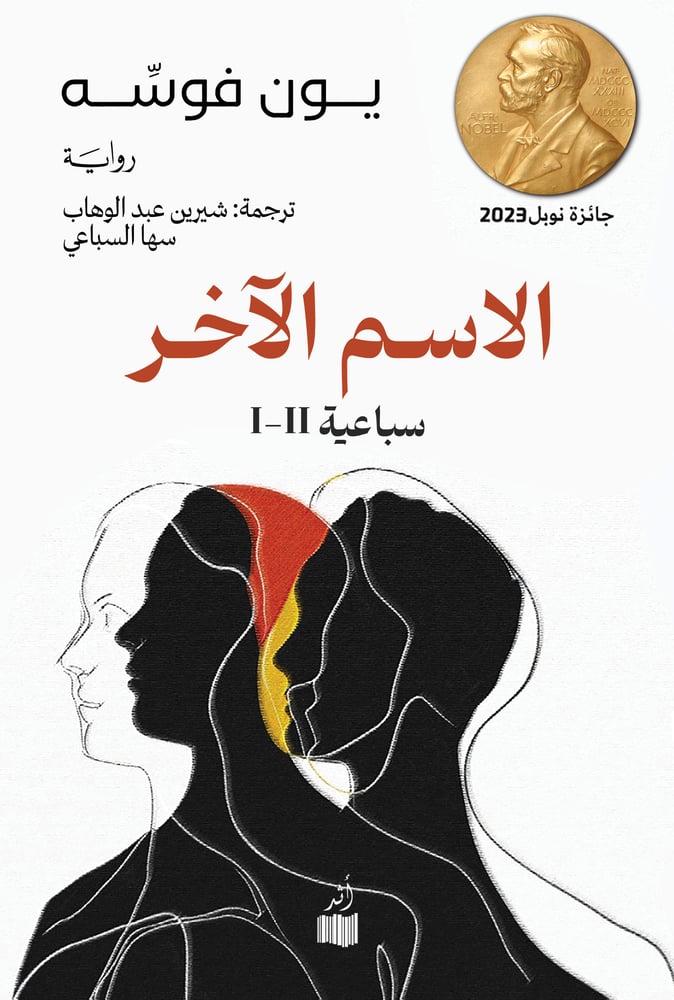
The other name - Yun Fossa
57.50ر.س
Product description
Norwegian novelist Yun Vose — winner of the Nobel Prize in Literature for 2023 in appreciation "for literature that gives voice to what is unspoken" — presents in his novel "The Other Name" (the first part of his seven-part standalone series) a unique literary experience that transcends the traditional narrative form, becoming a long reflection on identity, existence, and faith. The novel gained international recognition after reaching the longlist for the Booker Prize in 2020, and critics praised it as a text that redefines the relationship between consciousness and time, between man and his shadow, with flowing language that knows no pauses and does not stop at the usual boundaries of sentences. The story revolves around Asle, a painter living alone in a small house on the west coast of Norway, where he discovers the existence of "another Asle" living a parallel life he did not choose. Through this astonishing split, the novel becomes a deep internal journey into the meaning of self; the protagonist reflects on his life, his faith, and his sins, while memory intertwines with the present in a linguistic flow resembling waves or long prayers. One critic said the novel "embodies a consciousness that observes itself until the line between the narrator and his shadow is lost," while another described it as "a prose poem about loneliness and art, written with warm, slow breaths as if it were a prayer." Vose's style here is the true hero of the text. Long sentences flow smoothly without boredom, creating a contemplative rhythm that produces an internal music immersing the reader in a state of calm and focus similar to mystical experience. Every small detail — a hand movement, window light, reflection on water — turns into a cosmic event, and each repetition carries a new tone, like a brushstroke on an ever-unfinished painting. Through this technique, Vose makes the reader live the journey not as a story, but as a test of time, memory, and spirit. "The Other Name" is not just a novel, but a profound existential experience that returns the reader to the core of literature itself: how words can approach silence without breaking. It is a text about man in his solitude, about an attempt to reconcile with the mirror reflecting him twice: once as he is, and once as he fears to be. Are we truly what we see? Or are we, as Vose says, "the other name" for ourselves in a life we did not choose?

From Dammam
Questions you might have