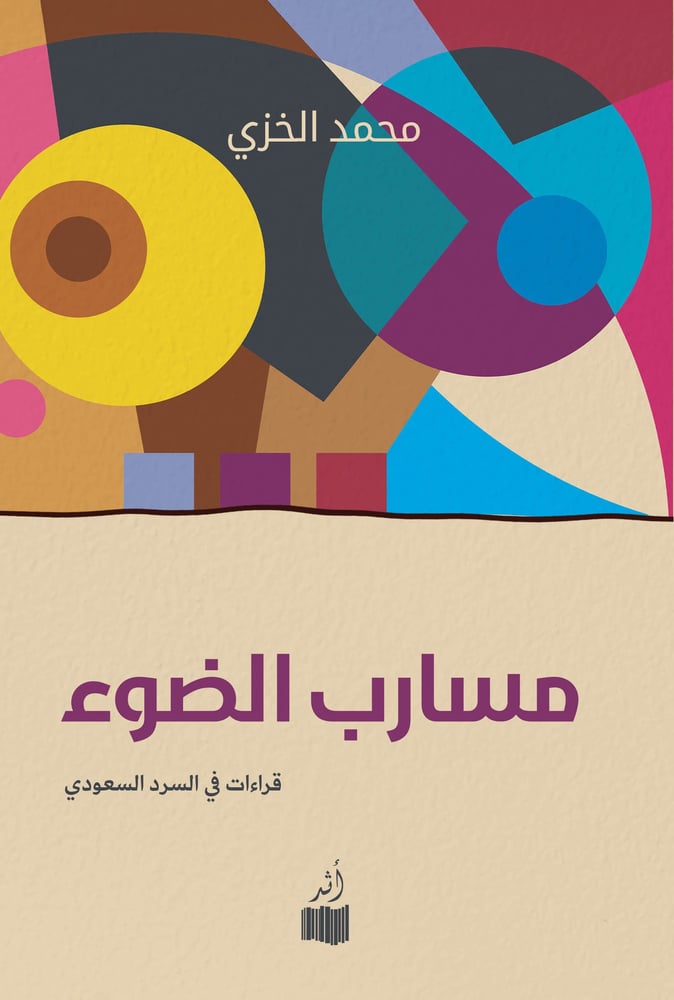
Light channels - Muhammad Al-Khuzay
40.25ر.س
Product description
The book "Light Passages: Readings in Saudi Narrative" by Dr. Muhammad Al-Khuzay is a precise academic critical work that seeks to explore the aesthetic and intellectual structure of contemporary Saudi narrative through an analytical approach combining semiotic, narrative, and anthropological methodologies. The book is published by Dar Athar in 2025, adding a significant reference to the Saudi critical library for reading short stories and novels within an integrated cognitive framework. Al-Khuzay starts from the hypothesis that Saudi narrative no longer suffices with describing reality or reproducing it, but has become a tool for reshaping the self and its relationship with the world. Therefore, "Light Passages" traces multiple paths in the narrative discourse, including representations of the self and the autobiographical pact in women’s novels, transformations of place and time, and the engagement between the referential and the imaginary. The book especially highlights its analysis of the works of writer Oumaima Al-Khamees, through the concept of “open referential space,” where the real place transforms into a narrative space that re-produces history and memory from an feminine perspective that transcends documentation toward the aesthetic and interpretive. What distinguishes this work is its balanced methodology between precise textual reading and theoretical accountability. The author does not merely apply modern critical approaches but questions them in light of local cultural specificity. Through analyzing temporal vocabulary and semiotic meanings in short stories, Al-Khuzay reveals the problematic of time as one of the major axes in modern Saudi narrative — a time where human existence intersects with social and intellectual transformations. This analytical and semiotic effort grants the book an accurate documentary dimension, without losing its interpretive depth. In conclusion, "Light Passages" constitutes a mature critical contribution to the project of reading Saudi literature within its broader human and cognitive context. It is a book that balances academic analysis with literary taste, affirming that criticism is no less creative than the narrative it studies. Can critical reading truly open "light passages" in closed texts? Or is the light, as the title suggests, only visible when passing through the shadow?

From Dammam