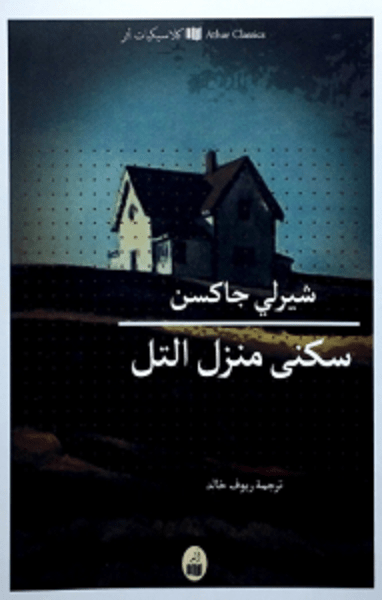
My residence at the hill house - Shirley Jackson
40.25ر.س
Product description
The novel "The House on the Hill" by American author Shirley Jackson is one of the pillars of psychological horror literature, a work that relies not so much on ghosts as on human fragility when placed in a setting that amplifies their fears. Jackson, who is famous for her ability to depict anxiety and isolation in an unforgettable way, presents in this text a haunted house not only filled with sounds and shadows but also with the possibilities created by a mind cracking internally. From the first moment, it becomes clear that the horror here is not entirely external; it is a direct extension of the wounds carried by the characters. This is what makes the novel one of the most impactful works in the entire genre. The story revolves around a small group summoned to explore the Hill House, among them Eleanor Vance, a fragile woman desperately seeking belonging, who finds herself responding to the house in a way others do not understand. The house does not attack her outright, but it whispers, observes, and invites her as if it knows what she lacks. Jackson builds the relationship between Eleanor and the house as if it were a mysterious connection between two entities feeling the same loneliness. Every room, every winding corridor, every dark corner becomes a new test of her resilience. The novel skillfully shifts between the realistic and the imaginary, leaving the reader unsure whether the events are caused by the house… or by a woman’s mind on the verge of collapse. Jackson’s style in the novel is calm but charged. The sentences do not scream; they creep inward slowly, creating a fear that accumulates unnoticed by the reader. Small scenes—an unexplained laugh, knocking on a wall, a door opening without reason—carry a psychological weight greater than any chase or explicit violence. Over time, it becomes clear that the house is not just a sinister building but a living entity that feeds on the weakness of its visitors and carefully chooses its victims. This focus on the interior makes the horror here a reflection of the self as much as an external threat. In the end, "The House on the Hill" is not a story about a haunted house but about a person haunted by their own fear. It is a text that reveals the fragility of the soul when searching for a place to belong, even if that place is capable of swallowing them whole. And the question that haunts the reader after the closing remains: Did Eleanor choose the house… or did the house choose her from the beginning?

From Dammam