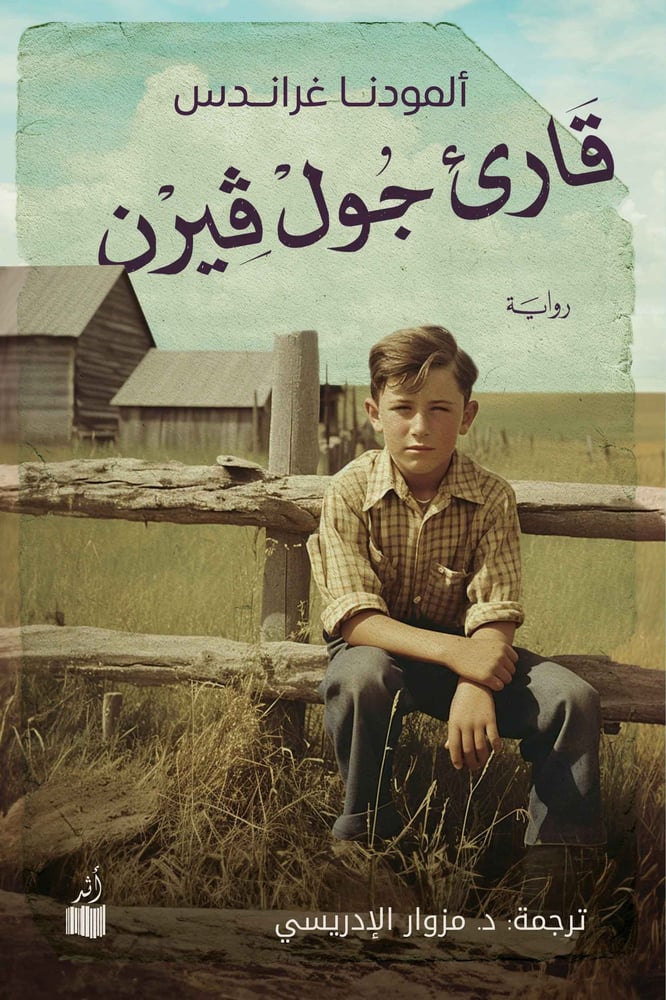
Jules Verne Reader – Almodna Grandes
57.50ر.س
Product description
Almodina Grande is considered one of the pillars of contemporary Spanish literature, and a literary voice that remained faithful to the idea of reopening the wounds of Spanish history through storytelling. Her works have gained widespread presence within her country and abroad, to the extent that critics regarded her as one of the most important chroniclers of the psychological and social impact of the Francoist Civil War on ordinary people. Her novel "The Reader of Jules Verne" is the second part of her famous series "Episodes of an Unending War," a large separate fictional series. It elevated her to the ranks of great novelists, as she restructured collective memory through captivating literary language.
The novel takes us to southern Spain, to a small village in Andalusia in the early 1950s, where the boy "Nino," son of a Civil Guard officer, lives a double life between a harsh reality imposed by political repression and another world opened up by his discovery of Jules Verne's books. Through a mysterious friendship with "Pipi the Portuguese," who lives in the mill surrounded by an aura of secrets, Nino begins to pay attention to what is left unsaid in the village: about the fighters still in the mountains, and about the silence of the elders filled with fear and memory. Reading here is not just a hobby, but a gateway that allows him to understand himself and the world around him, and grants him a new language to question his confusing reality.
Grandi's language is solid and expansive, characterized by psychological richness and slow development that gives the reader the opportunity to become fully involved in the characters' destinies. She narrates the relationship between Nino and books as a process of rebirth: when he reads Jules Verne's adventures, he does not see mere imaginary worlds, but finds a reflection of his personal journey between fear and curiosity. Even the small library he discovers in the novel becomes a refuge, a place where questions about freedom and justice are born, and where writing and reading turn into symbolic weapons to confront a suffocating reality.
With these layers, the text succeeds in being both an educational novel and a historical document, where individual consciousness emerges on the edge of collective awareness. Ultimately, "The Reader of Jules Verne" does not appear to be just a work about childhood during wartime, but a text about the power of literature in facing repression, and about the ability of imagination to give survivors a chance to survive. Can a child living under dictatorship find in books a path to freedom? And can literature be a refuge that restores what politics has corrupted?

From Dammam