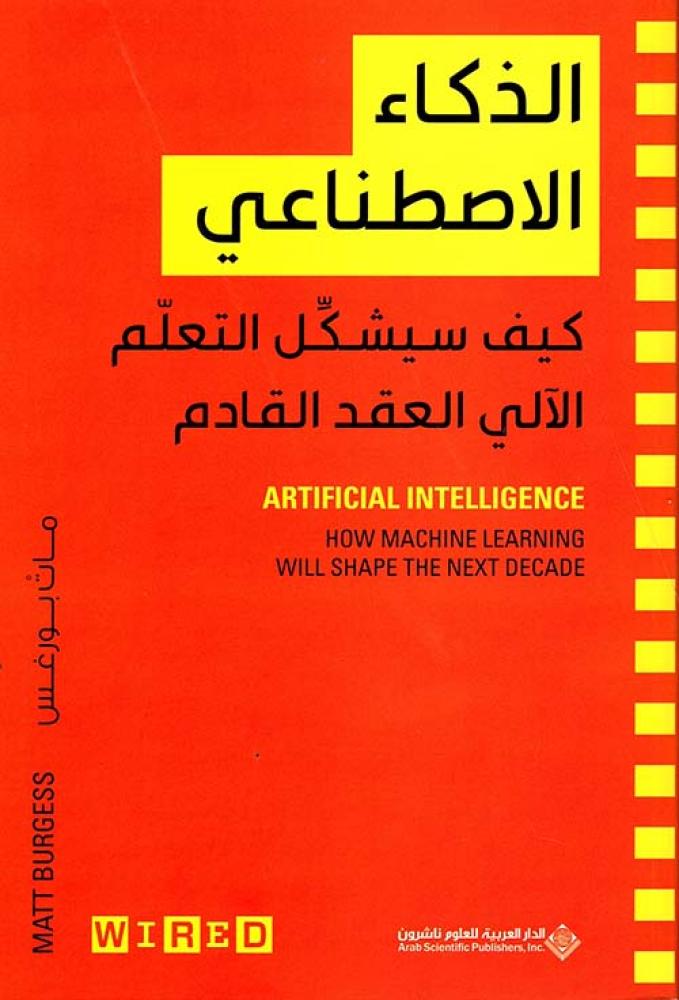
How artificial intelligence will shape machine learning contracts
34.50ر.س
Product description
The past decade has witnessed extraordinary developments in the field of artificial intelligence, but what exactly is it and where does its future lie? Under the title "Artificial Intelligence: How Machine Learning Will Shape the Next Decade," the journalist at Wired magazine, Matt Burgess, explains everything you need to know about artificial intelligence, starting from its early years and tracing the stages of its software development in specialized scientific research. He then moves on to define its terms, fields, applications, and their impact on various aspects of our lives, such as voice recognition programs that can be used to conduct conversations similar to human dialogues. Passing through computer vision and natural language processing, which are currently the fields where artificial intelligence excels because they focus on trying to replicate human behavior, i.e., the ability to see and understand the world around us and the ability to interpret and reproduce dialects accurately. Thanks to new massive datasets and even trillions of data points, both are making great strides forward. The book also provides insights from research on autonomous vehicles, which are expected to be widely used in the future, and explores the relationship between artificial intelligence and the world of work, questioning whether artificial intelligence can ultimately replace humans or not.
Thus, the book delves into every related field of knowledge to explore the potential of artificial intelligence to bring about further revolutionary change in almost every aspect of our daily lives, including healthcare and learning. Like all technologies, there are positives and negatives to what artificial intelligence has achieved so far and what it might achieve in the future. Therefore, the book clarifies the dark side of machine learning: surveillance, forgery, hacking susceptibility, tendency to discriminate against certain groups, and potential misuse by governments. The fundamental question posed is: can machines become as intelligent as humans?

Questions you might have