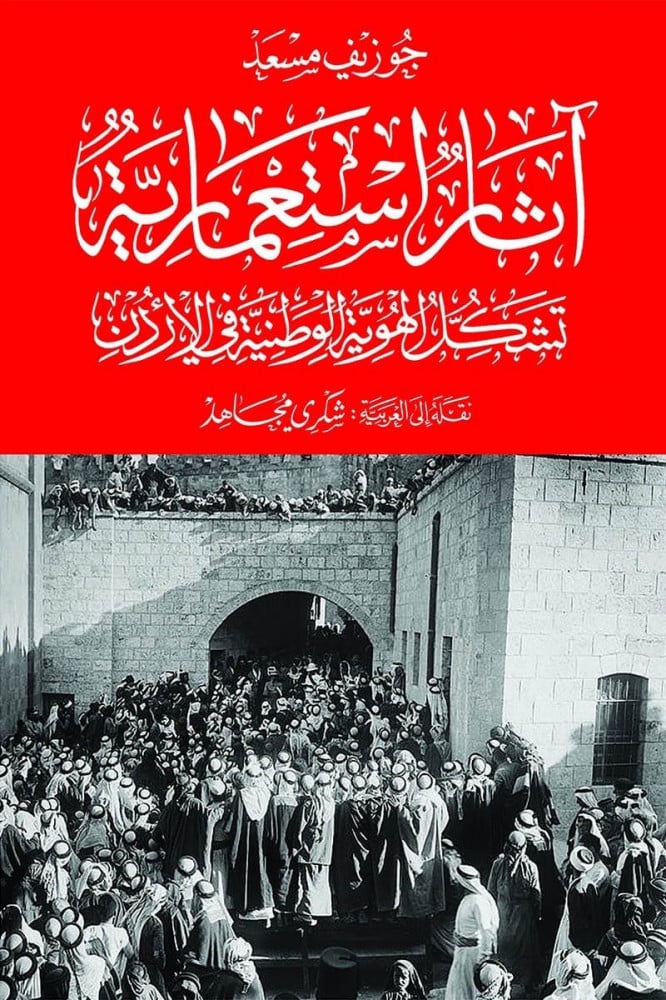
Colonial آثار: The formation of national identity in Jordan
81.94ر.س
Product description
This study aims to trace the process of producing national identity and culture within Jordan as a post-colonial, stereotypical, and non-stereotypical nation-state at the same time. Modern nationalism studies describe the concept of homeland or nation as a "invention" or "imagination" of intellectuals and/or political elites who produce or are produced by the political nationalist discourse. But my interest in this study is more focused on investigating the role of institutions in producing national identity and culture in the colonial and post-colonial context, specifically analyzing two main state institutions: the legal institution and the military institution, to examine their contribution to the production of the homeland. I wonder: do these two institutions contribute to defining the members of the people as "citizens"? Do they have any role in producing ideas and practices that work to form "national culture"? And my aim in posing these questions, and others related to them, is not to present a general or universally applicable theoretical model for studying nationalism, but to offer a general research approach that can be applied broadly...
Joseph Massad’s work, "Colonial Effects," demonstrates sharp and brilliant intelligence, not only due to his deep insight into Jordan’s history and culture but also because of his exceptional skill in utilizing the extensive material he relies on. It is rare to encounter pioneering books; this one is among them. Edward Said wonders how a national identity can emerge in a country largely inhabited, governed, and settled by strangers. Massad’s precise and meticulous analysis of how cultural policies and coercive power interact is a creative and important contribution to the field of political theories of national studies. Timothy Mitchell considers it a distinguished addition to the field of anti-colonial nationalism studies — distinguished because it focuses not only on culture but also on law and the military institution. We welcome this book, which reminds us that the modern nation-state must be both oppressive and productive at the same time. Partha Chatterjee states that Massad’s book will occupy an important place in the historiography of modern Jordan, not only because of its uniqueness and pioneering subject but also because of its remarkable comprehensiveness. It is an open book that encompasses politics, history, society, and popular culture in the broadest sense of the word… It is a truly great book. Khaled Al-Haroub, Al-Hayat Newspaper, April 20, 2003.
