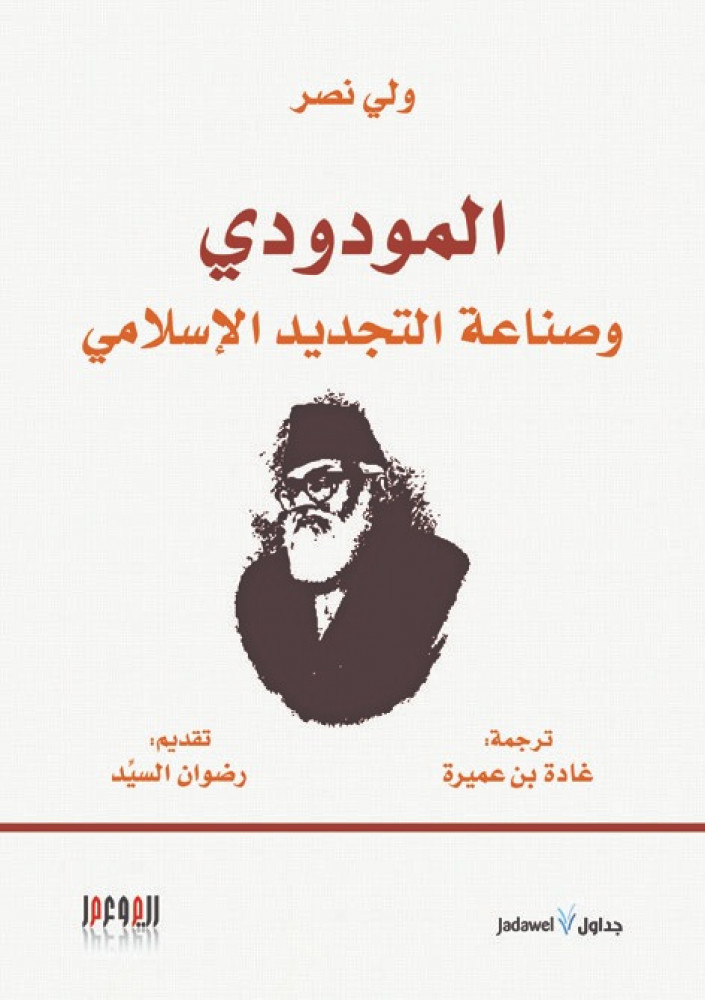
Al-Maududi and the making of Islamic renewal
65.55ر.س
Out of Stock
Product description
This book originally is the thesis of the author for the doctorate in 1994. Walid Sayed Nasr is now a prominent political scientist and dean of the College of Political and Strategic Studies affiliated with Johns Hopkins University, and is considered one of the specialists in Middle Eastern politics and culture, as in addition to his academic background, he is of Iranian origin, emigrated, and his father, the philosopher Sayed Nasr, moved to America after the Iranian Revolution of 1979. The author investigates in this book, through a long field and research journey, the biography of Abu Al-Ala Al-Maududi; one of the most prominent theorists of political Islam, whom the author sees as the father of political Islam and the most influential, not only in the Indian subcontinent but even in the Iranian Shiite sphere through Khomeini, and in the Arab Sunni sphere through the influence of Hassan al-Banna and the Muslim Brotherhood with his comprehensive ideas early on as translated by Abu al-Hasan Al-Nadwi. The movement of Maududi before and after the separation of Pakistan is what this book attempts to explore, as it depicts Maududi's personality with an objective academic tone that is not devoid of some surprises, including highlighting Maududi's pragmatism and his fluctuations throughout his political movement. For example, the author narrates that Maududi wrote a laudatory book about Gandhi in his youth, and he also narrates his other fluctuations before and after the founding of Jamaat-e-Islami, hinting that his formation was closer to a journalist than a scholar, which agrees with what Fazal Rahman Malik said, justifying his departure from Pakistan after the harassment by Maududi and his followers, saying, "A scholar cannot defeat a journalist." In this context, the author sees that Maududi was influenced by some ideas of Indian Salafism and was not familiar with the writings of the Salafi Najdi الدعوة (the الدعوة of Ibn Abd al-Wahhab).
