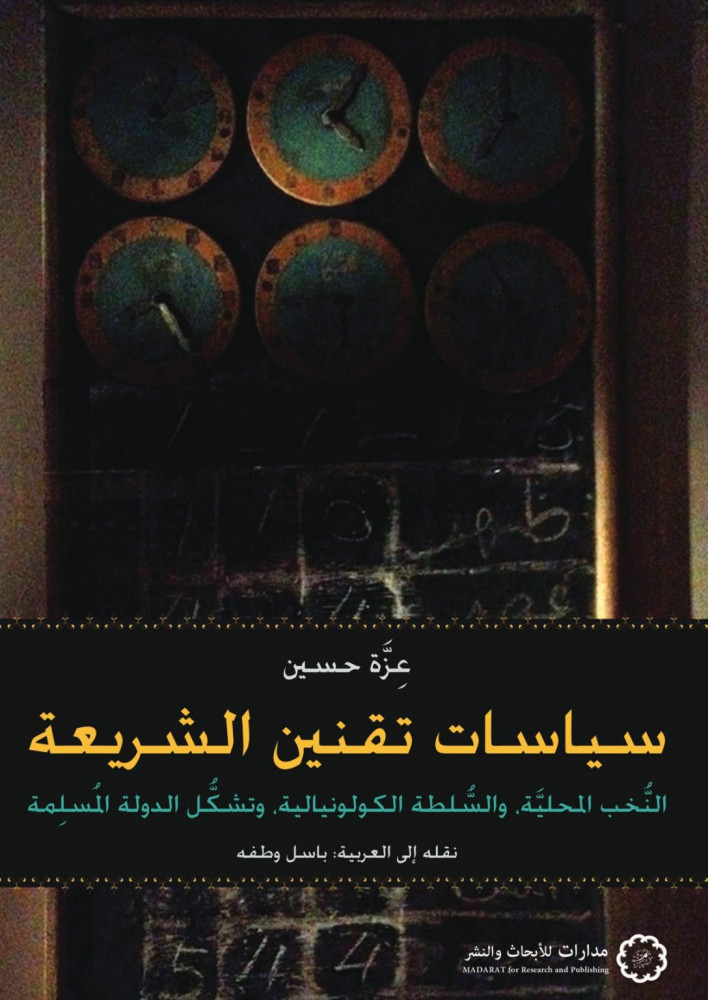
Policies of Islamic law regulation
81.94ر.س
Out of Stock
Product description
How did modern Muslims respond to the challenges created by confronting colonialism at the level of the relationship between Sharia, law, and the state? In this book, Azza Hussein, Professor of Politics and Law at Cambridge University, compares India, Malaysia (contemporary Malaysia), and Egypt during the British colonial era, in order to trace the impact of the formation and transformation of the modern form of "Islamic law." Hussein clarifies that Islamic law is not only the Sharia, but also an existing institutional structure, substantive content, symbolic vocabulary, and a relationship between the state and society; in short: it is policies built through institutions that emerged in the context of confrontation with colonialism. This book aims – therefore – to present a genealogical account of contemporary Islamic law, or the "hybrid" of contemporary Islamic legal systems, and to analyze the elite negotiations regarding religion, the state, and society during the British colonial period from a political perspective, as well as to historicize the circulating Islamic approaches to law, the state, and identity. The book also includes discussions on secularism and colonial and Muslim modernities, as well as analyses of the emergence of law as an instrument of control, and other debates related to intense discussions prevalent in Islamic studies, comparative law, history, and comparative politics. These debates raised questions about how state authority was established and maintained, how law moved from one context to another, the possibility that Sharia remains a living reality in the modern Muslim state, the central dilemma of Islamic law, and the restriction of Sharia to family laws and rituals, as well as how transformations in the Muslim state produced the framework through which Islam is expressed today.
