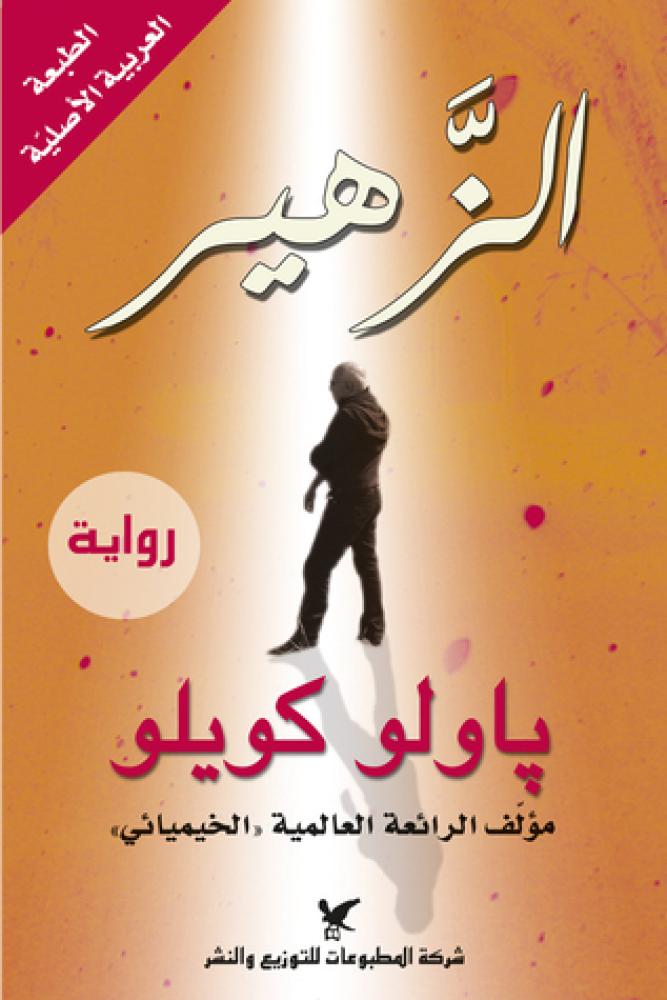
الزهير
34.50ر.س
Product description
Her name is Esther, she is a war correspondent who just returned from Iraq due to the imminent invasion of that country, in her thirties, married, with no children. He is an unidentified man, between twenty-three and twenty-five years old, with dark skin, and features similar to Mongolian people. Both were last seen together in a café on Rue Foubour Saint-Onore. She told the police that they had met before, but no one knows how many times: Esther always said that the man, whose true identity she concealed behind the name Mikhail, was very important, but she never explained whether it was important for her work as a journalist or for herself as a woman. The police began an official investigation, proposing different theories – kidnapping, extortion, kidnapping leading to murder – none of which exceeded the bounds of possibility, because Esther, through her work in seeking information, was subject to repeated contact from people linked to terrorist groups. The police discovered that in the weeks prior to her disappearance, there had been regular withdrawals of money from her bank account, and the investigators felt that this money might have been payments made in exchange for information. She did not take any change of clothes with her, but it was strange that her passport was not found. He is an unknown young man, in his early age, with no criminal record, no indication of his identity. And she is Esther, in her thirties, a two-time international journalism award winner, and she is married. She is my wife. As usual, Culeio begins his story with innocence: a famous writer, abandoned by his wife without any reason... and instead of continuing his life with a substitute, he is overwhelmed by a single obsession that disturbs and preoccupies him: "Why did my wife leave me?" After that, nothing remains innocent: a cascade of deep philosophical ideas descends. Ideas that have occupied and still occupy all humanity: how a certain obsession suddenly stands in front of a person, dominates him so that it becomes everything, and nothing else. And how war, only war, exposes hidden human feelings and takes them to the furthest extent. And how a set of inherited values that a person believes in enslaves him, dedicating himself and what he has, and what he does not have, for their sake, and they become the justification for his persistence and struggle. And he can no longer stop to ask: does he feel happiness or not? In the end, the author wears the cloak of the wise man, who wants us to see and not just look; he pushes his readers to answer the questions he once faced and answered. It is a novel about psychological liberation.

Questions you might have