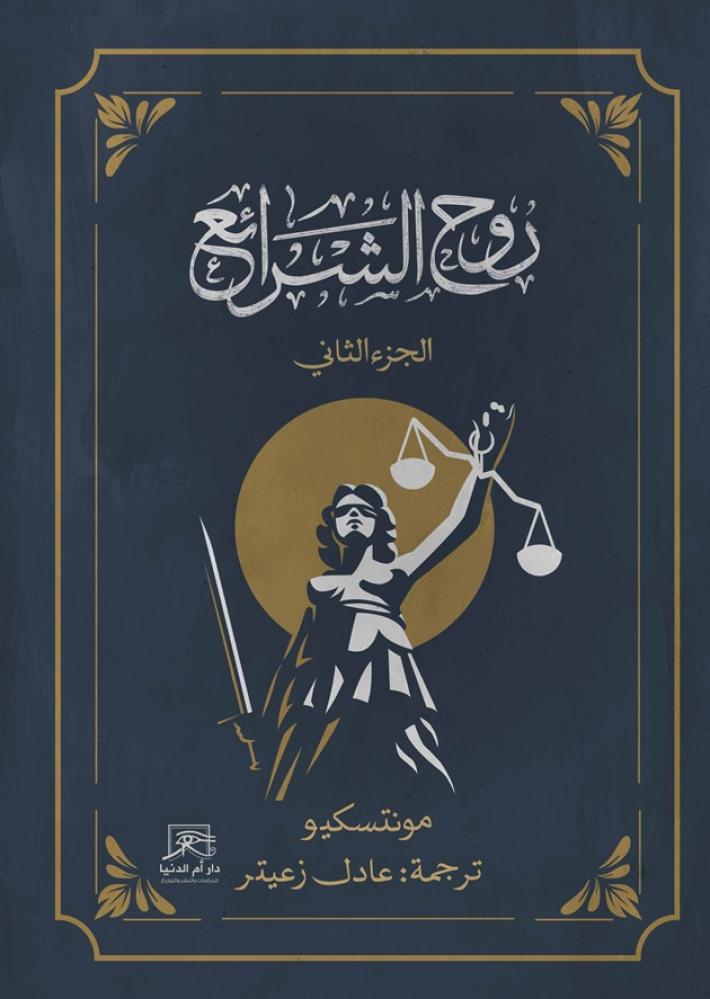
The soul of the Shariah - Part Two
20ر.س
Product description
No one studied law in the European Renaissance in such precise and astonishing clarity and boldness and insight as Montesquieu, for he explained in his book "The Spirit of the Laws" the known systems of government, criticizing them by differentiating their types: monarchy, in which the ruler inherits power from the predecessor; dictatorship, in which power returns solely to the ruler without legal limits, and he always consolidates his rule through terrorizing civilians; and the third system, the republic, in which the people govern through representatives chosen according to a mechanism that ensures their ability to dismiss and hold them accountable, and the republic is the best system of government from Montesquieu's point of view. Because any system of government should aim to guarantee human freedom, and for that, the three powers must be separated: executive, legislative, and judicial, and also maintain a balance between them. Montesquieu, in his book, redefines virtue and honor, placing these meanings within the framework of the republic and linking their significance to politics. "Virtue" in his view in the republic means love of the homeland, i.e., love of equality; it is not a moral virtue, but a political one.
