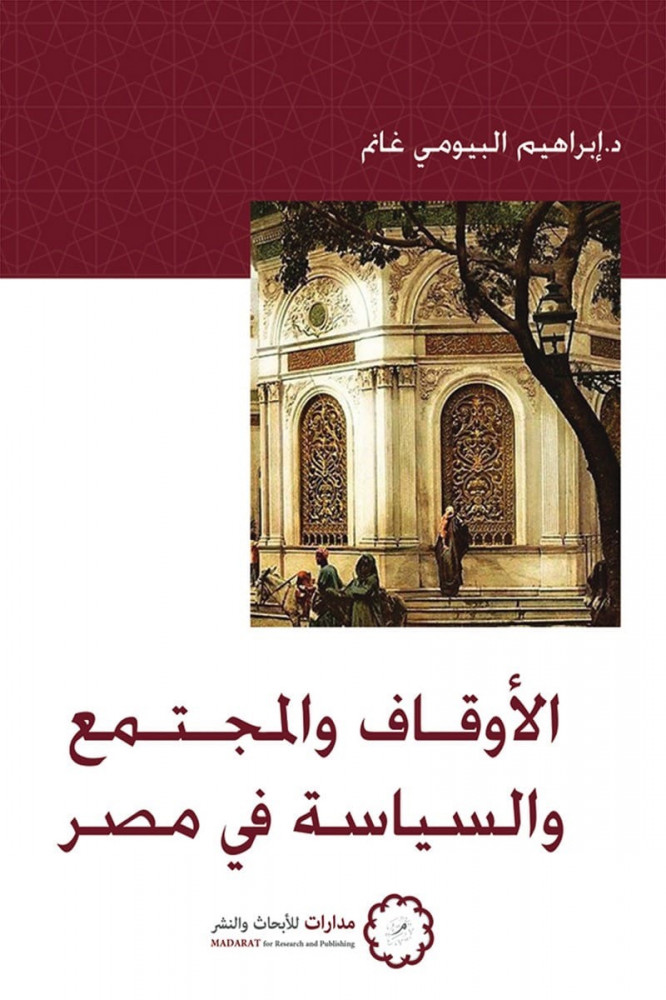
Endowments, society, and politics in Egypt
49.16ر.س
Product description
This book studies the relationship between society and the state in Egypt over the past two centuries from the perspective of charitable endowments, considering them as a tool used by traditional Islamic society to meet its needs and build a common space between it and the ruling authority, which relieves it of burdens and limits the ability of the authority to interfere in its affairs, thus opening up a wider space of freedom outside the horizon of the ruling power and its orientations. Through examining thousands of freed endowment arguments in Egypt, government documents, parliamentary records, as well as theoretical and Sharia sources of endowment jurisprudence and rulings, the book depicts a detailed picture of the relationship between the state and society in Egypt over the past two centuries, within the framework of Muhammad Ali’s modernization project and his successors, which aimed — through building the modern state in Egypt — to tighten control over traditional society and gradually intervene in all its affairs by controlling its ability to meet its needs. The book also clarifies that endowments were one of the traditional tools of resistance against Cromer’s project in Egypt, through attempts to provide services neglected by the occupying government, and thus reviews the role of endowments in Egyptian national work before July 1952, as well as the gradual attempts by the Egyptian state to limit endowments, the cultural trends supporting and opposing this, both, leading up to the painful story of the Egyptian state's control over endowments and its suffocation after July 1952. This edition of "Endowments, Society, and Politics in Egypt" differs fundamentally from its previous one; not only because this edition is revised and equipped with a number of historical "documents" published for the first time, but also because it is issued at a time when the issue of endowments in the Islamic world has become a matter of interest for governments, civil society institutions, researchers, academics, scholars of jurisprudence, legal experts, and members of parliamentary councils.
