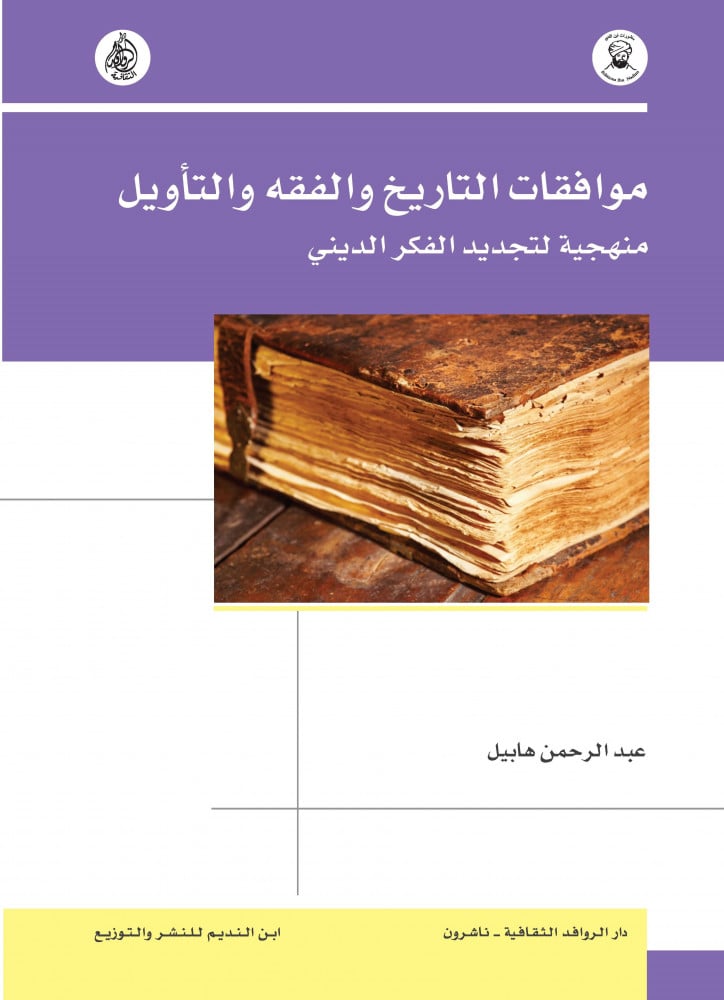
Approvals of history, jurisprudence, and interpretation
61.46ر.س
Product description
What is the secret of the grammatical and structural difficulties in a number of Quranic verses? Why do some of these verses resist parsing rules and even a minimal agreement on the concept of the verse and what can be inferred from it of rulings? Even considering the nature of sacred texts in general and the Quranic style in particular, many Quranic verses remain that their reading difficulties can only be explained by assuming that they are intended in themselves to refer to an interpretive principle embedded in the core structure of the texts themselves. Why is it impossible to agree on a convincing parsing of the word "الصابرين" in Al-Baqarah 177? or the phrase "المسجد الحرام" in Al-Baqarah 217? or "الصابئون" in Al-Ma'idah 69? And how can the word "المحصنات" have three meanings in the same women 25? And what led "Patrisha Cron" to think that "the Book" in An-Nur 33 is nothing but a marriage contract and not a freeing contract? And how did "Joseph Schacht" imagine that jurisprudence deviated from the explicit text of Al-Ma'idah 6 regarding the feet in ablution? Why are there verses separated from the rest of the verses dealing with the same topic in the same surah, while phrases and expressions found in these verses are repeated in previous verses related to the same rulings, such as Al-Baqarah 240 and 241 on one hand, and Al-Baqarah 234 and 236 on the other? Moreover, how is it that Women 176 appears at the end of the surah while Women 11 and 12, which are related to inheritance, come before it, while it is difficult to find a ruling in Women 176 that is not present in the previous two verses? And why do we observe the same phenomenon of repetition in other verses whose rulings are difficult to reconcile, such as the fasting verses (Al-Baqarah 184 and 185), and the purity verses (An-Nisa 43 and Al-Ma'idah 6)? Why do we also read in Al-Baqarah 177 "not righteousness that you turn your faces toward the east and the west" and find in the same verse that establishing prayer is part of righteousness? And how can each nation have "a law and a method" and the Book be "overseeing" them in Al-Ma'idah 48? And from where do zakat come for men who glorify Allah "morning and evening" and "are not distracted by trade or sale from the remembrance of Allah" in An-Nur 36 and 37? These are some of the evidences from which this book begins its discussion of the claim of the absolute nature of individual texts and reveals their danger in establishing extremism and hindering the renewal of jurisprudence, and calls for returning to the "definitive" consensus of the eight schools in acts of worship, and the "regulated" objectives inferred from the interconnected texts and the consistent reasons in non-worship matters, within the framework of the proposed project based on acquiring a historical perspective and restoring an interpretive vision.
Dr. Abdulrahman Habel: Former Libyan Minister of Culture
