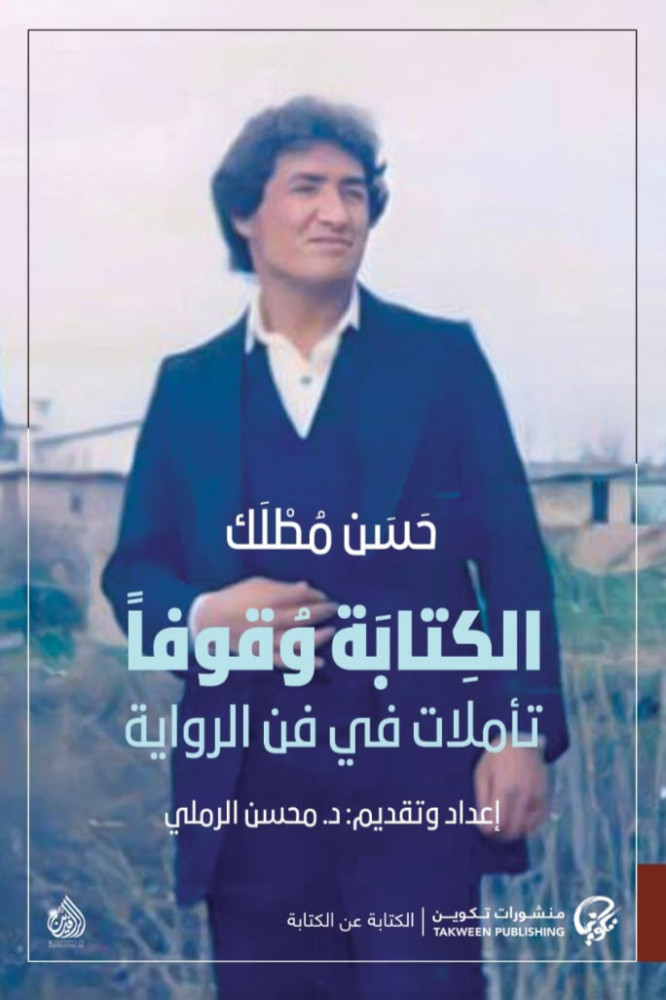
Writing standing: reflections on the art of the novel
49.16ر.س
Product description
Hassan Mutlak began with this book after he finished his well-known novel Dhabada, and he did not complete it because his life ended with his execution by hanging, and undoubtedly his experience of rewriting (Dhabada) five times is what pushed him to reopen questions related to literature in general and the novel in particular. "What is prose writing? Why do we write? Who is the true writer? What is the purpose of literary writing? How can perceptual connection be made between life in the text and life as it is? For whom do we write? Who is the reader? What is reading?" "I aim to reach a science of the novel through understanding its details. When, how, and why should I use this sentence, and in relation to which time?" So he would record his thoughts, read, and discuss others' ideas, alongside continuing to write his other texts, including his novel The Power of Laughter in Ora. He is preoccupied with honesty with oneself and with writing, for he says: "I and writing are one thing." And through this book, he demonstrates this to us: "If it were about language problems and its complex system, we could find dozens of logical measures exposed by the efforts of Saussure and others, but it goes beyond that to the vital act of writing — that our lives are consumed solely by the problems of the (novel)." "The true novelist is the one who places literary possibilities and solutions for his life, for his wife's behavior, knocks on the neighbors' door like Zorba, loves like Petchorin, and finds it difficult to separate what he writes or reads from what he lives." What he recorded appears as an introduction to what he hoped to establish — (absolute realism), announcing what he called: "A personal project against the literary methods of the nineteenth century." He describes what he did as "Reflections" based on awareness and consciousness, saying: "I hope my reflections are subject to disproof, yet I will not reject support." And these reflections deserve our serious contemplation and discussion.

Questions you might have