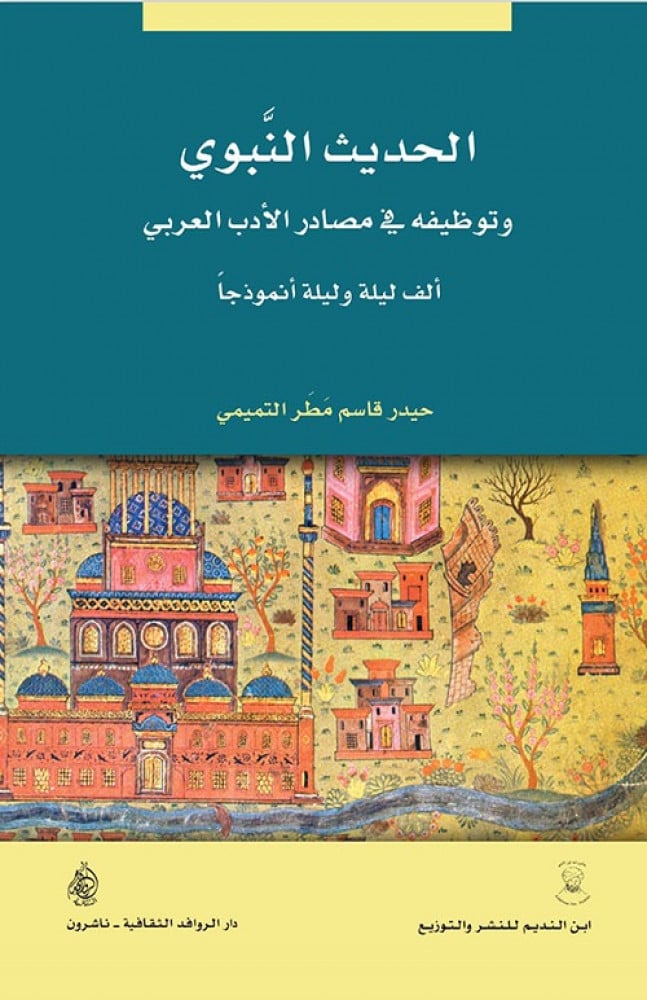
The Prophetic Hadith and its employment in sources of Arabic literature - One Thousand and One Nights as a model
43.13ر.س
Product description
So we directed in this book the focus in our study of modern knowledge, examining what Mashallah I examine, trying to find the gap that deserves filling, while I was tracking the ways of knowledge in this field, and what happened in it of communication and connection; through scientific journeys between the East and the West that led to importing a group of pioneering books and research in this field. While I was in this field, I found myself drifting to the literary side, trying to grasp its features, explore its depths and innermost parts, so I followed the material of the Hadith in it, and I found that it does not conform to a specific system nor is it based on a single methodology. It draws from the Hadith material wherever it agrees, as long as it is its target and purpose. And it is not hidden what this approach entails of hardship and danger; because it is related to the side of the Prophet (peace be upon him), whom we have been warned about the consequences of lying against him, and attributing false sayings to him. Muslim narrated in his Sahih that he (peace be upon him) said: “Whoever narrates from me a hadith that is seen as a lie, then he is one of the liars.” And as soon as I decided, I found myself inclined to research what has been written of the books in Eastern Arabic literature, and to track their materials and chapters, so I chose the book “One Thousand and One Nights” as it is one of the most famous books in this art and the largest in size, and it is a collection of the Hadith material that may be scattered in other books, and all the prey is in the belly of the fly, and also to ensure that the study of the Hadith texts in the books of this art has a kind of comprehensiveness, and its outcome comes from the door of induction.

Questions you might have