Cultural embodiment
49.16ر.س
Product description
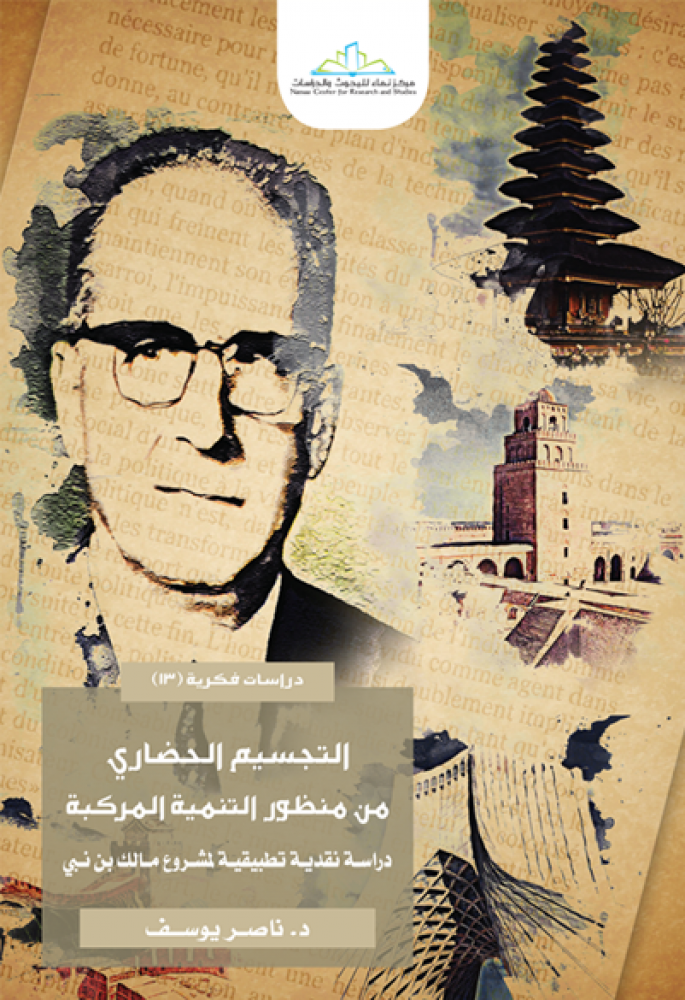
Because the Islamic thinker "Malek bin Naber" is considered one of the most prominent thinkers who influenced through their civilizational vision the structure of contemporary Islamic thought. And due to the importance of his critical intellectual theses regarding the remnants of Western colonialism in Arab countries, and the intellectual reception of these theses in the twentieth and twenty-first centuries by elites and Arab youth seeking answers to questions of renaissance and progress. This applied critical study of Malek bin Naber's project came, in which the author presented the first serious analytical intellectual attempt to address Malek bin Naber's civilizational project with critical questioning, testing his religious thought in global developmental experiences. The idea of the study is based on the hypothesis that the (civilizational equation) includes non-civilization; as it in its three elements: human, land, and time, does not establish a renaissance. The idea of the study also stands on the assertion that the (religious idea), which Naber considered a influential civilizational component, is an idea whose roots go back to the colonial civilization that was previously mentioned by Keeserling, and Spengler, and therefore it is an idea compatible with the colonial civilization that separates religion from development. Accordingly, the idea of this book is based on re-examining the elements of the civilizational equation from the perspective of complex development, as well as diagnosing the (religious idea) as a civilizational component, as Naber agreed upon in his book "Conditions of Renaissance" and other subsequent writings. Are the three elements of the civilizational equation sufficient to achieve a renaissance, or are there other missing elements? Is the (religious idea), as an reductive idea, capable of coordinating between these major elements? Is the simplified religious idea an effective idea in an Arab and Islamic world that regards religion as a comprehensive system?
