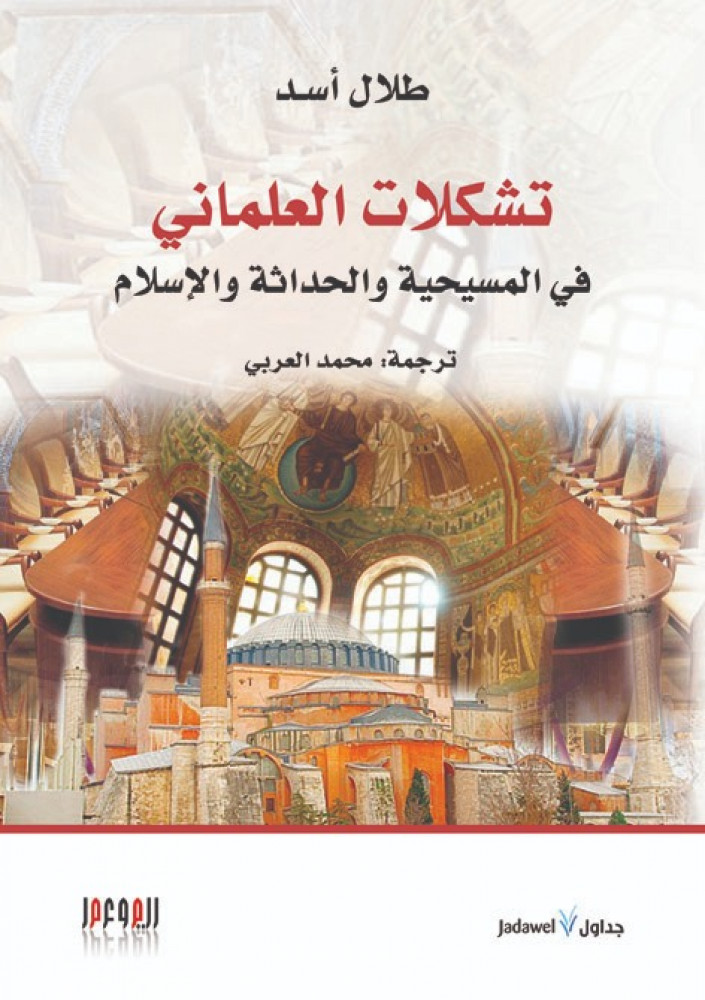
The formations of secularism.. in Christianity, modernity, and Islam
65.55ر.س
Product description
This book does not fall directly within the literature addressing the dichotomies of secularism and religion, and religion and the modern state. Its main subject is about how the secularist is formed and shaped in different and intertwined temporal and spatial contexts. Talal Asad begins his exploration of secularism by posing an provocative question about what anthropology of the secular could be. Based on this, the book explores the concepts, practices, and political formations of secularism, emphasizing the historical transformations that shaped secular tendencies and sensitivities in the modern West and Middle East. Asad then moves from this inquiry to deconstruct many common assumptions about the secularist and the spaces it is claimed to cover. He argues that while anthropologists have been preoccupied with studying the strangeness of the non-European world, and what they saw as irrational aspects of social life such as myth, superstition, taboos, and religion, they did not pay sufficient attention to studying the nature of the modern and secular in a similar way. He also raises questions about the problematic relationships between the secularist, pain, human rights, and the formation of modern nationalism and the state. From studying these issues, Asad concludes that the secularist cannot be viewed as an opposition or heir to religion (which is reshaped as discourse and practices from one era to another), nor can it be seen as the other face of rationality or rationalism. Rather, secularism is a description of a layered history that reaches back to the formation of modernity and its predecessors, and the concepts and practices it produced, some of which intersect with religion. Based on this assumption, the extended final chapter of the book, which discusses the reformation of law and ethics in Egypt during the nineteenth and twentieth centuries, aims to present a model of processes of secularization as they appeared in the legal and ethical formation in colonial Egypt.
