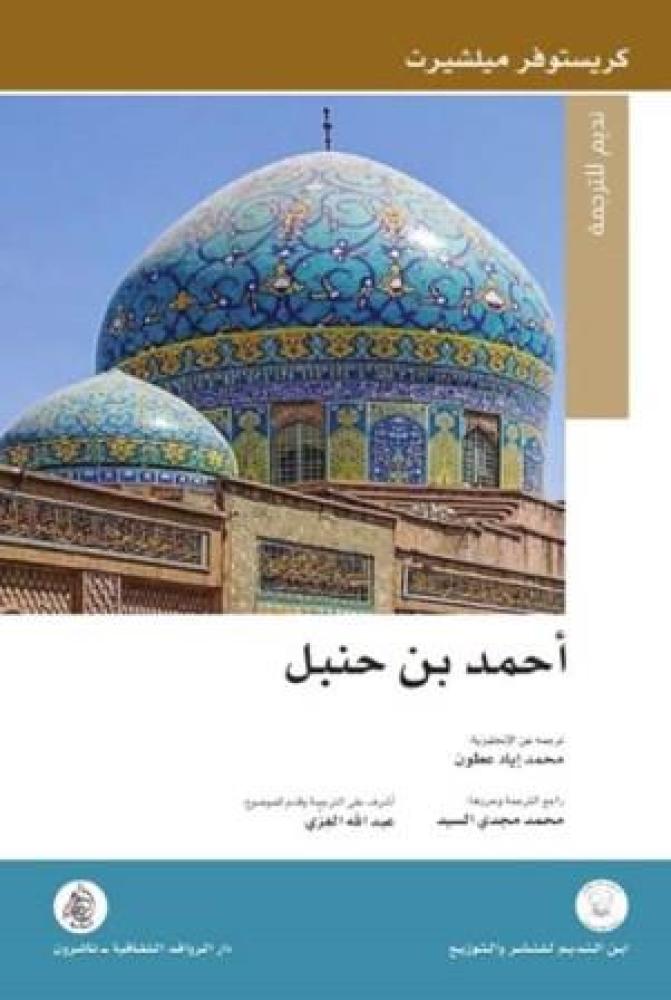
Ahmed ibn Hanbal
51.75ر.س
Product description
Ahmed bin Muhammad bin Hanbal is one of the most, or the most important; historical figures in the Islamic jurisprudential field that contemporary Muslim societies revive instead of going to them! So, one gets to know them through the spirit of the fixed texts attributed to them by reading them in their context. The reason for this goes back to the position of this figure in history; as he sits at the top of the scholars in the Sunni state; until he became a criterion between truth and falsehood. Naturally, the late Sunni doctrinal affiliations are keen to connect their state to a figure of such good reputation; thus, imagination and illusion arise regarding the opinions attributed to such figures that do not reflect the spirit of the preserved texts about them. The problem with many who work in Islamic sciences today is their lack of the intellectual courage to re-study these figures in light of their historical context, and to raise serious questions about their relationship with them as belonging to late-appearing doctrinal entities, and their relationship to the very doctrine they are associated with. Is everything established in their doctrinal state present in their awareness? Or is it merely the product of historical interactions; and that what is established at a later stage does not necessarily have to be present in an earlier stage? Were these late doctrinal states faithful to the teachings and advice of these figures? Or did they develop an independent way? This book in the reader’s hand is a brief study of the biography of a man who became an imam of one of the Sunni jurisprudential schools, the Hanbali school; it covers aspects of his life and sciences. It is true that its author did not delve deeply into research, nor did he systematically organize the sources leading to this figure in some issues; but it is an attempt by someone outside the disputing doctrinal parties today to present a historical reading of this “sacred” Islamic figure. This provides a justification for translating his study and placing it in the hands of the Arab reader; perhaps it will draw his attention to the importance of looking from unfamiliar angles in his society when studying these historical figures who have been sanctified. This is what prevents understanding them as they intended, not as subsequent societies that belong to them want.

Questions you might have