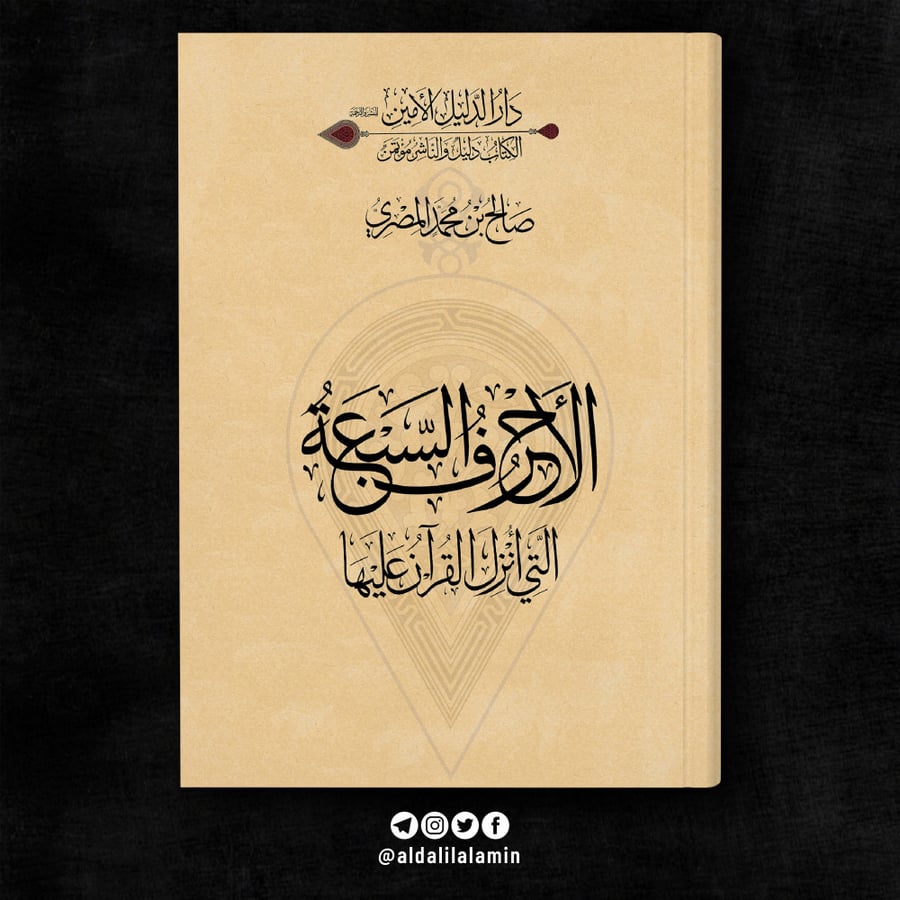
The seven letters
49.16ر.س
Product description
This research is concerned with studying the history of the emergence of Qur'anic readings and their development from the time of the revelation of the seven letters until they culminated in the ten readings; by shedding light on the phenomenon of (choice), which played a decisive role in this matter, and the meaning of choice is that the expert imam in the methods of recitation of the Qur'an and its narrations adopts a specific methodology — from what he has recited — to follow throughout the entire Mushaf. This methodology has accompanied the narration of the Qur'an since the beginning of the revelation of the letters, and it has contributed to shaping the features of the science of recitations until it reached its final form, represented in the ten mutually transmitted Qur'anic readings.
The choice was permitted by the Prophet, peace be upon him, when he ordered the recitation of the Qur'an according to the revealed letters, allowing the Muslim to choose whichever he wished, and he informed that whoever recites the Qur'an with any of them has achieved success. He also forbade disagreement over the Qur'an, but with the spread of Islam across the earth, signs of disagreement and discord among people regarding the Qur'an appeared; due to their ignorance of the fact that the Qur'an was revealed in seven letters. Since adopting the revealed letters was a concession granted by the Lawgiver to the nation, the companions chose to restrict themselves to one comprehensive letter for the entire nation. It is unlikely that the companions neglected anything established from the Messenger of Allah regarding the Qur'an; rather, they transmitted it pure, unaltered as the Prophet, peace be upon him, recited it before his death. It is not permissible to have bad assumptions about them; they were the most eager people to preserve the Qur'an, and what they did was solely to protect Muslims from fighting among themselves.
Therefore, understanding this noble science, its rules, its history of origin, and its stages, is among the most important concerns of those engaged in recitations. Every student of Islamic knowledge should familiarize themselves — even briefly — with this information, most of which is included in this research. I hope that this book will serve as a guide for the self-sufficient and a starting point for the seeker.
