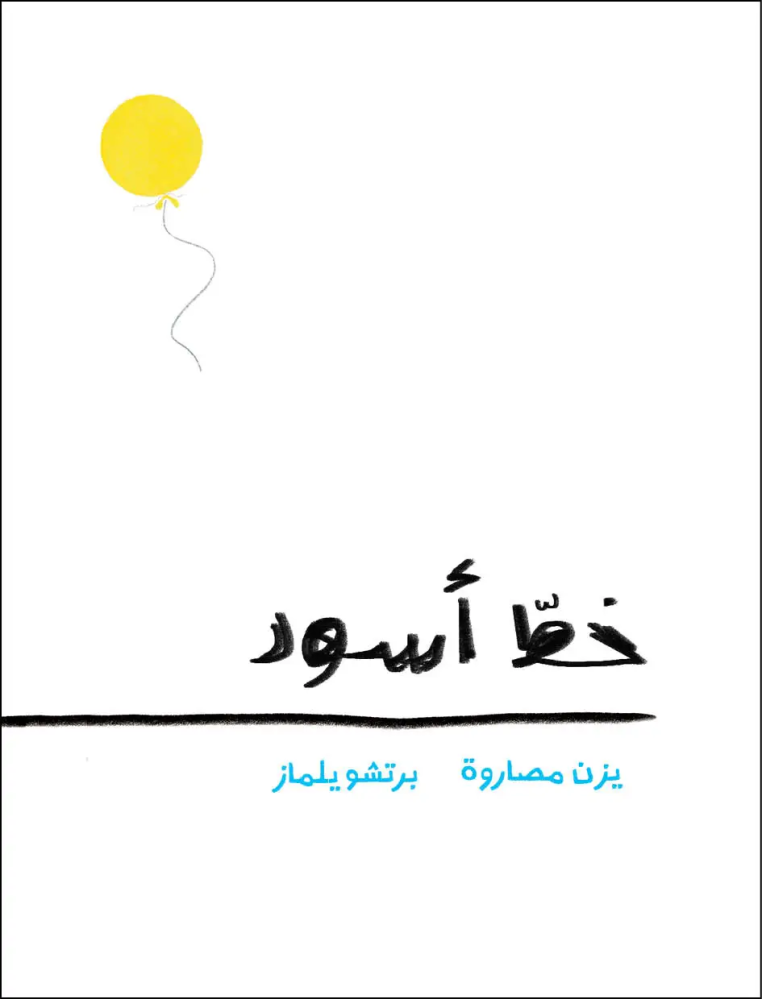
black line
49ر.س
Product description
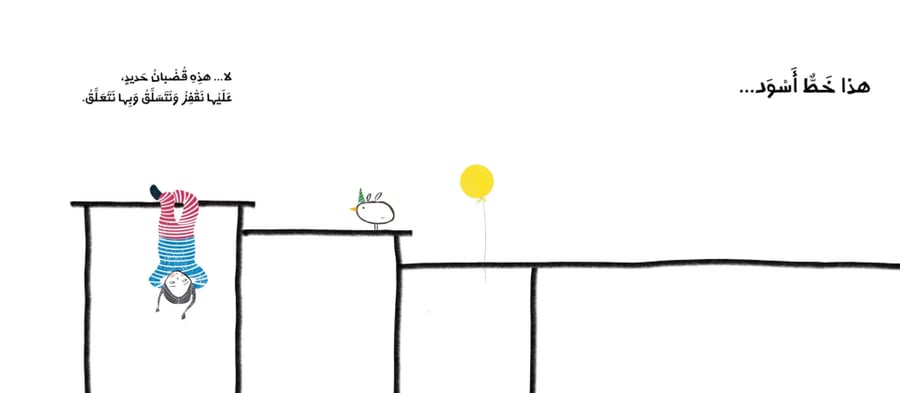
There's a black line in front of you... You might think it's just a black line, but you'll discover it's many other things you never expected... It could be a rope, an iron bar, or a train track! Guess what you can see on that black line?
“Black Line” is a fun, interactive book for all ages that promotes imagination and creative thinking with stunning artwork and a distinctive rhythmic text.
Parents and Teachers Guide
"Black Line" is a wonderfully creative and artistic book that combines art, storytelling, and imagination. It fosters creative thinking and imagination, empowering children to develop an independent way of thinking and analyzing, distinguishing them from others. This is achieved through the black line found on each page in various forms.
Upon opening the book, the reader sees a black line, each time in a different shape (straight, wavy, thin, thick...), opposite a fold that hides what that line could be, leaving it up to the reader to imagine the possibilities and perceptions of this line before opening the fold. Its possibilities may be similar to others or different. Then, upon opening the fold, the reader sees an example of what this line could be through a drawing and a picture with simple text with a rhythm and rhyme that attracts children. The black line could be a rope that children play with, a ballet dancer's ribbon, a railway, a rope that secures a tent... It could be many things from our lives and environment that the child can remember and imagine.
Discussion questions:
- Look closely at the things around you, how many lines can you see?
There are many types of lines with different shapes such as thick, thin, wavy lines... Do you know of other types? Give an example of each one.
- Try to draw a means of transportation with one continuous line without letting go of the pen.
- Do you know how to fix the tent to the ground?
Draw a kite, showing its parts and how many lines it has.
In front of you are black lines of different shapes (wavy, straight, thin, thick, etc.) and you are asked to transform these lines into real objects by drawing. How many objects can you draw?
- We call two lines that go in the same direction parallel lines. Can you mention other types of lines?
