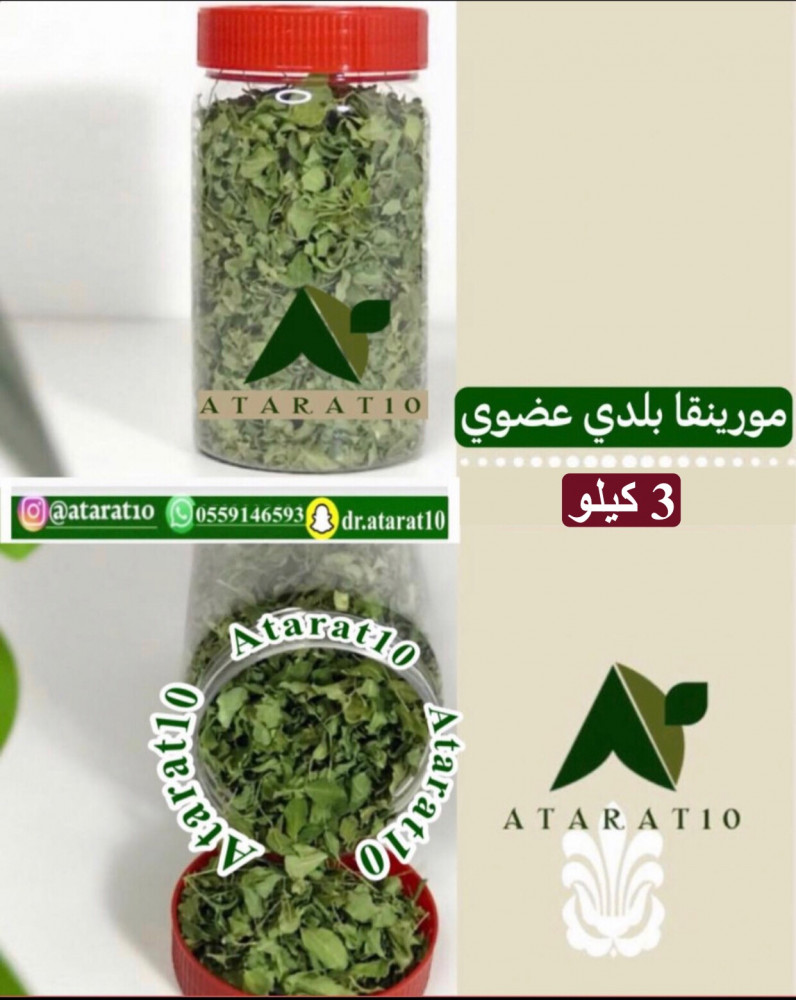



3 kilograms of local organic moringa leaves _ Organic _ Moringa _ Moringa _ Banyan branch _ Tree of life _ The precious seed _ Yusr tree
3060ر.س
Product description
From the names of the leaf (tree) Moringa _ Moringa: branch of the banana _ tree of life _ the precious seed _ the tree of ease.
Method of use: -
Add it to mint tea or ginger drink or cinnamon or any hot drink, add it to salads and yogurt and sandwiches.
- Does not affect the taste of the food to which it is added, but it gains it high nutritional value.
- It is recommended not to boil but to add it to boiling water so it does not lose its nutritional elements.
Moringa contains high levels of vitamins B, B1, and B3, which the body needs to convert food into energy instead of storing it as fat. The leaves also contain vitamin A, ten times more than carrots, 25 times more iron than spinach, 17 times more calcium than milk, and 15 times more potassium than bananas.
And vitamin C and protein eight times more than in yogurt, meaning the body benefits from all these nutrients by drinking one cup of Moringa tea.
The Moringa leaves are also rich in beta-carotene, vitamins A and C, iron, protein, potassium, and phosphorus, forming a complete food in some parts of Africa due to their high vitamin content.
The Moringa leaves contain seven times more vitamin C than oranges, three times the potassium content of bananas, four times the calcium in milk, four times the vitamin A in carrots, and double the protein in milk.
They contain antibacterial substances used for medical and therapeutic purposes, used as antifungal, antibacterial, antidepressant, and in fighting diabetes, pain, fever, and even treating asthma and cancer potential.
Positive results have been achieved against ovarian cancer, liver cancer, lung cancer, and skin cancer.
Adding Moringa leaves to the diet of nursing mothers increases milk production, and leaf juice lowers high blood pressure and helps in urination.
Moringa leaves contain four times the vitamin A and beta-carotene found in carrots, strengthening the immune and nervous systems.
Moringa leaves are rich in vitamin B (choline), B1 (thiamine), B2 (riboflavin), B3 (niacin), and vitamin E (tocopherol acetate).
They also help prevent heart disease and arthritis.
Moringa is rich in omega-3 and omega-6 fatty acids.
An effective treatment for anemia, as Moringa contains three times the iron in spinach, helps balance cholesterol levels in the body, and essential amino acids are present in excellent proportions in Moringa leaves.
Moringa also balances blood sugar levels, thus helping diabetics.
When used in daily food, Moringa strengthens the immune system and is excellent for AIDS patients.
Using Moringa tree leaves increases metabolic activity.
It also helps improve digestion efficiency, and Moringa is a well-known dietary supplement that gives a feeling of psychological comfort.
Using Moringa leaves activates cell regeneration in the body, especially beneficial for nursing mothers as it increases milk quantity.
Moringa leaves protect the liver and kidneys from many diseases and contain multiples of vitamin C found in oranges, as well as calcium multiples of that in milk, and seven times the potassium in bananas.
It is also very rich in minerals, antioxidants, proteins, and vitamins: vitamin A (beta-carotene), vitamin B1 (thiamine), vitamin B2 (riboflavin), vitamin B3 (niacin), vitamin B6 (pyridoxine), vitamin B7 (biotin), vitamin C (ascorbic acid), vitamin D (cholecalciferol), vitamin E (tocopherol), and vitamin K.
It contains high levels of calcium, four times that of milk, vitamin C seven times that of oranges, potassium three times that of bananas, iron three times that of spinach, vitamin A four times that of carrots, and twice the protein in milk.

From Riyadh
Questions you might have