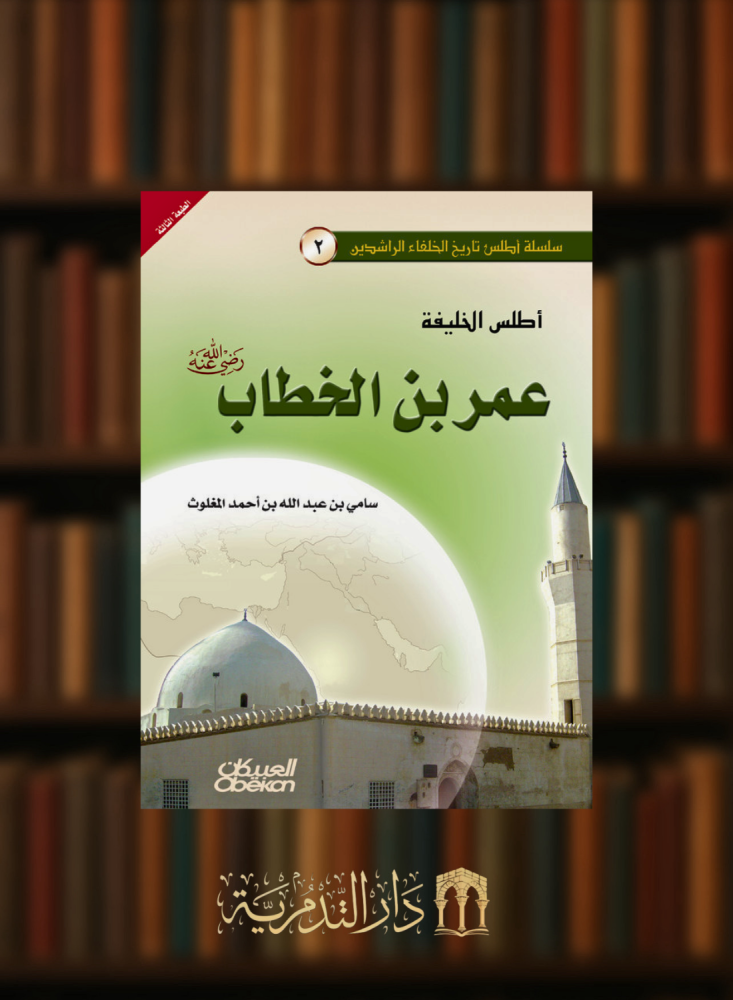
The Atlas of Caliph Omar ibn Al-Khattab, may Allah be pleased with him
86ر.س
Product description
I have divided this book titled "Atlas of Caliph Omar ibn Al-Khattab, may Allah be pleased with him" into four chapters as follows:
Chapter One: Omar ibn Al-Khattab in the Meccan period (Jahiliyyah).
Chapter Two: Omar ibn Al-Khattab in the Medinan period.
Chapter Three: The Caliphate of Omar ibn Al-Khattab, may Allah be pleased with him, from 13 AH to 13 AH, divided into five sections:
Section One: Conquest of Iraq.
Section Two: Conquest of Iran.
Section Three: Conquest of Sham and Palestine.
Section Four: Conquest of Egypt and Libya.
Section Five: Civilizational systems in the era of Caliph Omar ibn Al-Khattab, may Allah be pleased with him.
Chapter Four: Moments with Omar — may Allah be pleased with him.
This atlas came to meet the need of the Islamic library for maps focusing on one of the greatest periods of human brilliance throughout history. The availability of primary historical sources such as the "History of Nations and Kings" by Imam Al-Tabari, "Futuh al-Buldan" by Imam Al-Baladhuri, "History of Medina" by Ibn Shiba, and others facilitated the production of this book at this high level. I also tried to translate these sources into maps, illustrations, and data. Among contemporary books, I benefited greatly — after Allah — from the works of the great scholar/Professor Ahmed Adel Kamal in the "Series of Islamic Conquests" and the "Atlas of Cairo's History," which distinguished themselves by selecting authentic narrations from weak ones, a notable feature of this blessed series. Additionally, I used other valuable references such as "The Era of the Rashidun Caliphate" by Dr. Akram Diaa Al-Omari, "Fasl Al-Khitab in the Biography of Omar ibn Al-Khattab" by Dr. Ali Muhammad Al-Dalabi, and the series "Leaders of Islamic Conquests" by Brigadier General Mahmoud Shait Khattab. I also included other sources and references where I found my needs, which I listed at the end of each chapter or section.
Finally, I praise Allah, the Most High, who made it easy for me to produce this book in this elegant form. I also extend my sincere thanks to everyone who contributed to the completion of this work, especially the esteemed educator and scholar Dr. Abdulaziz bin Abdulrahman Al-Thunayyan. I also cannot forget to thank Mr. Mohammed bin Abdulrahman Al-Obeikan, the General Director of Al-Obeikan Library, for his keen interest and follow-up throughout the work process to ensure this book was completed in the best form and finest appearance.

From Riyadh