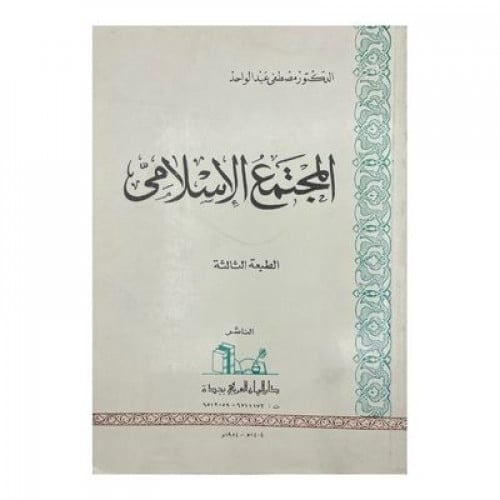
The talk about monotheism is the roots of the matter and its tributaries and the development of the debate about it
75ر.س
Out of Stock
Product description
Talking about Tawhid: roots of the issue and its tributaries and development of the debate among the most important Islamic sects until the fifth Hijri century. A historical reading of the Islamic concept of Tawhid "how do we understand the religious phenomenon, and do we have knowledge of our beliefs? Then we are not so in science; neither in the current empirical science nor in historical science and its branches. We know on the historical level the most important sects, and our knowledge is general. The sectarian phenomenon is very complex. One of us needs to be familiar with it, and the current researchers are required to exert effort in this direction."
Ilm al-Kalam (theology) played important roles at the social and political levels, due to the nature of theological discussions and the mechanisms of working of theological systems. After "the speech was treated by the Abbasid state [with the treatment of heresy quickly becoming clear] the difference between speech and heresy [...] especially after the authority confirmed the benefit of speech in confronting deviations and intellectual threats" (Muhammad Bouhhalal, Islam of the Theologians, Dar al-Talī‘a Beirut, first edition, 2006, p.92).
Although there was no consensus among religious scholars on considering Ilm al-Kalam as a legitimate science (L. Gardet, ˁIlm al-Kalam, EI2, III, PP1170-1179), the fact that Ilm al-Kalam as rational thinking about religious beliefs prompted the political authority to use the statements of theologians to gain supporters and allies. Perhaps the focus on "issues of Tawhid" is the most important area of intersection between the political field and the theological field.
The Tunisian researcher "Al-Habib Ayyad" dedicated a book to addressing the issue of Tawhid in the old Islamic theological systems, titled "Speech about Tawhid: roots of the issue, its tributaries, and the development of the debate among the most important Islamic sects until the fifth Hijri century." The book was published by Dar al-Madār al-Islāmī in Beirut, Lebanon, in its first edition in 2002. The book was originally a doctoral thesis prepared by the researcher under the supervision of Professor Abdul Majid al-Sharfi, and the research was discussed at the University of Tunisia in 1999.
The book consists of 640 pages divided as follows:
- Introduction
- Preface: on the concept, the figures, and the documentation
- Part One: Historical and comparative approaches to the issue of Tawhid
- Chapter One: Tawhid in history
- Chapter Two: mental horizons and cultural tributaries
- Chapter Three: a comparative view of fundamental issues of Tawhid
- Chapter Four: mental attributes
- Chapter Five: two transmitted issues: the vision of God / transcendence
- Part Two: issues of Tawhid
- Chapter One: prerequisites of Tawhid
- Chapter Two: evidence for the existence of God
- Chapter Three: the issue of self and attributes
- General conclusion
- List of sources and references
- Indexes (index of Quranic verses, hadiths, sects, figures, terminology)
The researcher started his discussion of the issues of Tawhid from a clear conception that Tawhid is a controversial issue among followers of monotheistic religions, on one hand, and among followers of one religion or sect, on the other. Throughout the research, Al-Habib Ayyad emphasized that divergence and disagreement are not limited to religions or followers of the same religion, but also include followers of the same sect, placing the issue within the context of the cultural, social, and political realities that influence the theological systems.
The author was keen to introduce the issue by reviewing the most important theories, studies, and contemporary approaches that addressed the issue of Tawhid. He paid particular attention to the developmental, ideological, phenomenological, psychoanalytic, and structural approaches. He provided important observations on these approaches, emphasizing that studying religious phenomena is of little benefit unless we understand that they are deeply connected to psychological, social, and objective factors.
The author also appreciated Marcel Gauchet’s theory (born 1946) which was primarily reflected in his book "Disenchantment of the World: A Political History of Religion," in which he sought to place religion at the core of history, considering Tawhid as a phenomenon that works to liberate humans from primitive religious systems, coinciding with the emergence of the state, i.e., the victory of the logic of domination. This was seen as a departure from classical readings that seek to automatically link the development of religious phenomena with the development of social structures, affirming that "religion in its most coherent and integrated forms is the religion that prevailed in primitive societies before the emergence of the state" (Al-Habib Ayyad, Speech about Tawhid, p.61).
Ayyad applied this reading to the Arab Islamic culture, examining the effects of Tawhid in pre-Islamic times. The Quranic text did not speak of a new god but of a known god among Arabs before the revelation to Muhammad. However, the Quran introduced a new conception of divinity aimed at transforming the prevailing political, social, and mental structures, which confirms that the relationship between religion and politics and society is strong on one hand, and on the other hand, that every monotheistic or scriptural religion or others seeks closure, as the belief in the unity of truth by religions—often their followers—refuses anyone who presents a different view of religious truth. This led to the establishment of fixed principles and rules that are considered foundational and must be adhered to. Anyone deviating from them is considered to have deviated from Tawhid and the straight path.
The laws of faith and their foundations were established in Judaism (Maimonides), Christianity (First Council of Nicaea, 325 AD), by making Tawhid take on various connotations within and between religions and within the same religion and sects as well. Based on this reading, Al-Habib Ayyad derived the legitimacy of addressing issues of Tawhid epistemologically and historically, attempting to build a critical, authorial reading. As much as he examined the roots, extensions, and consequences of the issue, he was interested in the developments that the issue underwent in Arab Islamic culture, by first reviewing the tributaries and positions of the most important Islamic sects, and second, examining the major transformations in theological reasoning regarding Tawhid, linking these issues to the social and political dimensions of the matter. In this sense, theological discussion about Tawhid was not the origin of the religious phenomenon but rather a result of the interaction of social and political factors.
To prove this, the researcher did not limit himself to classical theological texts but expanded his scope by examining the texts of early theologians, aiming to depict an accurate picture of theological systems and their development in terms of vision, tributaries, and thinking mechanisms. This allowed the research to span five centuries (the first five centuries of Islamic Arab culture), which enabled him to monitor the conditions surrounding the birth of Tawhid issues and to observe the developments within sects or groups. The fifth century, in particular, saw "the stabilization of the main Tawhid systems during this period, due to the mixing of theological issues with philosophical issues after this date" (Al-Habib Ayyad, Speech about Tawhid, p.13).
In the first section of the book, titled "Historical and Comparative Approaches to the Issue of Tawhid," the researcher placed Tawhid within history and outlined the mental horizons of theologians and the cultural tributaries that shaped Ilm al-Kalam through studying God's attributes, the premises, and evidence for God's existence, the divine self and its attributes. Al-Habib Ayyad made significant strides in clarifying the profound impact of historical factors and the necessity of revising the certainties produced by classical theological discourse. He chose to examine the issues of Tawhid through the perspectives of the most influential sects that contributed to the development of Ilm al-Kalam (Ash'arites, Mutazilites, Isma'ilis, ...), and focused on the most important writings of each sect.
Ilm al-Kalam is of great importance in classical Islamic sciences because of the nature of rational theological thinking regarding faith, levels of religion, and methods of studying the religious phenomenon in general. Al-Habib Ayyad recognized the role played by the phenomenon of cultural exchange in shaping the principles of Tawhid among Islamic sects and the systems they formed. He dedicated the second chapter, titled "Cultural Tributaries," to this, showing that Muslims were open to neighboring civilizations and cultures from early times, especially in the second Hijri century, before the Abbasid era. The clear presence of philosophical discourse and dual mystical religious discourse in theological texts is undeniable. Regarding this, the researcher noted that the Muslim theologians’ knowledge of these sources was often imprecise. Among the most important philosophical tributaries used by Muslim theologians to shape their views and positions are the Platonic (Neoplatonic) ideas (Isma'ili/ Hamid al-Kermani, ...), and the effects of this are evident in the Muslim approach to the emanation theory and its role in establishing the principle of divine transcendence. This also includes the Greek atomistic view and Aristotelian ideas (especially among Mutazilites and Ash'arites), especially when discussing issues such as the division of beings into essences and accidents, etc. Al-Ayyad pointed out that theologians used these theories in various ways to serve their sectarian and political goals.
What is striking—according to Al-Habib Ayyad—is that Muslims’ knowledge of these references was sometimes confused and lacked accuracy, especially regarding the Manichaean dualism. On the other hand, these tributaries did not appear equally in the texts of theologians; for example, Mutazilites rejected Manichaeism, while Manichaeism had a clear influence on Shiite thought, especially among the Ghulat (extremists), such as the Bāṭiniyya, Mughīriyya, ... who believed in the incarnation of the divine essence in the persons of the Imams (Imamate deification ...). This led to the emergence of the esoteric dimension in Shiite theological texts, with al-Kirmānī being a prime example.
The researcher’s review of these tributaries concluded that there are other tributaries that funded Islamic theological theories of Tawhid (Christian theism, Israelite traditions, Stoicism, ...), indicating that familiarity with various tributaries is extremely complex. Moreover, this reading admits that Islamic theological thought was, in general, an open discourse to neighboring cultures, seeking to benefit from their theories while giving them an Islamic dimension. This is why different Islamic sects, by their nature, relied on certain references over others. In the third chapter, the research focused on issues of Tawhid and the evidence theologians used to prove the existence of God and the nature of divine existence.
The author noted that theological systems have taken two divergent directions in their conception of the divine self: "one leaning towards transcendence and sanctification, and another leaning towards depiction and analogy" (Al-Habib Ayyad, Speech about Tawhid, p.179).
In this sense, the comparative reading reveals many points of agreement among various sects and Islamic systems, especially regarding the issues of God's existence and attributes, based on the fact that most Islamic systems originate from a single Islamic vision rooted mainly in the Quran.
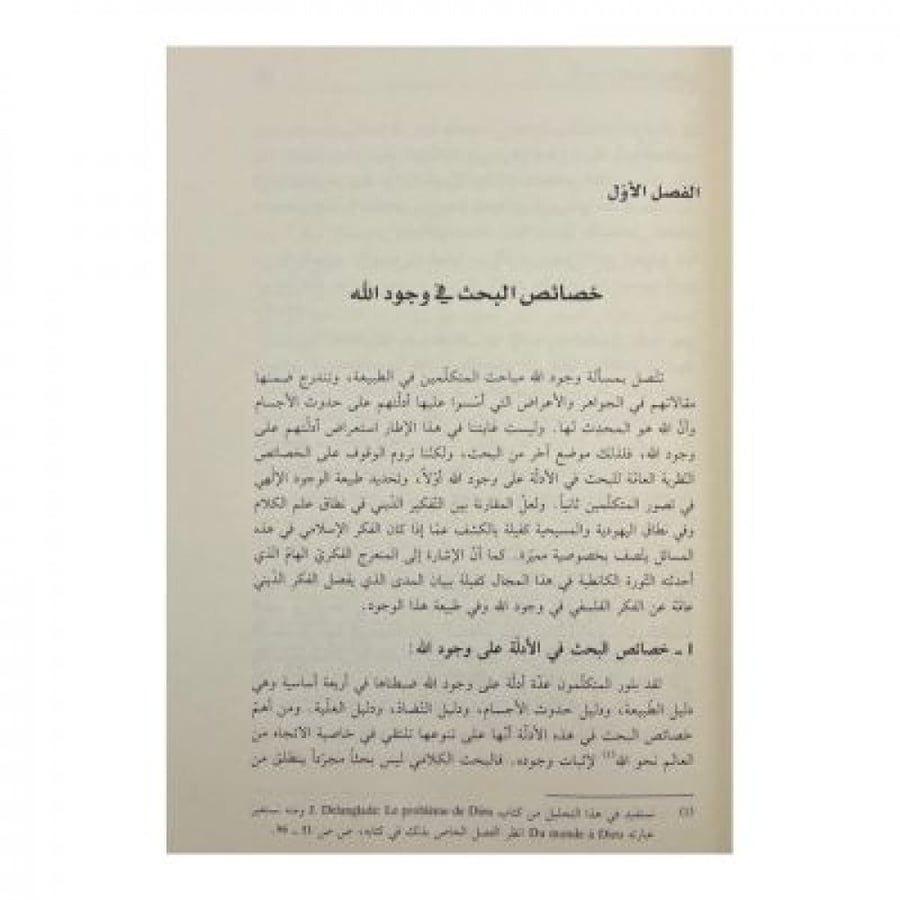
The author dedicated the fourth chapter to examining the meanings of concepts and terminology used in theological discourse. Among the most important terms discussed are: thing, the old, the new, essence, ... These concepts, according to the researcher, "are mostly subject to normative judgments that merely reflect the representatives’ perceptions of the universe, without expressing scientific facts capable of understanding and appropriately interpreting reality" (Al-Habib Ayyad, Speech about Tawhid, p.227). These concepts also reveal the necessity for the researcher to understand the foundational references and knowledge theories underlying these concepts and the theological articles. This is evident in many issues, some of which relate to the existence of God. The evidence for God's existence among theologians is divided into two categories, based on the distribution of reasoning methods: one rational, and the other based on testimony and hearsay. This led to theologians’ conceptions of God's existence diverging from the conception established by Islamic revelation. The evidence used to prove God's existence, especially the natural proof, the proof of contingency, the proof of opposition between things, and the proof of causality, are diverse and reveal the development of Islamic thought in addressing Tawhid issues. On the other hand, they show a gap between the Quranic vision and theological theories. The researcher deepened this discussion when addressing issues of the self and attributes.
The theologians’ theories regarding the divine self and its attributes are based on two interconnected principles: refuting opponents’ opinions by using analogy of the absent with the present, and the conclusion that "the theologians’ vision regarding humans and their status in knowledge is unclear" (Al-Habib Ayyad, Speech about Tawhid, p.347).
God’s attributes have many characteristics, divided into two categories: attributes of the self and attributes of actions. The distinguishing feature of the first (attributes of the self) is that they do not imply the attribute and its opposite (knowledge/ignorance, ...). The second (attributes of actions) can be described with God and its opposite (love/hate, command/prohibition, ...).
Abu al-Qasim al-Baghdadi (died 429 AH) classified the anthropomorphic attributes into two types: one where the comparison was limited to the self, and another where it was limited to attributes. The anthropomorphists of "the self," such as the Karramiyya and followers of Hisham ibn Hakam, considered the divine self as identical to the human self, differing only in measures and sizes. As for the anthropomorphists of "attributes," they made God's will and speech two events, with the Ghulat (extremists) among the Mu'tazilites being among the first to say: "God does not know something until it exists, so they necessitated the occurrence of His knowledge" (al-Baghdadi, The Difference between the Sects, Dar al-Kutub al-‘Ilmiyya, Beirut, Lebanon, 2nd edition, 2005, p.173).
From this, the difficulty of studying divine attributes arises, considering that the attribute is the self itself, and the inability to comprehend the essence of these attributes necessarily leads to anthropomorphism, incarnation, or negation. Thus, the prevalent definition of God as "He is He" becomes a refuge for anyone seeking to explore the divine self through its attributes and actions.
The theologians’ approaches to reasoning about God's attributes and actions varied. Al-Habib Ayyad warned of the necessity to realize that all attributes revolve around the concept of "creating the world from nothing," especially concerning divine knowledge. He concluded that attempts to sanctify God in opposition to incarnation have led Mutazilites and most theological sects into many pitfalls and crises, including that proving God’s life and making perception a condition of life led to anthropomorphism and incarnation, and to attributing human attributes to God. The most serious crises, according to the researcher, are that the theological discourse failed to answer an important question: Is God aware of pleasure and pain?
To prove God's attributes as human attributes (metaphorically, ...), suggests that God experiences feelings and sensations like humans, which are the most distinctive features of life. In this sense, the discussion of God's will also faces problematic issues, including attributing evil to God.
In this context, the researcher observed that attempts to construct theological systems did not provide clear answers to these issues and problems, but rather widened disagreements among sects, as the solutions offered by theologians increased their confusion and bewilderment. Perhaps the "vision of God" (Chapter Five: Seeing God) is the most expressive of this confusion, as the statement of seeing or not seeing God was based by most theologians on authentic hadiths and firmly held beliefs, considering the Hereafter a day that does not differ from what people observe in this world.
The affirmation of seeing God was the motivation for this interpretation, aligning with social reality and popular beliefs. To prove the vision of God in the Hereafter, theologians selected specific Quranic texts and ignored many other verses that deny the possibility of seeing God. They interpreted the texts to fit their doctrinal and sectarian beliefs and the authority of the cultural and social reality.
The issue has other dimensions, including the effort of the Islamic vision to establish Quranic concepts that are, in themselves, extensions of what was prevalent among Arabs, nations, and cultures they interacted with, such as the saying that God is in the sky. As for the denial of transcendence, especially among Mutazilites, they relied on rational foundations to build a different conception of the divine self.
The Mutazilites rejected the vision of God—glorified and exalted—based on the idea that seeing is only permissible for bodies that are localized in space and composed of parts. On the other hand, they recognized that the idea of the occurrence of divine knowledge would make humans solely responsible for their actions. However, this made the divine self a contingent, changing knowledge according to circumstances, contradicting most Muslims’ view of divine transcendence.
What distinguishes Al-Habib Ayyad’s approach to "talking about Tawhid" is his focus on defining the figures of sectarian theological schools and their writings in order to produce a comprehensive, objective, accurate, and simplified descriptive reading, based on comparison, seeking to understand the heritage of Islamic theological discourse, examining roots, tributaries, and major doctrines.
The idea of Tawhid, although unified in theological systems as the belief in one God, has continually evolved within the same religion or sect, as the idea was represented in various ways based on specific interpretations influenced by social, cultural, intellectual, and sectarian factors.
Regarding this issue, the researcher’s approach was primarily epistemological, aiming to understand things as they are. He expressed this in many places, most notably by maintaining an equal distance from different systems and sects, as he was not concerned with favoring one over another. Additionally, the book clearly advocates for a critical, historical, and objective reading of the intellectual and religious heritage. Contemporary Islamic thought, especially the strict, is often focused on the past to recover the pure origin, while there is no pure origin in cultural production, including that related to religious texts.
Open engagement with the cultural heritage of others and benefiting from it in addressing metaphysical issues quickly turned into closedness when adherence to sect principles became a requirement for authentic faith. As a result, Ilm al-Kalam ceased to be purely rational knowledge about religion and became a rote learning, and the theological systems, in their treatment of Tawhid, aimed to institutionalize religion and eliminate the subjective dimension that makes faith in the one God and attributing certain qualities and actions to Him a matter connected to the believer and his conscience before anything else.
Perhaps one of the most important conclusions Al-Habib Ayyad reached in this field is that the approaches of theological systems to issues of Tawhid were influenced by the circumstances of the intellectual and cultural reality, making them highly complex compared to what the Quranic text called for. Their complexity is a reflection of the complexity present in humans and all their phenomena.

Questions you might have