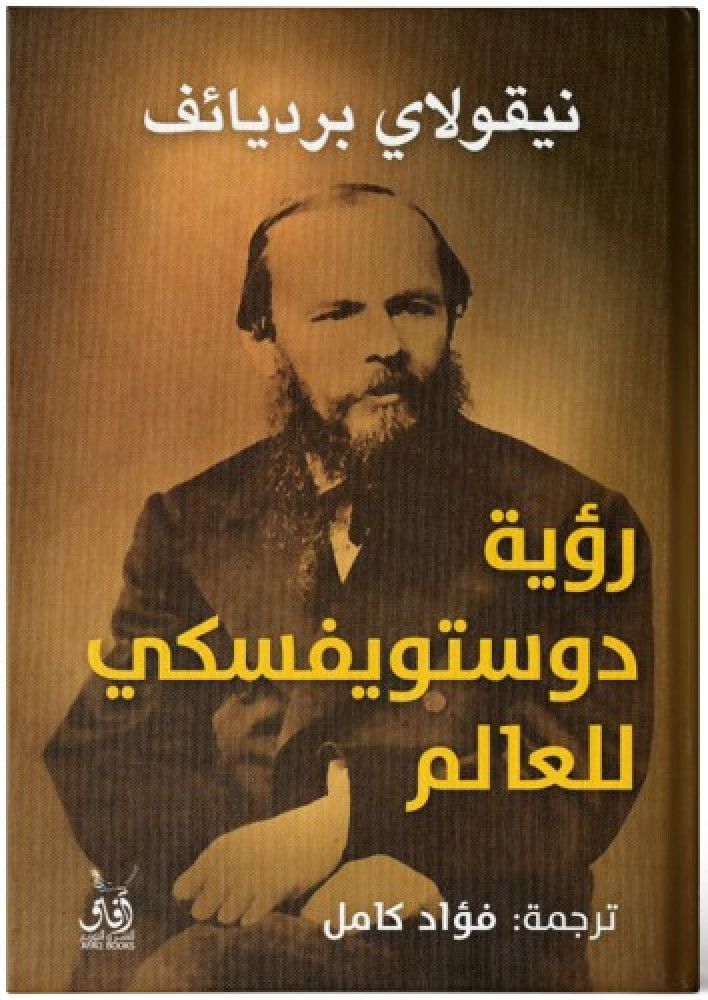
Dostoevsky's view of the world
40ر.س
Product description
I do not know if there is anyone who has discussed Dostoevsky as deeply as Nikolai Berdyaev did. If Berdyaev, with his passionately dialectical spirit, almost resembles Dostoevsky himself, Dostoevsky himself, but with greater philosophical awareness. The book contains a dialectical confusion that clearly distinguishes both, and the main idea is "the freedom of the soul." The dilemma that Dostoevsky's novels address, in Berdyaev's view, is the conflict between the freedom of the soul, which brings choice, and therefore contains the seeds of evil, and the coercive organization of human happiness based on treating people like a herd. This is the problem whose expression reached its peak in the myth of the Grand Inquisitor in The Brothers Karamazov. In Ivan's hallucinations, a man appears who is opposed to Christ, a man with a loving spirit for humans, and with a spiritual message similar to Christ's, but he believes that Christ burdened people with greater pains than they could bear, and his motivation was vanity. The pride of the human spirit of the elite grew, and in return, millions of people were left to evil. As for his message—the Grand Inquisitor—it is to divide humans into an elite representing the tenth, and the remaining nine-tenths are treated like a herd, and the news is distributed to them equally, thus achieving "organized social happiness." Dostoevsky's vision of the world. Nikolai Berdyaev. Fuad Kamel

Questions you might have