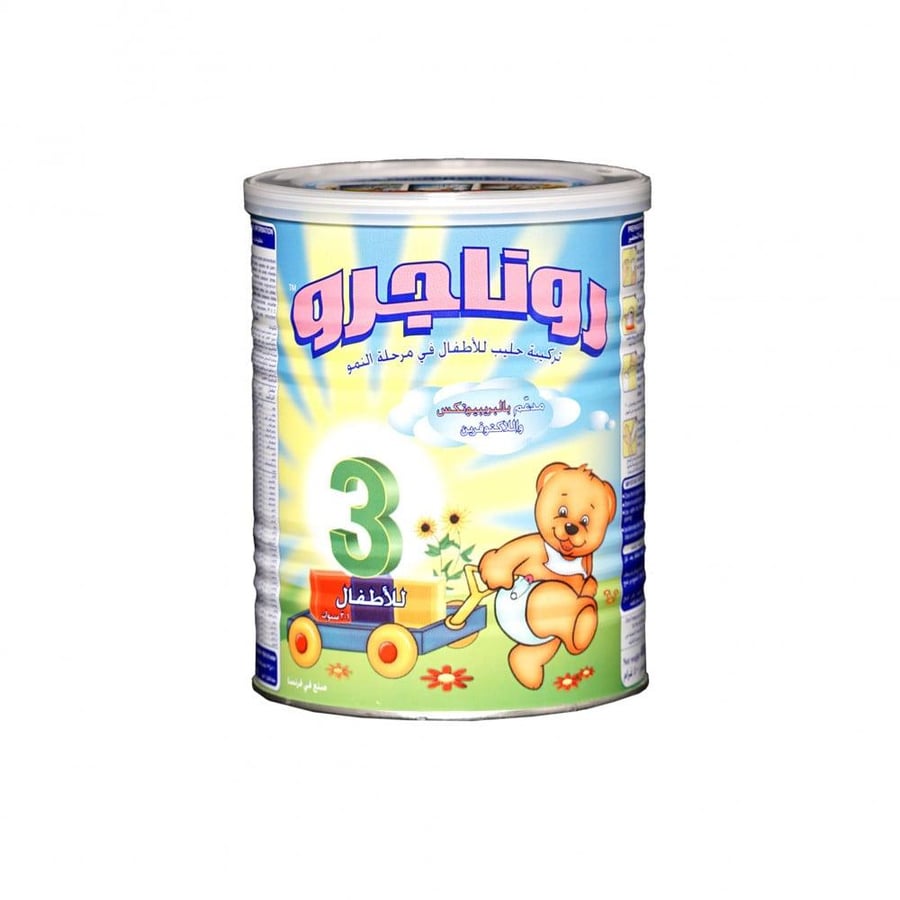
Ronagro milk - from age one to three years - 850 grams
78ر.س
Out of Stock
Product description
Ronagro 3 children's growth milk from age one to 3 years 850 g
Ronagro 3 comprehensive and complete nutritional formula specially designed to support children's growth and development during their first crucial years, from age one to 3 years.
Contains a balanced set of nutrients, vitamins, and minerals that contribute to enhancing overall health, mental and visual development, and supporting the child's immune system.
Advantages of Ronagro 3 milk
Comprehensive growth support: Ronagro 3 milk contains calcium, iron, and protein to support the development of bones, teeth, and muscles.
Immune enhancement: fortified with lactoferrin known for its role in strengthening the immune system.
Contains prebiotics that improve digestive health and promote the growth of beneficial bacteria.
Rich in essential nutrients: vitamin D to support bone health.
Omega-3 fatty acids to support mental and visual development.
The main source of protein is cow's milk.
Instructions for using Ronagro 3 milk
Preparation of Ronagro 3 milk:
Wash hands thoroughly before starting.
Sterilize the used tools by placing them in boiling water for 10 minutes.
Boil drinking water for 5 minutes and let it cool.
Mixing the milk:
Add one scoop of powder to 30 ml of lukewarm water.
Gently shake the bottle until the powder dissolves completely.
Test the temperature of the milk on your hand before giving it to the child.
Storage:
Close the package tightly after each use and keep it in a cool, dry place.
Consume the product within 4 weeks of opening the container.
Warnings when using Ronagro 3 milk
Do not use the powder if more than 14 days have passed since opening the package.
Avoid using your hands to remove the scoop; only use the attached scoop and keep it inside the package.
Feedings should be consumed within one hour of preparation, and leftover quantities should be discarded.
Do not heat the milk in the microwave to avoid hot spots that may harm the child.
Ingredients of Ronagro 3 milk
Skimmed cow's milk.
Vegetable oils (palm and soybean).
De-mineralized cow's whey.
Maltodextrin.
Sucrose.
Fucose oligosaccharides.
Minerals (calcium carbonate, potassium chloride, sodium chloride, magnesium sulfate, calcium phosphate, ferrous pyrophosphate, sodium citrate, zinc sulfate, copper sulfate, manganese sulfate, potassium iodide, sodium selenite).
Lecithin (soybean).
Fish oil.
Vitamins (C, E, beta-carotene, D3, A, PP, biotin, B5, B1, K1, B2, B6, B9, B12), and antioxidants (concentrated tocopherol mixture, ascorbyl palmitate).
L-Carnitine, lactoferrin.
Diarrhea in newborns and infants
Diarrhea indicates a sudden change in the number of bowel movements and stool consistency in the child. Often, newborns have frequent bowel movements, especially after each feeding, but if the number of movements increases significantly or the stool becomes liquid, it may be a sign of diarrhea.
Causes of diarrhea in newborns and infants
Changes in feeding: changing the type of child's food or the mother's diet in breastfeeding cases.
Use of antibiotics: whether the child is taking antibiotics directly or through the breastfeeding mother.
Infection: bacterial, viral, or parasitic infection.
Complications of diarrhea in children
Dehydration:
Symptoms: dry mouth, rough skin, decreased activity and lethargy, sunken eyes.
Procedure: monitor symptoms carefully and consult a doctor immediately if any signs of dehydration appear.
Diaper dermatitis: diarrhea can cause irritation in the diaper area.
Prevention and treatment methods
Change the diaper regularly.
Use protective creams or suitable ointments.
Clean the area with water only when inflammation appears, and avoid wipes.
Tips and suitable foods for treating diarrhea in children
Careful food selection:
Offer easily digestible foods such as:
Bananas: help reduce the severity of diarrhea.
Crackers: such as toast.
Grain powders: such as rice or oats.
Dealing with formula feeding:
If the child is formula-fed, it may be necessary to switch to a special formula for diarrhea cases after consulting a doctor.
Rehydration solution:
Use oral rehydration solution to maintain fluid balance in the child's body, but consult a doctor or pharmacist before use.
When should you see a doctor?
If diarrhea persists for more than two days.
Signs of dehydration such as decreased urination or severe dryness.
Presence of blood in stool or high fever.

From Unayzah