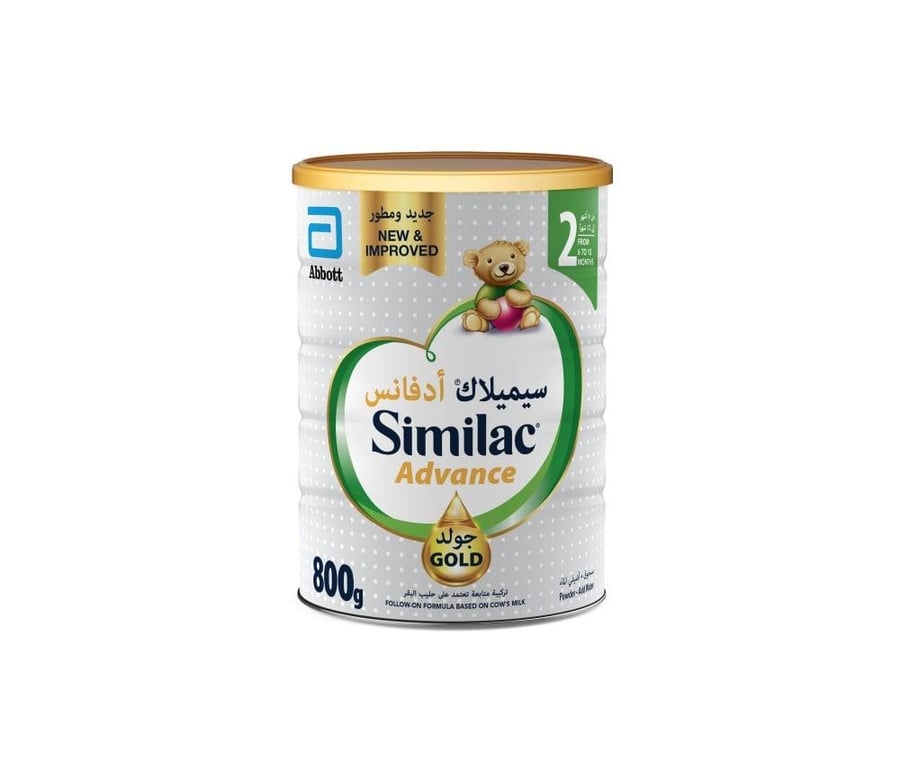
Similac Gold Milk - 2 - 800 grams
71.30ر.س
79.22ر.س-10%Out of Stock
Product description
Similac Gold 2 - 800 grams, a balanced formula that supports your child's physical and mental growth, rich in Omega 3, vitamins, and minerals that meet your child's nutritional needs. It can be used from six months old to one year old.
Features of Similac Gold 2: contains simple carbohydrates, whey protein, casein, and essential fats Omega 3 and 6, arachidonic acid, and docosahexaenoic acid.
Contains all the vitamins and minerals your child needs at this age.
Supports both Omega 3 and 6, arachidonic acid, and docosahexaenoic acid for the child's mental growth.
Contains all the essential nutrients for growth, making it the most suitable choice for the child's early stages of development.
Method of preparing Similac Gold 2 milk:
Wash hands before preparing the meal.
Wash the bottle and all its parts to remove remnants of the previous meal.
Boil the bottle and all parts for five minutes, keeping them covered until use.
Boil drinking water for five minutes and let it cool.
Pour the water into the feeding unit according to the amount specified in the feeding schedule.
Use only the scoop inside the package and remove excess.
Add the amount specified in the feeding schedule, then shake the package until fully dissolved.
Seal the package tightly and store it in a cool, dry place, and use it within four weeks of opening.
Suggested feeding schedule:
Similac Gold 2 milk is used for children from 6 to 12 months according to the doctor’s instructions.
For children after six months and above, prepare the feed using 180 ml of pre-boiled water with 3 scoops of Similac Gold 2, with four to five feeds per day.
Signs that Similac Gold 2 may not be suitable for the child may vary depending on the child's health condition and the type of milk used. However, some common signs of milk intolerance or unsuitability include:
Allergic reaction or food allergy: if you notice your child developing symptoms such as rash, facial swelling, vomiting, or diarrhea after consuming the milk, it may indicate a milk allergy.
Irritation or digestive discomfort: if your child suffers from persistent irritation, excessive gas, constipation, or diarrhea, the milk may not be suitable for their digestive system.
Discomfort or refusal to feed: if your child shows signs of discomfort or distress while feeding, such as continuous crying or refusal to eat, this may indicate the milk is not suitable.
Changes in sleep or behavior: you may notice changes in your child's sleep pattern or behavior after consuming unsuitable milk, such as frequent night waking or increased irritability.
Changes in weight or growth: if you notice a decrease in your child's weight or inadequate weight gain with growth, it may be due to intolerance to a certain type of milk.
If you notice any of these signs, it is important to consult a doctor to evaluate the child's condition and determine whether the current milk is suitable or should be changed according to the child's needs and tolerance.

From Unayzah