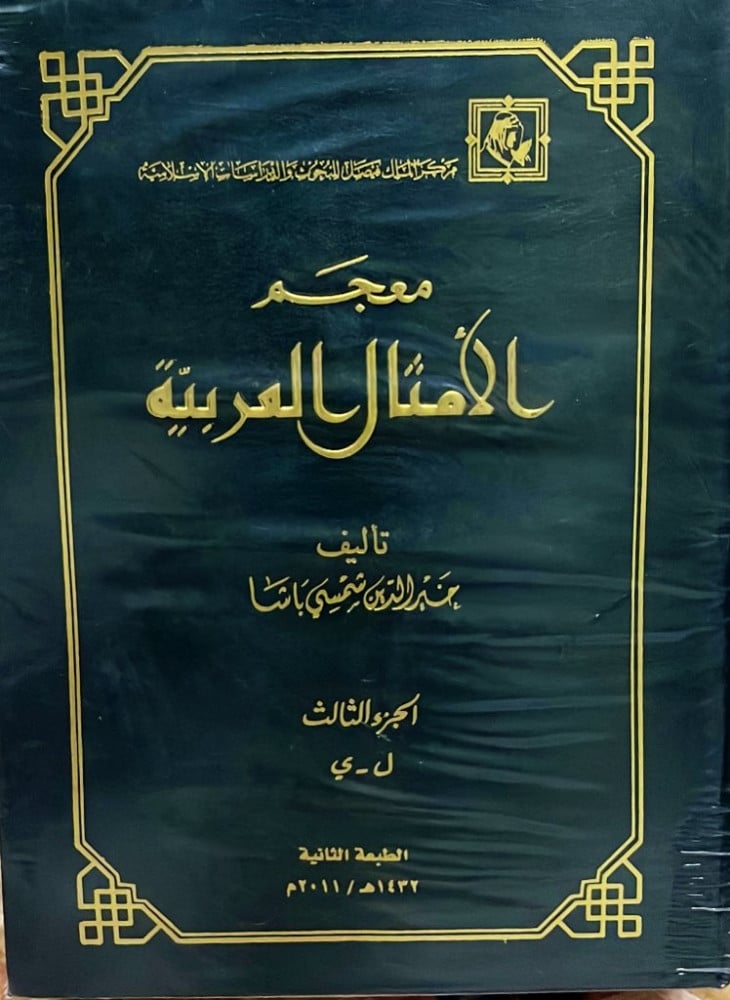

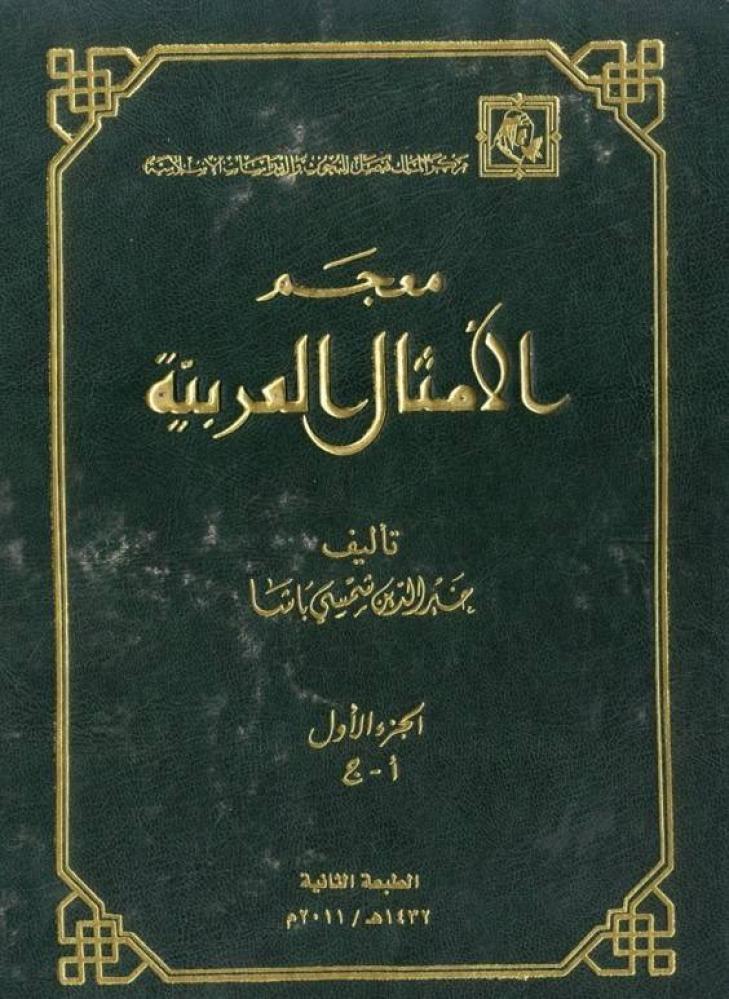
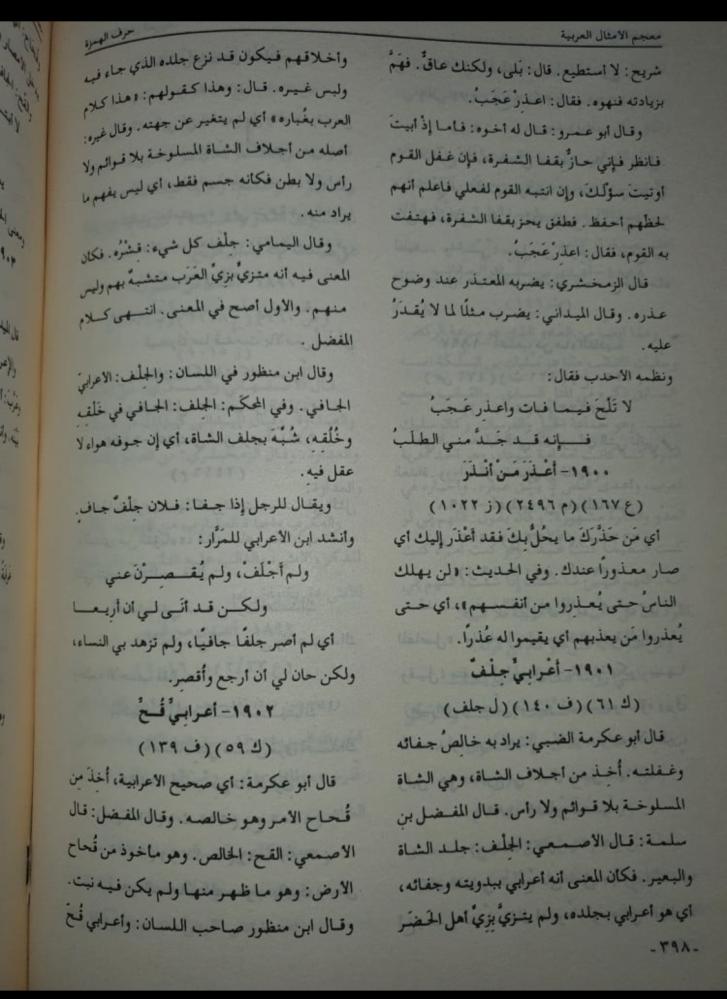
Dictionary of Arabic proverbs by Khair al-Din Shamsi Pasha, 3 volumes of large size
325ر.س
Product description
A comprehensive reference encyclopedia on Arabic proverbs reflecting the care given to the Arabic language and its branches of literature, poetry, and the richness of meanings and vocabulary it contains, which hardly exist in the world’s living languages. The primary goal of the book is to explore the Arabic proverbs that Arabs have cared for historically and recently in their language, widely used among both the elite and the general public, and transmitted across generations as part of the collective memory of Arabic speakers and those interested in it. Proverbs reflect the outputs of real life, and through their use, a person can express many broad meanings with brief and concise phrases that convey wider implications than the complex sentence structures. Proverbs hold a significant place in Arab culture, as the author emphasizes in the introductory preface of the encyclopedia, and Arabs’ interest in expressing their conditions and life affairs surpasses that of other nations. This has been confirmed by scholars, including the famous German orientalist Zolhheim, in his book on ancient Arabic proverbs, where he states that proverbs have influenced no other people as much as they have the Arabs, who adorned their rich literature with them, and their wisdom remains alive to this day. Proverbs are often linked to specific historical events, so their historical importance, alongside their literary value, is evident, as historians relied on them to record events that occurred in certain eras, such as those spoken during the Battle of Dāḥis and Ghabrā. The author, in his foundational approach to the phenomenon of proverbs and their uses in Arab culture, states that a proverb is considered a summary of Arab societies’ ideas, a product of their experiences, and a sign of their eloquence and rhetoric, as it records customs and character traits and paints an honest picture of the Arab environment, Bedouin features, and civilization landmarks. The reason for compiling the encyclopedia, despite the existence of many individual books on proverbs in Arab heritage, is their insufficiency, in the author’s view, to gather all proverbs in a single documented collection. Additionally, it is difficult to find a single proverb even in alphabetically arranged books. Therefore, the book undertook the task of documenting Arab proverbs over twenty years, resulting in more than ten thousand proverbs, arranged in an easy and smooth order that helps the reader easily find and extract the proverb without much effort. In the book’s introduction, the author presents his concept of the proverb in Arabic literature after reviewing its linguistic definitions from dictionaries and lexicons, defining it methodologically as: "A common saying used by people to compare something to similar past events." Proverbs are nothing but ideas and meanings conceived in minds, connected to people's thoughts, and inspired by their utterances, which over time, become judgments and lessons reflecting experience and advice, expressed in brief, straightforward phrases free of complexity. In the course of establishing the phenomenon of Arabic proverbs, the author discusses attributing proverbs to their speakers, emphasizing that not all proverbs are known by their origins; rather, they are likely common language among all people, refined and polished through experience, each according to their customs and nature. This is a universal phenomenon that includes cultures beyond the Arab world, with overlaps and similarities between proverbs in other languages, such as Persian, due to contact between peoples and nations. The author also distinguishes between the proverb and wisdom, and their relationship, noting that even ancient people did not see a difference between them, except that the difference lies in the connection of the proverb to a specific personal need based on a historical incident, often improvised, while wisdom is closer to a concise statement that condenses a meaning derived from thinking and philosophical reflection rather than relying on facts and historical events. Therefore, it is a common rule that proverbs are narrated as they are spoken and their wording is not changed because of their connection to lived experience and historical events more than their attribution to their speakers, as is the case with wisdom. In the conclusion of his preliminary study of the encyclopedia, the author discusses the relationship of proverbs with the Holy Quran, Arab literature in poetry and rhetoric, and also mentions the writings on proverbs in the history of literature, which served as the primary source for his comprehensive encyclopedia. According to a decision by a committee of scholars, some vulgar proverbs were excluded due to their offensive language, but overall, the encyclopedia contributed to collecting scattered proverbs from books and writings, organizing and explaining them in one book, reflecting the great effort and passion of the author.

From Riyadh