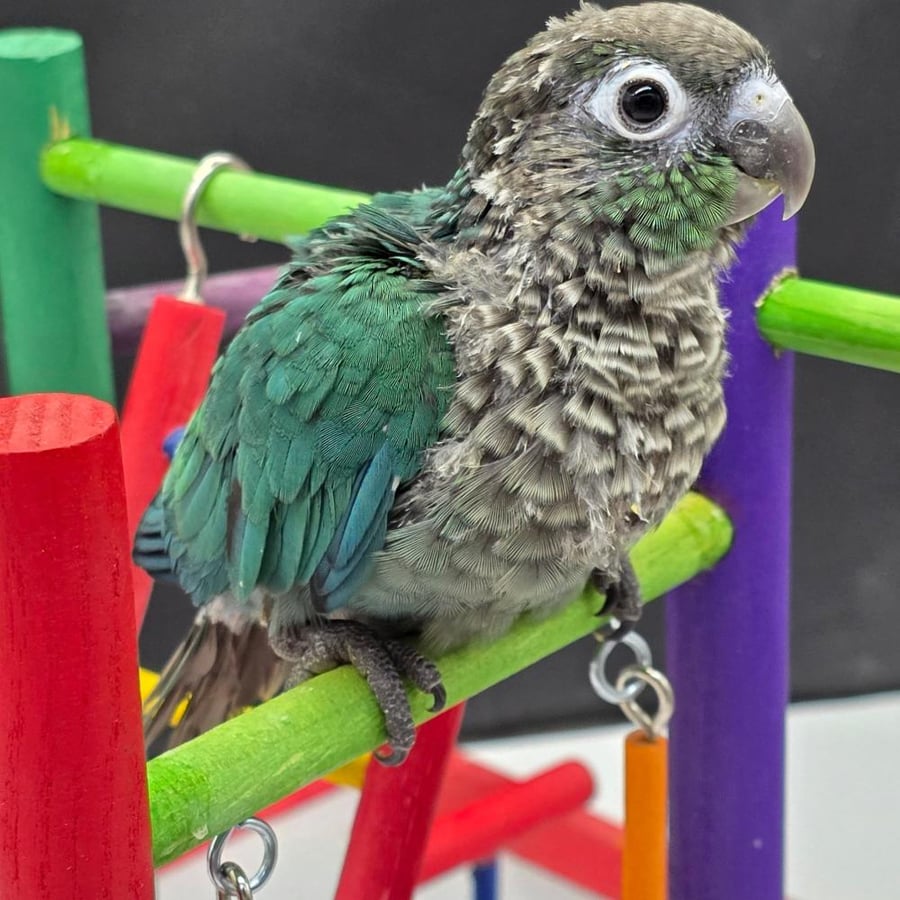


Turquoise Conure
800ر.س
Out of Stock
Product description
A piece of heaven in your home! 🌟 Are you looking for a friend to fill your life with joy and loyalty? We present to you "Cyanur Blue Chic" (Turquoise Conure), the chick that combines the calmness of sky blue with the playful mischief of the beloved conure. It is only one month and ten days old; meaning it is in the "golden age" for bonding with its owner and considering him its spiritual father. Why specifically get this chick? Irresistible innocence: With its soft feathers and curious look, it will steal your heart from the first moment. Lifelong friend: At this age, the bird adopts your habits, making it very tame and exceptionally attached to you. Sharp intelligence: The conure is known for its intelligence and high ability to learn tricks and play, and later even mimic some simple sounds. Beautiful colors: The turquoise feather waves with its calm cheeks make it a living masterpiece. Don’t just buy a bird... but get a companion who will exchange love and loyalty with you for many years. 💙
🩺 Care guide for the conure chick (1 month and 10 days old) In this age, the bird still mainly depends on hand-feeding ("al-gur"), and here are the most important tips:
1. Nutrition (hand-feeding)
Type: Use specialized bird cereal (like Cede cereal or high-quality products).
Temperature: The food should be warm (between 38 to 40°C). Be careful it’s not cold, which it will refuse, or hot, which could burn the bird’s crop.
Number of feedings: Usually needs 3 meals daily (about every 8 hours), with each between 8 to 12 ml depending on crop fullness.
Cleanliness: The syringe (feeding tube) must be washed well after each use and dried.
2. Environment and heating
Since its feathers are not fully developed, it needs a warm place completely away from drafts or direct air conditioning.
Use coarse wood shavings or paper towels at the bottom of the nursery/cage to absorb waste, and change them daily.
3. Weaning stage (preparation)
Since it has passed 40 days, start placing a branch of millet or a little soaked grains or grated apple in the cage to encourage it to peck, but do not stop hand-feeding until you are sure it is eating completely on its own.
4. Training and taming
This is the perfect time to get it used to your hand. Gently stroke its head, and speak to it softly to build a strong trust relationship.

From Riyadh
Questions you might have