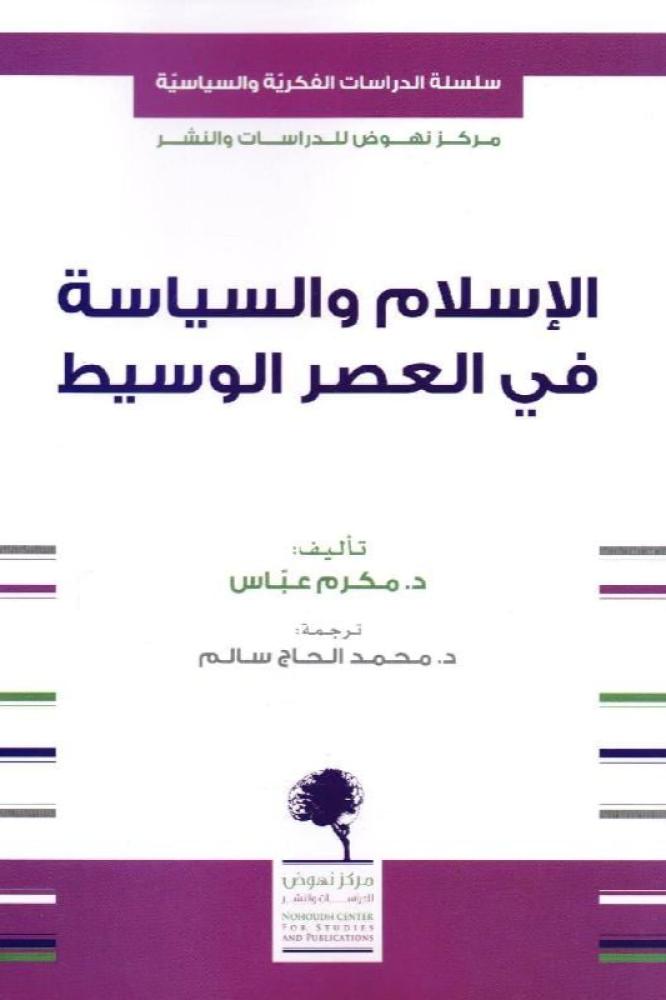
Islam and politics in the medieval era
64ر.س
Product description
Medieval thinkers addressed the political issue from different perspectives. The tradition of sultanic manners considered politics, as practiced, an inevitable result of human desires, and from this perspective, politics is a field for managing and restraining these desires to organize human society. While the scholars' view was framed normatively by religious texts, the realities of life often forced deviations in exceptional cases from religious objectives. As for political philosophy, it viewed the political realm in light of intermediate natural sciences, and Muslim philosophers tried to make the "city" a entity that mimics the system of the world. Between the normative view of the scholars and the ideal approach of the philosophers, there was the eternal realism of Ibn Khaldun, which emerged during a period of decline in Islamic civilization and the dawn of the European Renaissance. It presented a social vision for the development and decline of the state. These four visions (sultanic manners, Sharia-based politics, political philosophy, and Ibn Khaldun's theory) formed the core material that researcher Makram Abbas attempted to analyze in his book "Islam and Politics in the Medieval Era."
Researcher Makram Abbas begins his reading of the political heritage formed within Islamic thought by engaging with the overall theories produced by Western narratives, whether from Orientalism or political sociology. The latter, especially with German sociologist Max Weber, provided classifications of the nature of political practice, distinguishing between political action in the modern West—based on the independence of law, secularism, and rationalization of bureaucracy— which granted it modern political legitimacy, and other traditional legitimacies rooted in customs or charismatic authority believing in a savior figure. Regarding Islam, Weber viewed it as an invisible church; according to his reading, there is a fundamental overlap between the religious and political components. The researcher notes in his introduction that Weber's theorization has directed all subsequent studies on politics and religion in Islamic thought, mentioning several names such as Anne Lamtoun, Louis Gardet, von Grunbaum, Bertrand Badi, and Patricia Cron.
The researcher concludes, in a general judgment, that the particularity of European history has significantly influenced the reading of the Islamic political historical experience. It does not separate the self from the object but projects itself onto the studied object, stating: "The problem posed by these studies is the imposition of ready-made analytical frameworks onto Islamic culture. Then, there is an attempt to verify and prove them." From this, it appears that the purpose of writing the book is to reconsider all these judgments. Since Orientalist studies were directed by ideas derived from the Western discursive field, the researcher will turn directly to an internal, parallel reading. He will examine the literature formed within Islamic political thought, which he classifies into three sections: sultanic manners, Sharia-based politics, and political philosophy. The first section is given a historical character, the second a legal aspect, while the third is classified as scientific discourse.
