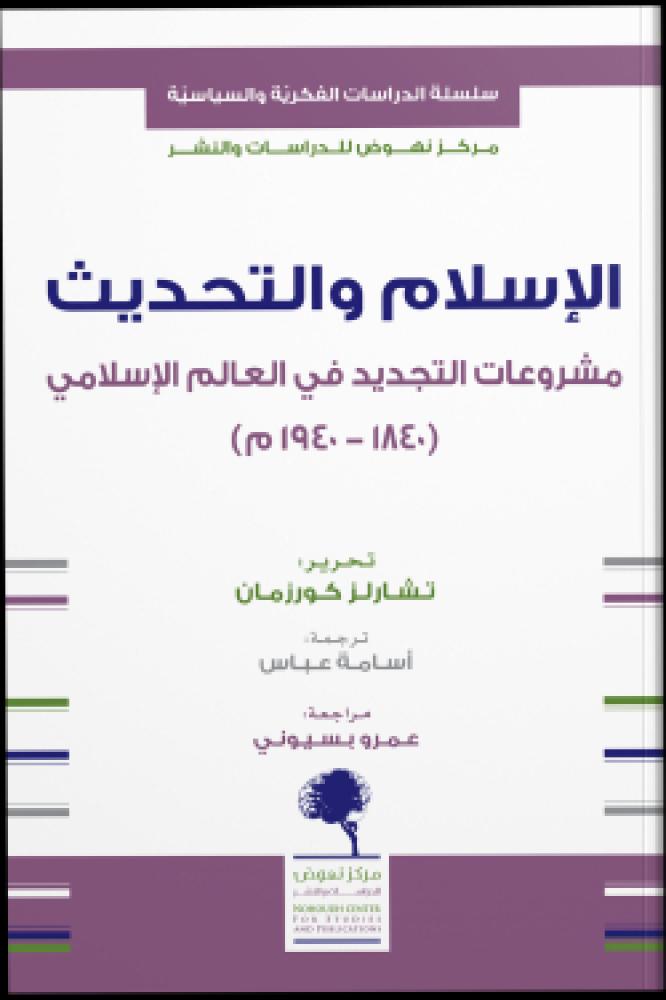
Islam and modernization
129ر.س
Product description
It is not an exaggeration to say that there is no Arab study that has collected the texts of pioneers of renewal with the comprehensiveness and diversity found in this unique book. If the texts of reform and renewal pioneers such as Abdulbaha, Afghani, and Rashid Rida are abundant in the Arab library, the value of this encyclopedic book is that it expanded in tracing the Islamic renewal movement and monitoring it across various parts of the world, where we find valuable texts from pioneers whom the Arab reader may not have heard of before, such as Abdullah Abdul Rahman from South Africa, Amin bin Ali Al-Mazrouei from Kenya, Namik Kamal from Turkey, Mahmoud Torzi from Afghanistan, Ismail Bek Kasprinski from Crimea, Abdullah Bobi, Raza al-Din bin Fakh al-Din, and Musa Jar Allah Bikiyev from Tatarstan, Munawar Qari, and Abdul Hamid Suleiman Shulban from Uzbekistan, Abdul Rauf Fattart from Bukhara, Yaqoub Wang Jing Chai from China, and Ahmed Dhalan from Indonesia. This is in addition to thinkers who gained fame in the Arab world through the translation of some of their texts, such as Muhammad Iqbal and Ahmed Khan. This comprehensive monitoring makes this book truly the most important reference that collected the output of Islamic renaissance thinkers and their visions, providing researchers with the opportunity to broaden their view of the product of the Muslim renewal mind beyond the Arab sphere.
One of the benefits of this collection is that we notice the participation of various pioneers of Islamic renaissance in the same problematic questions, which revolve around how to revive progress and advancement, and how to interact with the developments of the era and its innovations in thought, politics, and society. In this context, the book is distinguished by selecting the most important reform contributions of thinkers of Islamic civilization in the modern era, studying how reform and renewal pioneers addressed questions of modernity and its issues, concluding that their contributions resulted in shaping a reformist Islamic model that interacted with social conditions, inspired by the roots of their religious culture, to establish their visions and ideas.
What also distinguishes the book is its expanded scope in tracking the interaction of the Muslim mind with the problems of renaissance and modernity in Africa, Iran, Turkey, India, Russia, and China. Thus, it became the broadest reference that includes a summary of modern Islamic thought.

Questions you might have