

Pink Tabebuia seeds
48ر.س
Out of Stock
Product description
Number 200 seeds
Common name: Pink Tabebuia
Scientific name: Tabebuia rosea
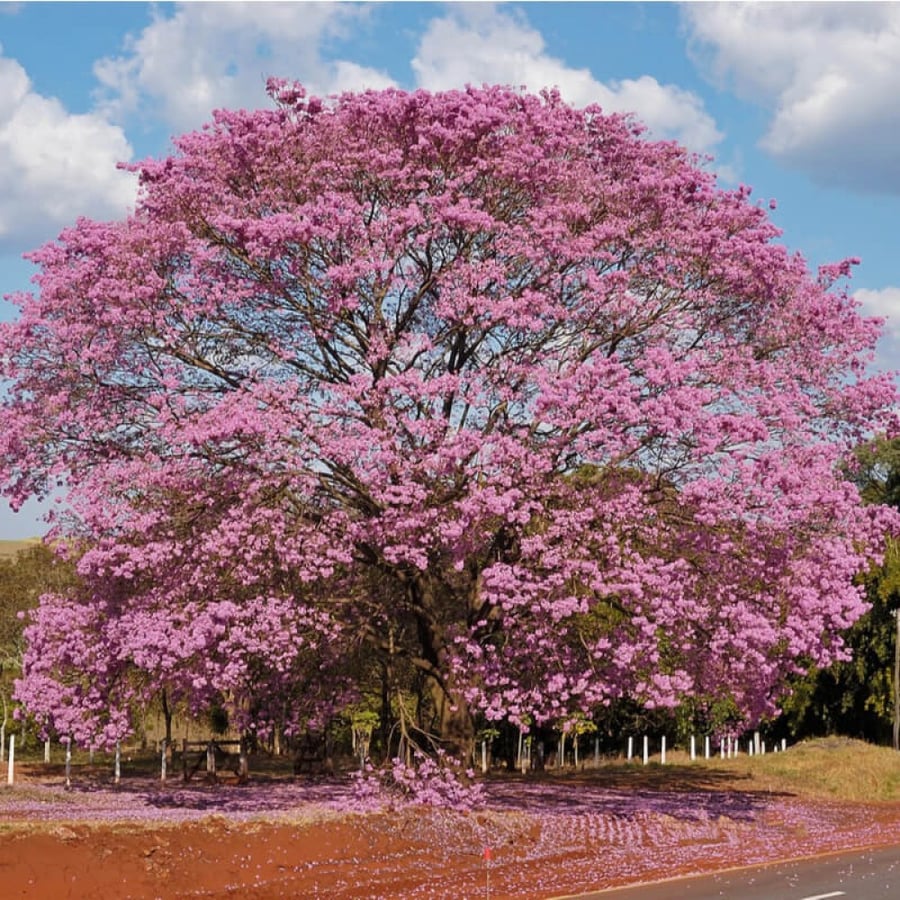
A large, fast-growing tropical tree belonging to the genus Tabebuia from the Bignoniaceae family. It has a woody trunk resembling oak wood, and as it ages, its bark color turns from gray to brown. It reaches a height of about 30 meters and has a wide crown with a diameter of approximately 9 meters. Its leaves are compound, with each leaf containing five leaflets of different sizes, the largest being the middle one. When its leaves fall during the long flowering period, it creates a stunning scene that attracts attention. It is considered one of the most beautiful ornamental trees suitable for planting in coastal areas, and it has begun to be widely planted along roads and in public parks, especially in the Eastern Province of Saudi Arabia.
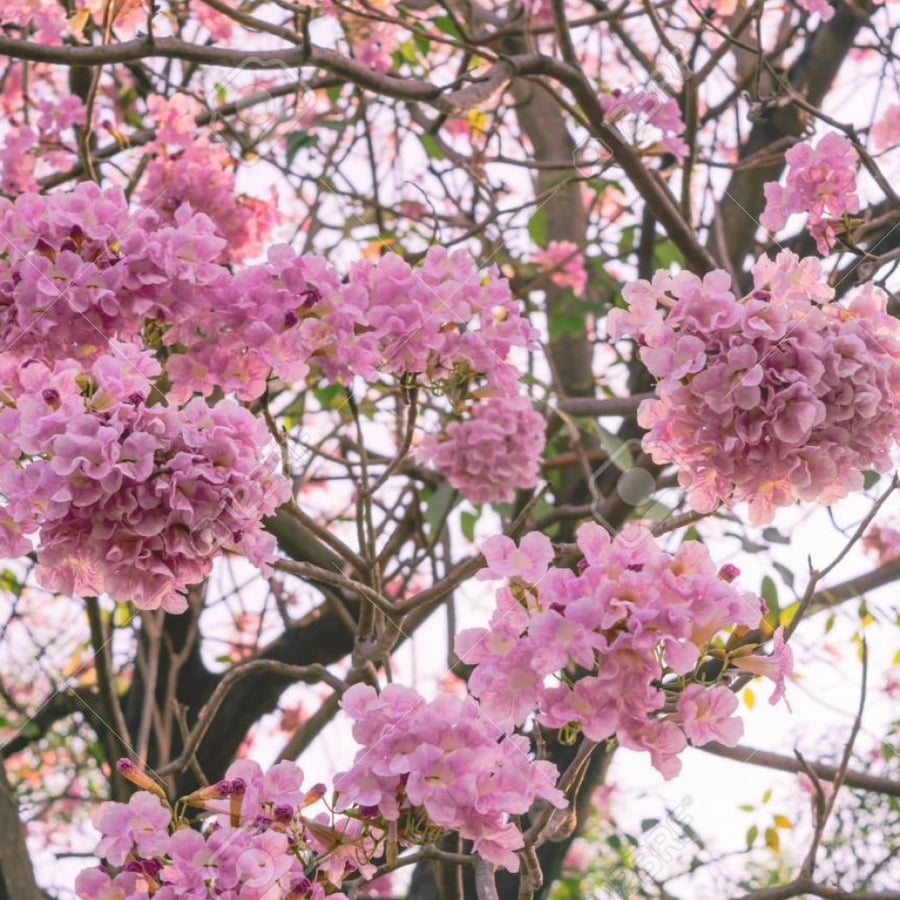
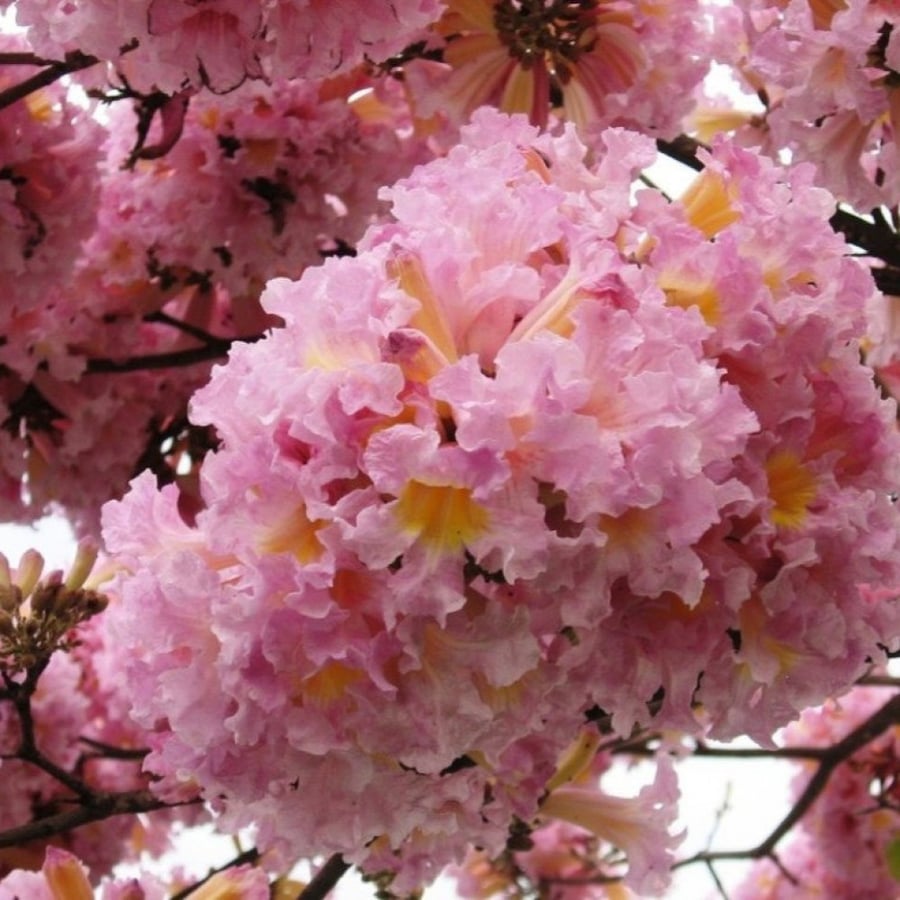
• Pink Tabebuia tree flower: Its large flowers are pink in color, gathered in intertwined and hanging clusters. The flowers appear early in age, and when they do, the leaves fall, creating a beautiful scene. It blooms three times a year.
• Pink Tabebuia tree seeds: The seeds come inside long pods that can reach 35 cm in length. To extract them, these pods should be left to dry, and once dried, the seeds are taken out. The seeds are winged, medium-sized, and light brown in color.
• Season for germinating Pink Tabebuia trees: It is preferred to plant them at the end of winter and in spring. They can be planted outdoors during autumn in areas without frost or harsh winter. They can also be cultivated year-round in agricultural nurseries, enclosed spaces, or plastic houses where temperature and sunlight can be controlled, or where adequate lighting for the plant is available.
• Suitable climate and soil for Pink Tabebuia: Since the Pink Tabebuia is a tropical tree, it thrives in humid climates and tolerates salinity. It prefers temperatures between 22 to 30 degrees Celsius and can withstand 17 to 50 degrees Celsius. It grows best in fertile soils of all types.
• How to cultivate Pink Tabebuia: It propagates through seeds. Because the seeds are winged, it is best to place them flat on the soil and cover them with a thin layer of soil no more than 1-2 cm. The soil should be kept moist through regular misting until the seeds sprout. When the seedlings appear, watering can be gradually reduced to normal levels. It is a plant that does not require much care or fertilization.
• Its benefits and uses: It is planted for decoration in parks, gardens, and roads.
• Native habitat of Pink Tabebuia: This species is distributed from southern Mexico to Venezuela and Ecuador. It is cultivated in many countries, including Saudi Arabia and the Gulf countries.

From Buraydah