

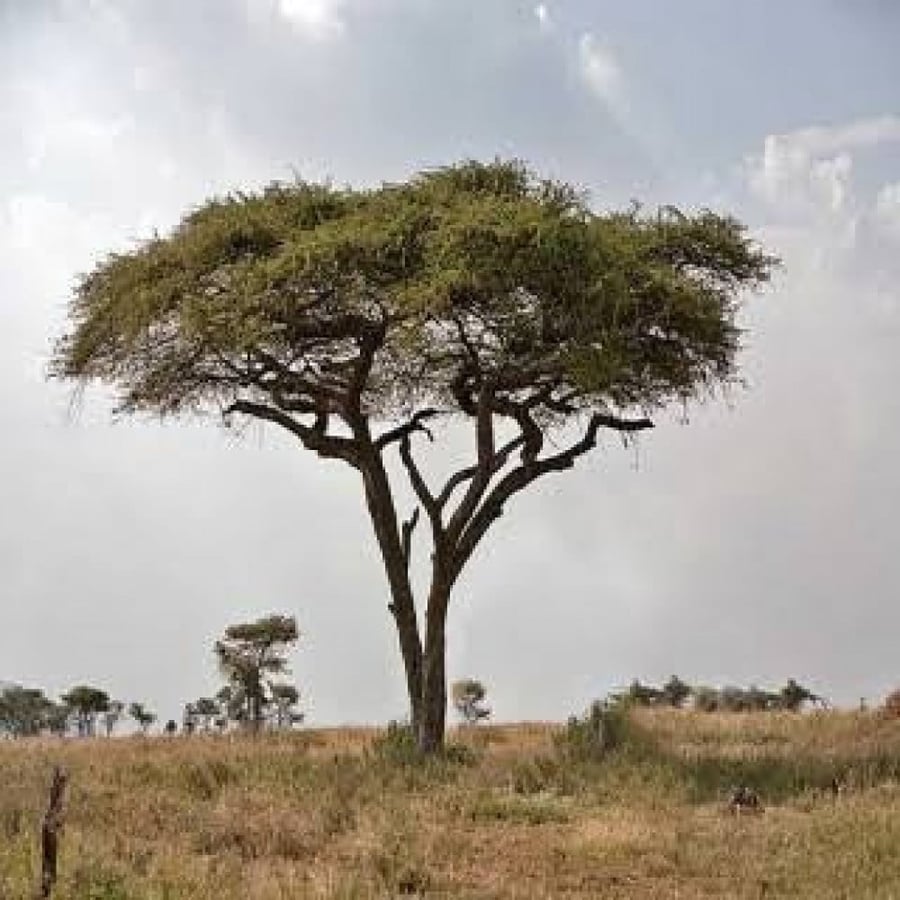

African acacia tree seeds (Acacia nilotica)
6ر.س
Product description
Common name: Acacia tree
Scientific name: Acacia nilotica
Also known as: Arabic gum tree - African acacia
The acacia has a medium-sized single trunk, and the tree has a rounded or flat top. The new branches are densely covered with white hairs, and the trunks have black bark with red cracks on the inner layer of the bark, where a red waxy substance known as gum arabic is secreted. The thorns are long, paired, and sharp on the branches, and smaller on the leaves, reaching a length of 5 m – 20 m.
Acacia tree flower:
The flowers are arranged in round dark yellow inflorescences that appear in winter.
Acacia tree fruit and seeds:
Its fruits are long, segmented, containing about 12 segments, each with one round seed similar in shape to kidney beans.
Acacia tree planting season:
It is planted in spring and autumn, and can also be cultivated year-round in agricultural reserves and enclosed or plastic places where temperature can be controlled, sunlight reaches, or where adequate lighting for the plant is available.
Suitable climate and soil for acacia:
The acacia tree is resistant to drought and high salinity but affected by severe frost. It needs sunlight and grows in fertile, well-drained, and ventilated soils.
How to cultivate acacia:
It is propagated through seeds and cuttings. It is recommended to soak the seeds in water for at least 24 hours. It is planted at a depth of 1 cm – 2 cm from the soil surface.
Its benefits and uses:
The plant is considered beneficial medically and important for feeding camels and livestock. It is one of the desert trees suitable for developing vegetation cover.
Original habitat of the acacia tree:
Africa, and it is also spread in the Kingdom of Saudi Arabia.

From Buraydah
Questions you might have