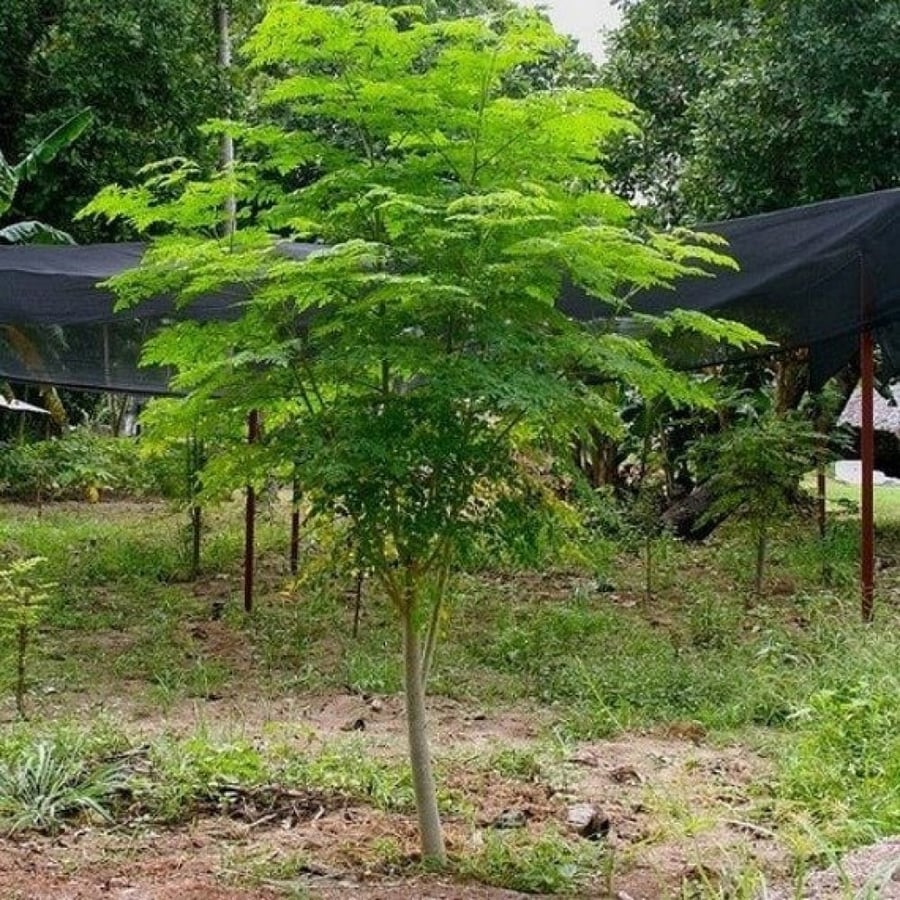


Indian Moringa seeds or Moringa oleifera
43ر.س
Product description
Number 250
Common name: Moringa Oleifera
Scientific name: Moringa oleifera
The ban or Yers tree is a fast-growing upright tree, with open branches that have a graceful appearance, reaching a height of about 10 meters. It is characterized by thick grayish bark, soft beautiful distinctive doubly pinnate leaves that reach up to 40 cm in length, with oval-shaped green leaflets spaced apart on short stalks.
• Moringa Oleifera flower:
The flowers are attractive yellowish-white with a fragrant smell, about 15 cm in size, blooming from April to September.
• Moringa Oleifera fruit and seeds:
The fruit is brown and consists of pods whose length varies from 15 to 120 cm, and the fruits range between 15 and 90 cm depending on the type and region. The taste of the fruit is bitter, and it is edible whether cooked or fresh, but should be washed before eating. It should not be eaten in large quantities. The tree produces between 400 and 600 pods, each containing about 20 to 25 seeds.
• Moringa Oleifera germination season:
Moringa Oleifera is planted in late spring or early summer, and it can also be cultivated year-round in agricultural protected areas, enclosed or plastic places where temperature can be controlled, and where plants receive adequate sunlight.
• Suitable climate and soil for growing Moringa Oleifera:
Moringa Oleifera is highly resistant to drought but does not tolerate cold or frost. It can be successfully cultivated in sandy and clay soils, which require good drainage.
• How to cultivate Moringa Oleifera:
Germination occurs in shaded areas, often with seeds placed in perforated bags, then planted in soil. When seedlings reach three months old, they can be transplanted to their permanent location. They are planted at a depth of 1-2 cm, fertilized with organic fertilizer at least once, and watered regularly.
• Its benefits and uses:
Shade, decoration, soil improvement, perfumes, cosmetics, food, animal feed, beekeeping, medicinal uses: used to treat cystitis, prostatitis, diarrhea, liver and spleen diseases, skin diseases, and rheumatism.
• The original habitat of Moringa Oleifera:
Its native homeland is India, and it is cultivated in Saudi Arabia and Gulf countries.

From Buraydah