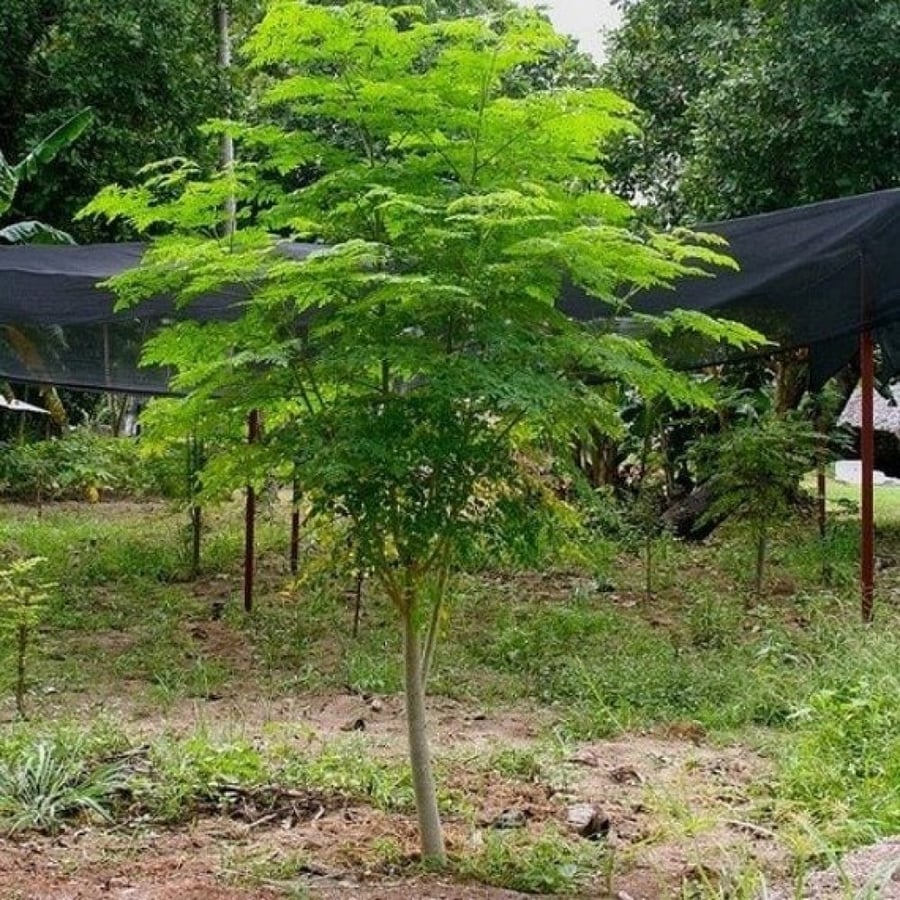


Indian Moringa tree seeds - Moringa oleifera
6ر.س
Product description
Common name: Indian Moringa - Moringa Oleifera
Scientific name: Moringa oleifera
Other names: Shouw - Oilseed Pigeon Pea - Alisar - Banan - Ghalia Bean - Wild Garlic - Horse Radish - Riwaq Tree - Drumstick
Banan or Yers is a fast-growing upright tree, with open, slender-looking branches reaching up to about 10 meters. It has thick, dark gray bark, and beautiful, soft, doubly pinnate, feather-like green leaves that can reach 40 cm in length. The leaflets are oval-shaped, green, and borne on short petioles.
Moringa Oleifera flowers: Attractive yellowish-white flowers with a fragrant smell, about 15 cm in size, blooming from April to September.
Moringa Oleifera fruit and seeds: The fruit is brown, consisting of pods ranging from 15 to 120 cm in length, with some varieties producing pods between 15 and 90 cm depending on the type and region. The taste of the fruit is bitter, but it is edible when cooked or fresh, and should be washed before eating. It should not be consumed in large quantities. The tree produces between 400 and 600 pods, each containing about 20 to 25 seeds.
Moringa Oleifera germination season: Grown in late spring or early summer, but can be cultivated year-round in protected agricultural environments, enclosed or plastic places where temperature can be controlled, and where plants receive adequate sunlight.
Suitable climate and soil for growing Moringa Oleifera: Known for its strong drought resistance, but it does not tolerate cold or frost. It can be successfully cultivated in sandy or clay soils, provided there is good drainage.
How to cultivate Moringa Oleifera: Seeds are germinated in shaded areas, often placed in perforated bags, then planted in soil. When seedlings reach three months old, they can be transplanted to their permanent location. Plant at a depth of 1-2 cm, fertilize with organic fertilizer at least once, and water regularly.
Its benefits and uses: Shade, ornamentation, soil improvement, perfumes, cosmetics, food, animal feeding, beekeeping, medicinal uses: used to treat cystitis, prostatitis, diarrhea, liver and spleen issues, skin diseases, and rheumatism.
Original habitat of Moringa Oleifera: Native to India, cultivated in Saudi Arabia and Gulf countries.

From Buraydah