Seeds of the Chorisia tree
8ر.س
Out of Stock
Product description
Common name: Chorisia tree
Scientific name: Chorisia speciosa
One of its names: Silk thread - Bottle - Elephant's trunk
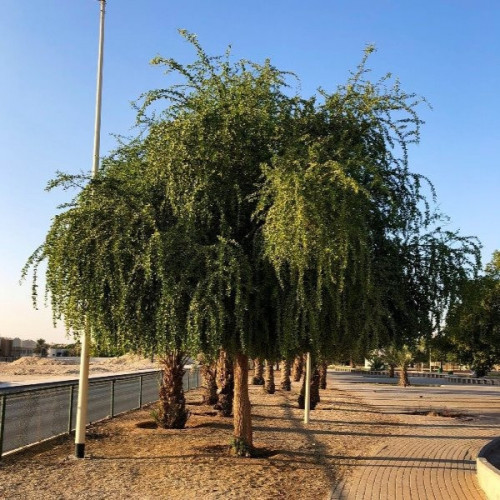
The Chorisia tree is one of the most beautiful trees in the world when used as an ornamental tree, as it gives an impressive and very eye-catching appearance with its magnificent colors, especially during the flowering season. It exceeds 20 meters in height, with a green trunk adorned with thorns that may lose their sharpness over time. Its palmate leaves are composed of 5 to 7 oval leaflets. It has branches that tend toward the horizontal direction and are also thorny. The lower third of its trunk is swollen and serves as a water reservoir for drought seasons.
• Chorisia tree flower: Its flowers are large, pink with a white center, with five petals, reaching a diameter of up to 15 cm. They are among the favorite flowers of bees. It blooms from February to May.
• Fruit and seeds of the Chorisia tree: Its fruits are oval, hard, and open to reveal cotton inside, with small smooth seeds that are dark brown in color.
• Season for propagating the Chorisia tree: It is planted in spring, but can also be cultivated year-round in agricultural reserves, enclosed or plastic places where temperature can be controlled, sunlight reaches the plant, or where adequate lighting is available.
• Suitable climate and soil for the Chorisia tree: It is grown in clay, sandy, or alkaline soil. It tolerates heat and drought conditions but does not withstand frost. It needs direct sunlight and does not tolerate high salinity. It is watered regularly.
• How to cultivate the Chorisia tree: It propagates through seeds planted at a depth of 0.5 cm to 2.5 cm from the soil surface. It can also be fertilized with organic fertilizer at least once to accelerate its growth and development. It can also propagate through cuttings.
• Its benefits and uses: It is used for decoration and beautification of gardens and roads. Cotton is extracted from its fruits.
• Native habitat of the Chorisia tree: South America, and it is cultivated in Saudi Arabia, the Gulf countries, and many Arab countries.

From Buraydah