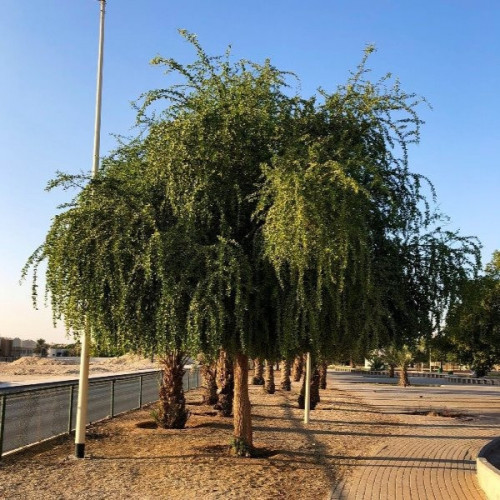
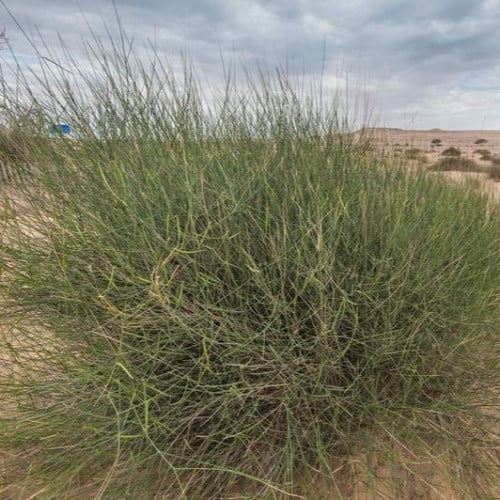
Rare desert tree seeds - wild cherry (Capparis Decidua)
8ر.س
Product description
Common name: Tnadbal tree
Scientific name: Capparis Decidua
Other names: Wild cherry - Sidad
A perennial thorny tree from the Capparaceae family that reaches up to 5 meters in height, with multiple stems, hard and tangled branches, small fallen leaves, characterized by its fragrant flowers that bees are attracted to, and its delicious red cherry-like fruits.
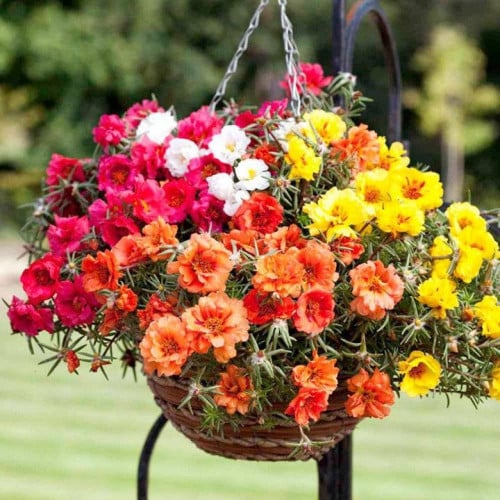
- Tnadbal tree flower - wild cherry: Its flowers are large, orange-red in color, and have a fragrant, sweet scent. They are attractive flowers that bees are drawn to, blooming abundantly in autumn and spring.
- Seeds and fruit of the Tnadbal tree - wild cherry: Its fruits are cherry-like called Hameqi, with a sweet taste and seeds inside.
- Growing season of the Tnadbal tree - wild cherry: It is cultivated outdoors during the moderate weather periods in autumn and spring, and can also be cultivated year-round in agricultural shelters, enclosed spaces, or plastic houses where temperature can be controlled and sunlight or adequate lighting is available for the plant.
- Suitable climate and soil for the Tnadbal tree - wild cherry: It tolerates drought and frost, and it thrives in clayey and hard soils.
- How to cultivate the Tnadbal tree - wild cherry: It reproduces by cuttings, and also by seeds soaked in water for 24 hours before planting them in soil at a depth of 1-2 cm, then watering regularly until the plant sprouts.
- Its benefits and uses: It is cultivated for its fragrant flowers that bees are attracted to, as hedges and windbreaks, in addition to being used as fodder for livestock, and it also has medicinal uses.
- Native habitat of the Tnadbal tree - wild cherry: Southern Saudi Arabia, North Africa, and India.

From Buraydah