


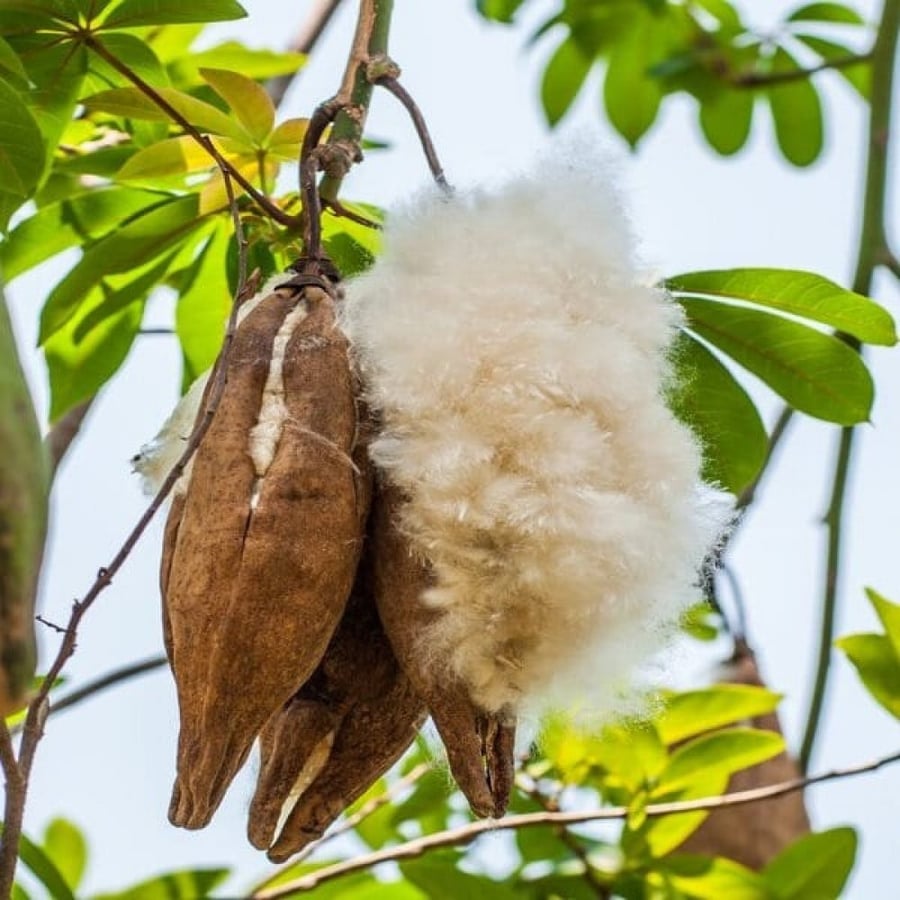


Seeds of the kapok tree
6ر.س
Product description
Common name: Kapok
Scientific name: Ceiba pentandra
Also known as: Silky cotton tree - Lobonash
The Kapok tree is a tropical perennial tree, fast-growing, reaching heights of 40 meters or more, deciduous, and considered one of the tallest trees in the world. It has a light gray vertical trunk covered with sharp conical thorns.
Flower of the Kapok tree:
The bisexual flowers are 4 cm long, thick white in color, and have a milky scent. The flowers bloom at night and contain five petals on the outside. Only a few flowers open on a specific branch each night during the two or three weeks the tree blooms. It does not bloom every year, and some may remain 5 to 10 years without flowering.
Fruit and seeds of the Kapok tree:
The fruits are large, soft, made of an outer skin and rectangular capsules up to 15 cm long, pointed at both ends. The color changes from green to brown to black when ripe, then splits from the base to the top into five sections. The seeds are smooth, dark brown, and found in a mass of light hair.
Kapok tree planting season:
The best time to plant seeds is March and April. They can also be cultivated year-round in agricultural reserves, enclosed or plastic places where temperature can be controlled, sunlight reaches, or where adequate lighting for the plant is available.
Suitable climate and soil for the Kapok tree:
The Kapok needs full direct sunlight. It is planted in fine sandy soil, preferably moist, deep, and fertile. It is heavily fertilized, tolerates drought and frost, and is watered regularly.
Method of planting the Kapok tree:
Seeds are placed in a small pot with moist, fertile soil, and water is added periodically. The pot is kept in a sunny place until the seeds grow. Afterward, continuous fertilization is needed if deficiencies occur.
Its benefits and uses:
Kapok trees are ornamental and provide shade. Seeds produce oil used in soap-making. The fruits produce cotton, considered among the best types of cotton for mattresses and pillows, and are also used in the medical field.
Original habitat of the Kapok tree:
Its native habitat is Asia and Africa. It is cultivated in Saudi Arabia and many Arab countries.

From Buraydah